A sock is not made on one machine. It is knitted on one, closed on another, and finished on several more – and each of those machines sets a limit on what is possible and how long each pair takes. Buyers who understand the sequence know which of their own decisions are actually changing price and schedule.
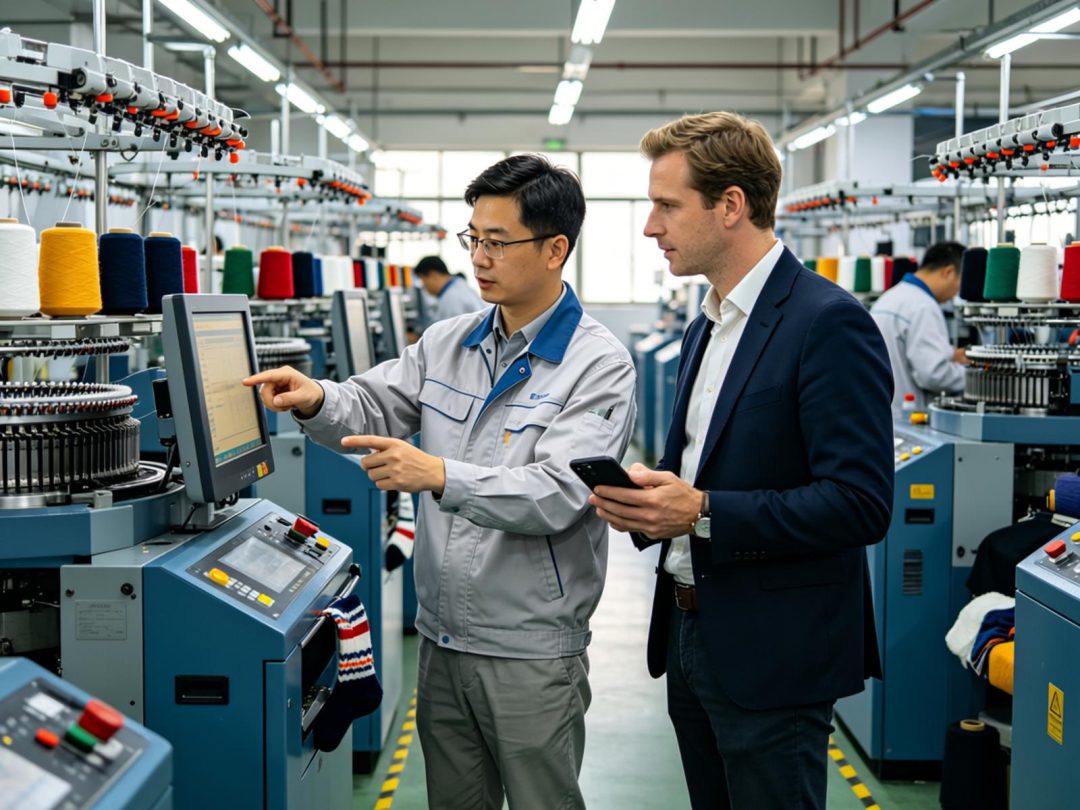
This is written for brands and wholesale buyers rather than equipment purchasers. The question it answers: which sock making machine choices affect my order, and how?
The five stages and their machines
| Stage | Equipment | What it determines |
|---|---|---|
| Knitting | Circular sock machine | Gauge, construction, minutes per pair |
| Toe closing | Linking machine or seamless unit | Comfort quality, labour time |
| Boarding / setting | Steam or heat setting form | Shape stability, how flat the sock lies |
| Inspection | Manual stations and measurement jigs | Defect detection before packing |
| Packing | Labelling, bagging, cartoning line | Retail presentation |
Most programmes are quoted on the knitting stage and priced with everything else folded in, which is why a construction addition that looks small on paper can move the unit cost noticeably – it often adds work at a later station too.
Knitting stage: where output is set
Output is a function of three things: how many stitches each pair requires, how fast the machine runs at that gauge, and how many interventions the pattern demands.
- Gauge drives stitch count. Every step up in needle count means substantially more stitches per pair and therefore more machine minutes.
- Pattern complexity drives intervention. A plain sock runs largely unattended. A jacquard pattern with multiple yarn changes may require supervision and slower running.
- Cylinder count affects availability. Single-cylinder machines cover most styles; true rib cuffs and certain effects may need double-cylinder equipment, which not every factory operates.
The practical consequence is that two socks of identical size and yarn can take very different amounts of machine time, and machine time is what you are buying.
Toe closing: a small step with outsized cost effect
After knitting, the tube has an open toe. Closing it happens two ways:
Standard linking joins the toe with a chain-stitch seam. It is fast and reliable, and leaves a seam that some wearers notice.
Seamless or true-linked closing produces a flat join with minimal bulk. It is slower and carries higher cost, and it is the right call for products positioned on comfort or sold into markets where wearers are sensitive to seam bulk.
For a uniform programme nobody complains about a standard link. For a comfort-led brand, the upgrade is usually worth it. Decide this at spec stage, not after sampling, because it changes the quote.
Setting, inspection and packing
These stages rarely get discussed, and they are where schedule surprises hide.
Boarding and setting stabilise shape. Skipping proper setting produces socks that look right damp off the machine and wrong on shelf. It also determines how reliably a size actually matches the stated dimensions after washing.
Inspection is the difference between agreeing on a written standard and hoping. A defined sampling standard – how many pieces get pulled, what defects are counted, what the pass threshold is – should exist before bulk starts, not when something goes wrong.
Packing is easier to specify than most buyers realise, and getting it wrong is expensive: barcodes in the wrong place, polybags the wrong thickness, cartons labelled against the wrong marking all cause receiving problems at your warehouse.
Turning machine knowledge into a better enquiry
Ask these five questions and you will separate factories that control their output from those guessing:
1. Which gauge will this be knitted at, and how many stitches does that imply per pair?
2. Is the toe closed by linking or seamless method, and what does each cost?
3. Are cuff treatments run in-house or bought in?
4. What sampling standard do you apply to bulk, and can I see the checklist?
5. Does any part of this style depend on equipment you do not own?
Factories answering concretely tend to quote accurately and deliver on schedule. Vagueness at this stage usually predicts slippage later.
Our own reference points are straightforward: MOQ from 50 pairs per style, 3-7 days for sampling, 5-25 days for bulk production after sample approval. Where within that window your order lands depends on gauge and construction choices – which is exactly why those belong in the first conversation rather than the third.
Bring a target construction through bulk custom socks for realistic costing, or start from the custom sock manufacturer page if you are still shaping the brief. Buyers with finished artwork and specs follow the OEM sock manufacturing route. Equipment background sits alongside material notes in sock fabrics, and further references are collected on our sock making machine page.
FAQ
Can a factory run any construction on any machine?
No. Gauge and cylinder type both constrain what can be knitted cleanly. Asking before artwork is finished saves a redesign.
Why does a comfort sock cost more?
Usually the seamless toe closing and finer gauge – both add machine or labour minutes per pair.
Does machine choice affect minimum order quantity?
No. Minimums are set per style by setup cost, independent of which machines the style needs.
How do I compare two quotes fairly?
By making both quote the same gauge, blend, construction list and closing method. Differences in those explain most price gaps.
Does finer machinery always mean better socks?
It means finer socks. Better depends on whether the end use needs that fineness.
—
*Parameter note: MOQ, sampling and production windows reflect Sockmader’s own figures. Machine conventions vary between makers; confirm specifics against your factory’s capability table.*