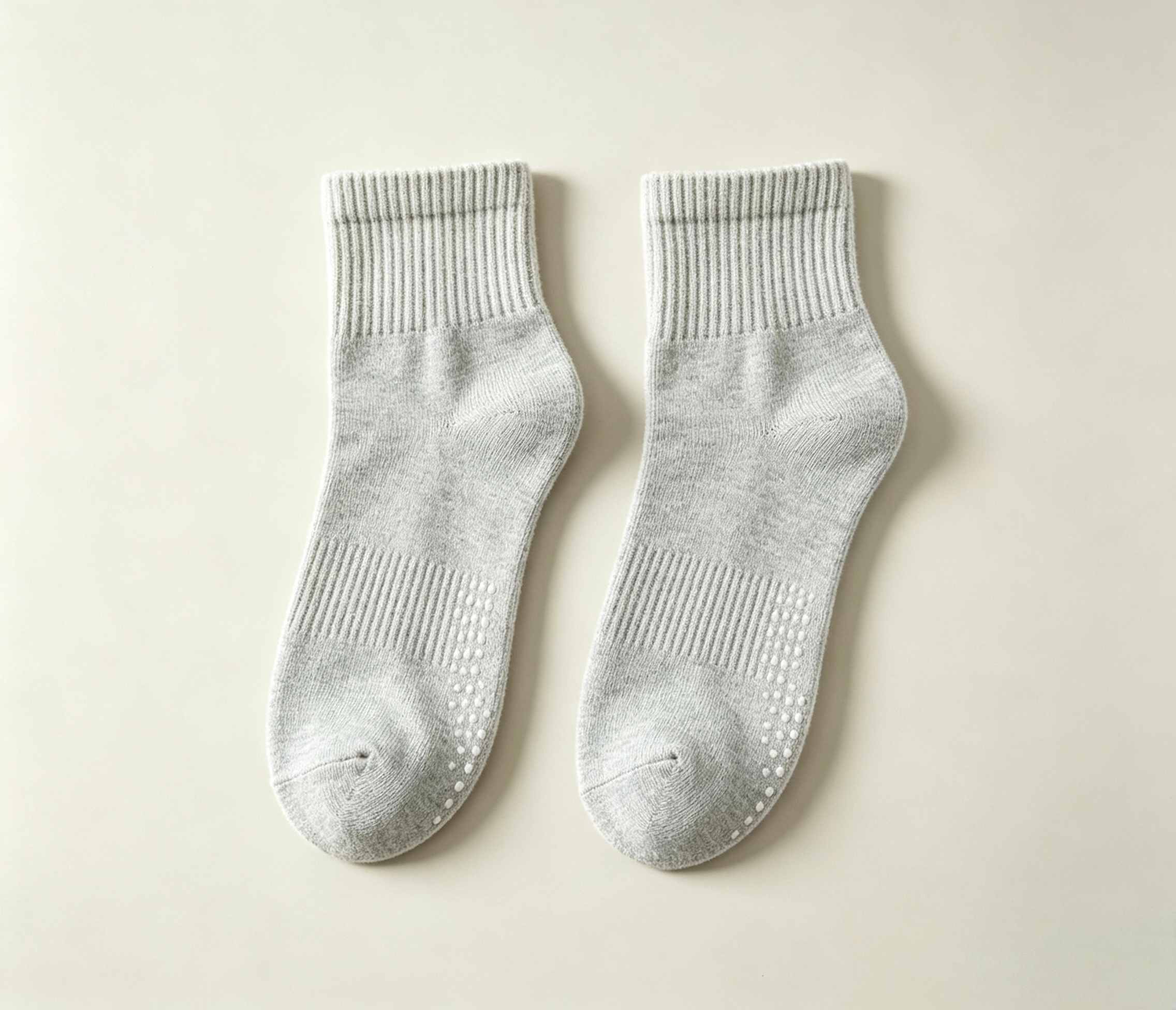
thermal socks wholesale looks like a simple purchase until you try to specify one. Two orders with the same name can differ in yarn, needle count, cushion structure and finishing, and end up at very different prices. This page is written for buyers who already know they want the product and now need the parameters behind it. Full route: thermal socks wholesale.
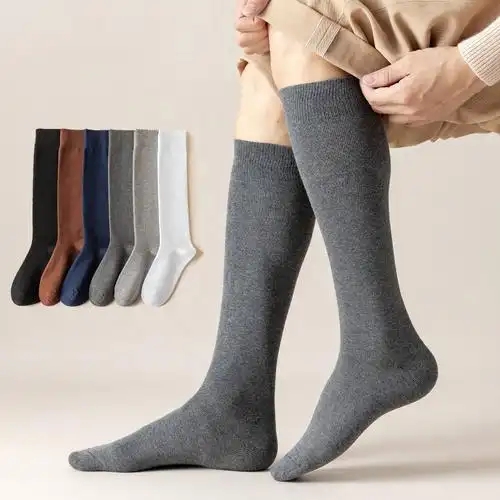
Short answer: for anyone searching thermal socks wholesale, MOQ starts at 300 pairs per color, sampling takes 3-7 days and bulk production takes 5-25 days. People who look this up are usually building a resale or distribution programme, not buying for personal use, so below I have kept it to the parameters, the cost structure and the calendar rather than product adjectives.
The single most useful thing you can do before contacting a factory is write down weight per pair, brushing and cuff pressure. Almost every delay traces back to that being left vague.
What this covers:
- 4 mistakes buyers make with thermal socks
- QC: the checks to ask for before the shipment leaves
- Timeline, stage by stage
Related terms in the same decision: custom heated socks; custom ski socks; heated socks wholesale.
4 mistakes buyers make with thermal socks
1. Ignoring shoe volume
Why it happens: Too thick and the foot gets compressed, which makes it colder.
What to do instead: Give a thickness recommendation by shoe type.
2. Pilling complaints
Why it happens: The most common issue with brushed acrylic.
What to do instead: Specify an anti-pilling grade and test it.
3. Cuff too tight
Why it happens: Restricts circulation and the foot feels colder.
What to do instead: Wide cuff, low pressure.
4. Buying on thickness alone
Why it happens: Thick is not warm; trapped still air is what insulates.
What to do instead: Quantify weight and the number of brushing passes.
None of these are exotic. They are the ordinary failure modes of a programme that moved too fast from idea to purchase order without a written spec in between. The commercial terms that prevent most of them: wholesale socks.
QC: the checks to ask for before the shipment leaves
AQL 2.5 is the common default for apparel, and many European and US buyers additionally require zero tolerance for critical defects. AQL 4.0 suits promotional goods, and AQL 1.0 is used for high-value or medical channels. Then the product-specific checks:
| Check | Method |
|---|---|
| Anti-pilling | Martindale or pilling box test. |
| Shrinkage | Mandatory for any wool blend. |
| Brushing evenness | Inspect against light for missed areas. |
| Weight check | Weigh 10 pairs per batch and average them. |
Ask for the inspection report before the balance payment, not after. Once the container is on the water, every remedy gets slower and more expensive. Process and test references: OEM sock manufacturing.
Nearly every sourcing dispute traces back to a spec that was never written down. Put these on your enquiry sheet and most of the risk disappears.
| Spec | What to write | Why it matters |
|---|---|---|
| Weight per pair | 60-120 g for everyday, 150 g and above for extreme cold. | Weight is the most honest measure of warmth. |
| Brushing | One pass or two on the inside. | Two passes are warmer but thicker and eat into shoe volume. |
| Cuff pressure | Must not leave a mark. | Wide cuff with low pressure. |
Two more that buyers forget: the needle count and the toe closure. 84N-96N coarse gauges serve terry and heavy socks, 108N-120N is the workhorse for everyday styles, 144N-168N carries fine jacquard and athletic structure, and 200N tops the range for dress socks and very fine jacquard. There are three toe closures: standard overlock, the cheapest and the one that leaves a seam ridge; Rosso linking, which is substantially flat; and hand-linked seamless, the most comfortable and the most expensive per pair. Related reading: Sockmader.
Timeline, stage by stage
| Stage | Duration | What happens |
|---|---|---|
| Enquiry and quotation | 1 to 3 days | spec sheet confirmed, yarn availability checked |
| Sampling | 3 to 7 days | programming, trial knitting, finishing, sample shipped |
| Sample revision | 2 to 4 days per round | each change restarts part of the loop |
| Bulk production | 5 to 25 days | knitting, closing, washing, boarding, inspection |
| Packing and export | 3 to 7 days | pairing, packing, cartons, documentation |
| Shipping | 3 to 45 days | A full sea container takes roughly 30-40 days to the US West Coast and 35-45 days to major European ports. Air freight takes 5-8 days but usually costs four to six times the sea rate per unit, and courier shipments for small trial orders arrive in 3-5 days. |
The biggest avoidable delay is a vague sample brief. Every clarification round costs three to five days. Process detail is documented under OEM sock manufacturing.
FAQ
What wool content is right?
30-50% is the value range; above 60% controls temperature better but raises cost and shrinkage risk.
Will they shrink?
Wool blends need anti-shrink treatment and a written shrinkage limit, usually plus or minus 5%.
What is the minimum order?
300 pairs per color; custom-dyed wool yarn has its own mill minimum, so confirm it before costing.
What is the fastest way to get an accurate quote?
Send a specification sheet — yarn composition, needle count, size set, construction, artwork route, quantity and packing. A quote built from that is usually within a few percent of final; a quote built from a photo is not.
Buyers comparing this usually open yarn color options next.
Where to go from here
The short version: fix the specification, then the quantity, then the date. Everything else is negotiable; those three are not. If you want the full route, start at thermal socks wholesale and keep Sockmader open while you write your spec sheet.