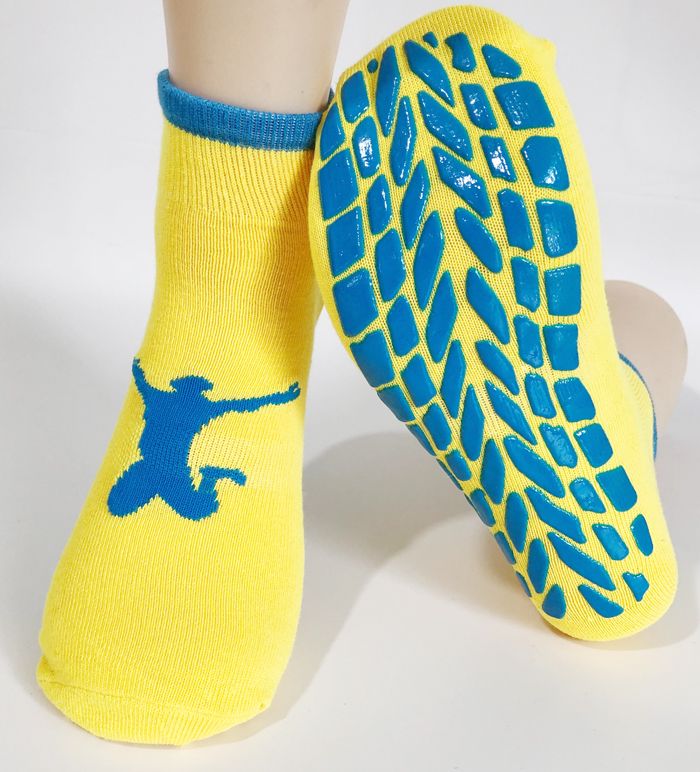
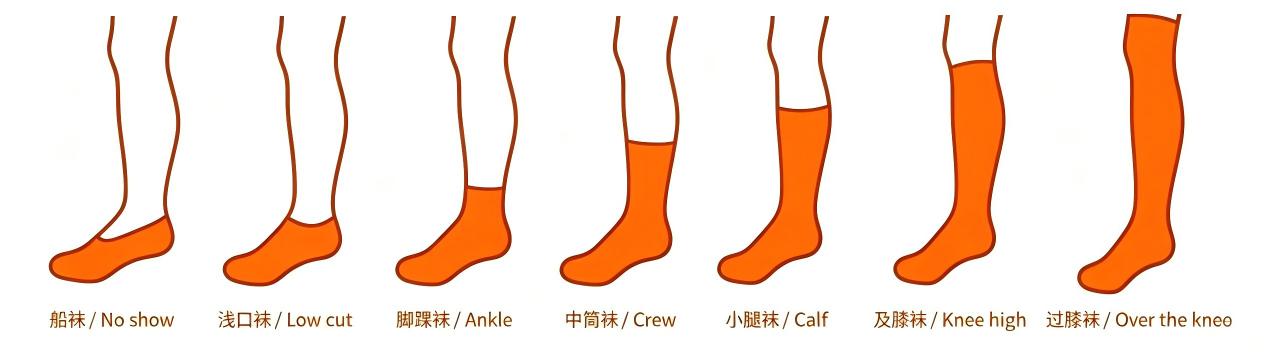
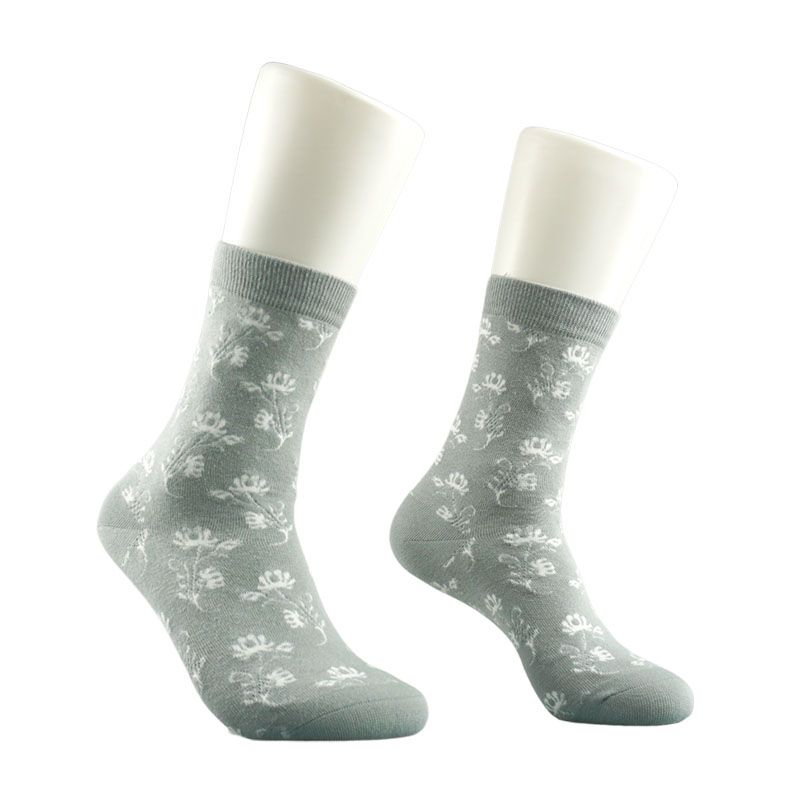
Buyers searching for custom team socks with logo usually want three things settled before they write to anyone: the specification, the minimum and the calendar. Logo placement is where most rework happens, because artwork problems are usually file problems rather than printing problems.
Short answer: for anyone searching custom team socks, MOQ starts at 300 pairs per color, sampling takes 3-7 days and bulk production takes 5-25 days. People who look this up want the specification and the commercial terms settled before asking anyone for a quote, so below I have kept it to the parameters, the cost structure and the calendar rather than product adjectives.
The single most useful thing you can do before contacting a factory is write down number technique, team colour matching and size ratio. Almost every delay traces back to that being left vague.
On this page:
- How team socks are made, step by step
- QC: the checks to ask for before the shipment leaves
- Which yarn blend actually performs
- Timeline, stage by stage
Related terms in the same decision: custom socks for teams; custom school socks; custom sports team socks.
How team socks are made, step by step
Understanding the production sequence tells you where delays and defects come from.
1. Yarn preparation. Cones are inspected and, if the programme needs it, dyed to a confirmed shade. Custom dyeing adds 7–14 days and carries a mill minimum.
2. Knitting. Socks are knitted as tubes on circular sock machines. 84N-96N coarse gauges serve terry and heavy socks, 108N-120N is the workhorse for everyday styles, 144N-168N carries fine jacquard and athletic structure, and 200N tops the range for dress socks and very fine jacquard.
3. Toe closing. There are three toe closures: standard overlock, the cheapest and the one that leaves a seam ridge; Rosso linking, which is substantially flat; and hand-linked seamless, the most comfortable and the most expensive per pair.
4. Washing and boarding. Washing removes knitting oils and sets dimensions; boarding (heat-setting on forms) gives the final shape and smoothness.
5. Inspection and pairing. Each pair is checked for defects, matched by size and shade, and paired.
6. Packing. Hang tags, polybags, inner boxes and cartons per the packing specification.
For team socks the step that most often needs extra attention is finishing — Team colour check. Full process notes: sock resource library.
Nearly every sourcing dispute traces back to a spec that was never written down. Put these on your enquiry sheet and most of the risk disappears.
| Spec | What to write | Why it matters |
|---|---|---|
| Number technique | Knitted in, embroidered or printed. | Knitted in lasts longest. |
| Team colour matching | Pantone reference plus a signed colour sample. | A wrong team colour is unsellable. |
| Size ratio | Order against a collected size list. | A wrong ratio leaves dead stock. |
Two more that buyers forget: the needle count and the toe closure. 84N-96N coarse gauges serve terry and heavy socks, 108N-120N is the workhorse for everyday styles, 144N-168N carries fine jacquard and athletic structure, and 200N tops the range for dress socks and very fine jacquard. There are three toe closures: standard overlock, the cheapest and the one that leaves a seam ridge; Rosso linking, which is substantially flat; and hand-linked seamless, the most comfortable and the most expensive per pair. Related reading: Sockmader.
QC: the checks to ask for before the shipment leaves
AQL 2.5 is the common default for apparel, and many European and US buyers additionally require zero tolerance for critical defects. AQL 4.0 suits promotional goods, and AQL 1.0 is used for high-value or medical channels. Then the product-specific checks:
| Check | Method |
|---|---|
| Number durability | Inspect knitting or pull-test embroidery. |
| Size ratio check | Count against the order sheet. |
| Colour fastness after washing | Bleeding where dark meets light. |
| Team colour check | Compare with the approval sample under D65 light. |
Ask for the inspection report before the balance payment, not after. Once the container is on the water, every remedy gets slower and more expensive. Process and test references: sock resource library.
Which yarn blend actually performs
| Blend | What it gives you |
|---|---|
| Nylon / polyester / elastane | Athletic team styles, fast drying with good recovery. |
| Cotton / nylon / elastane | Schoolwear and everyday. |
| Wool blend | Winter training. |
Beyond the blend, three things decide the outcome more than the fibre name does:
- Staple quality. Combed cotton sheds short fibres, which is why it pills noticeably less than carded.
- Elastane share. Below about 3% the cuff will not recover; above 8% the sock feels tight and costs more.
- Reinforcement yarn. Nylon in the heel and toe is the cheapest durability you can buy.
Blend choice is a positioning decision, not a technical one. Decide what the wearer should feel on day one and after thirty washes, then work backwards to the fibre mix. Cross-category comparison: custom anti-slip socks.
Timeline, stage by stage
| Stage | Duration | What happens |
|---|---|---|
| Enquiry and quotation | 1 to 3 days | spec sheet confirmed, yarn availability checked |
| Sampling | 3 to 7 days | programming, trial knitting, finishing, sample shipped |
| Sample revision | 2 to 4 days per round | each change restarts part of the loop |
| Bulk production | 5 to 25 days | knitting, closing, washing, boarding, inspection |
| Packing and export | 3 to 7 days | pairing, packing, cartons, documentation |
| Shipping | 3 to 45 days | A full sea container takes roughly 30-40 days to the US West Coast and 35-45 days to major European ports. Air freight takes 5-8 days but usually costs four to six times the sea rate per unit, and courier shipments for small trial orders arrive in 3-5 days. |
The biggest avoidable delay is a vague sample brief. Every clarification round costs three to five days. Process detail is documented under sock resource library.
FAQ
Which number technique is best?
Knitted in or embroidered for match socks; printing suits short-term event use.
What is the minimum order?
300 pairs per color, usually 100 or more where embroidery is involved.
Can we reorder mid-season?
Yes, but agree the reorder lead time and minimum quantity up front, because capacity is tight in season.
What is the fastest way to get an accurate quote?
Send a specification sheet — yarn composition, needle count, size set, construction, artwork route, quantity and packing. A quote built from that is usually within a few percent of final; a quote built from a photo is not.
Buyers comparing this usually open sock packaging options next.
Where to go from here
The short version: fix the specification, then the quantity, then the date. Everything else is negotiable; those three are not. If you want the full route, start at custom team socks and keep Sockmader open while you write your spec sheet.