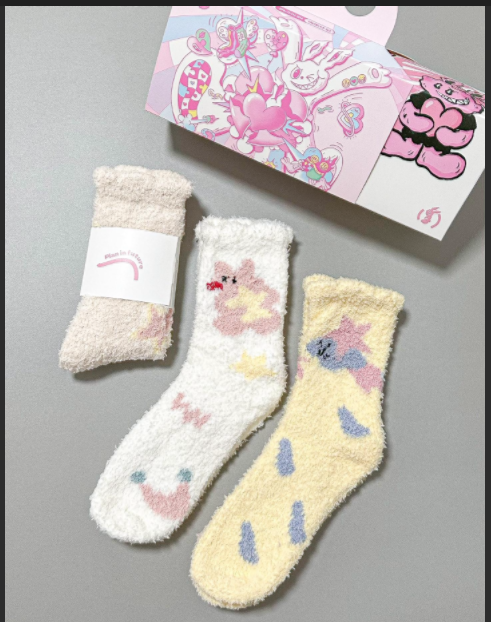
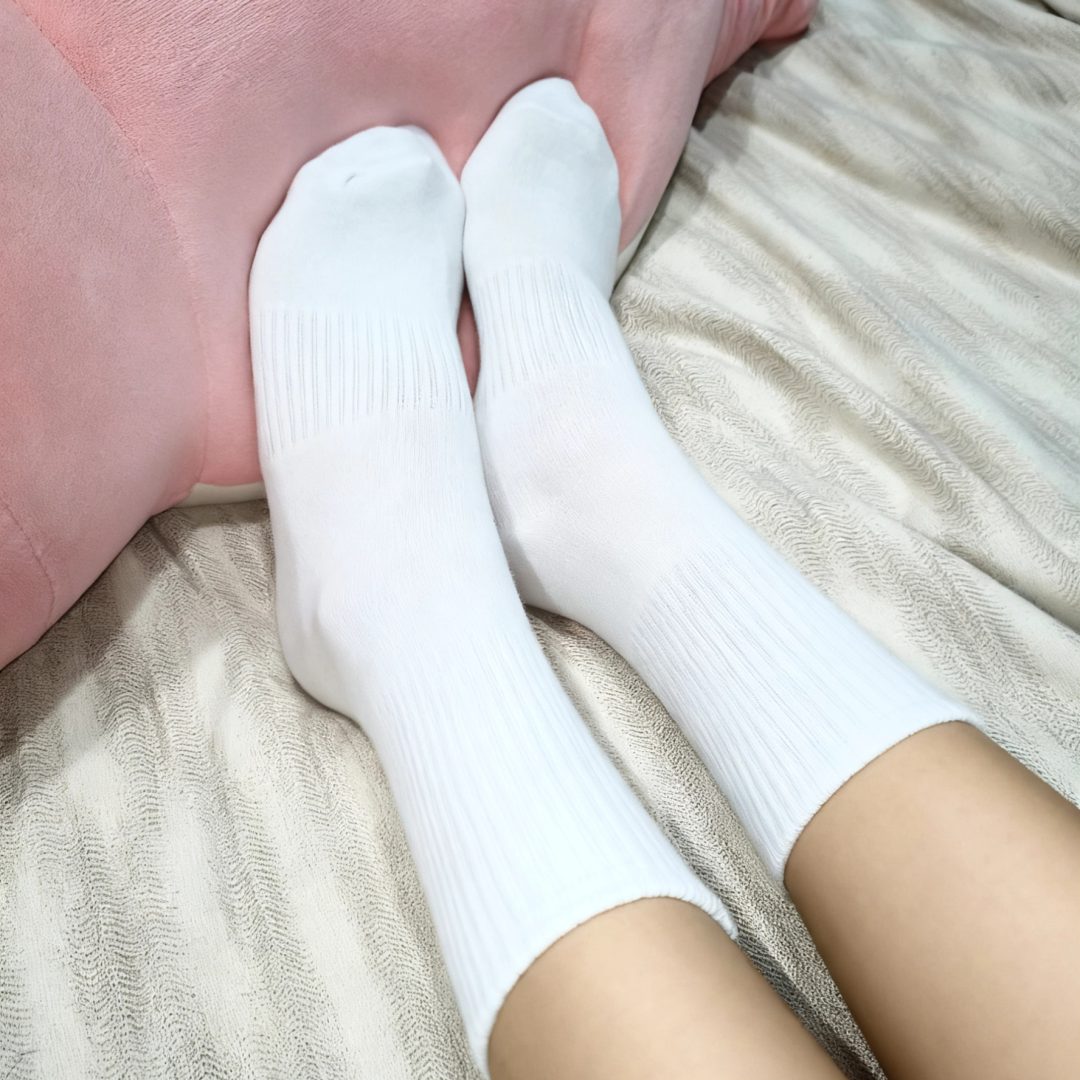
Buyers searching for fuzzy socks manufacturer for small business usually want three things settled before they write to anyone: the specification, the minimum and the calendar.
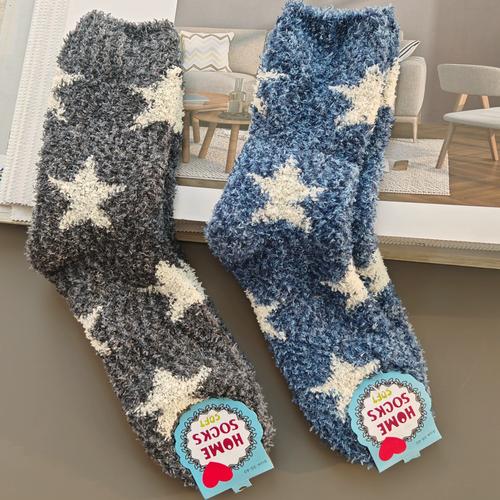
A “small first run” here means a first production order measured against a full seasonal buy, not a handful of pairs. Custom fuzzy socks start at 300 pairs per color. Samples are quoted separately.
Short answer: if you are looking for a fuzzy socks, expect a minimum of 300 pairs per color, 3-7 days to sample and 5-25 days for a bulk run once the specification is frozen. People who search this are shortlisting production partners rather than shopping for a single pair, so below I have kept it to capability, terms and the calendar rather than adjectives.
The single most useful thing to do before contacting anyone is write down pile length, shedding control and sole treatment. Almost every delay traces back to that being left vague.
On this page:
- What the price per pair is actually made of
- Which yarn blend actually performs
- Minimum order: what actually sets the number
- Timeline, stage by stage
If that is not the wording you used, these are the common alternatives: fuzzy socks wholesale; custom fuzzy socks; bulk fuzzy socks.
What the price per pair is actually made of
Prices go stale; structure does not. This is the split to negotiate against.
- Yarn, 35 to 50 percent of the total. The dominant line. Polyester microfibre, coral or sherpa fleece – The source of loft and handfeel.; Acrylic terry with brushing – Low cost and warm.; Polyester with elastane and a grip sole – The house slipper version.
- Knitting and labour, 20 to 30 percent. Set by gauge and structural complexity.
- Artwork and setup, 5 to 15 percent. Programming, screens, digitising – a fixed cost, which is exactly why small orders carry a higher unit price.
- Finishing, pairing and packing, 8 to 12 percent. Washing, boarding, pairing, tags, cartons.
- QC, overhead and margin, the remainder.
The price gap in fuzzy socks comes from fibre grade and the finishing steps. Skip pre-washing or shearing and you buy a shedding problem.
A useful rule: discounts come from amortising setup cost, not from secretly cheaper yarn. Ask which line moved. The commercial route is explained on ODM socks.
Nearly every sourcing dispute traces back to a spec that was never written down. Put these on your enquiry sheet and most of the risk disappears.
| Spec | What to write | Why it matters |
|---|---|---|
| Pile length | 3-8 mm depending on the handfeel target. | Longer sheds, shorter feels flat. |
| Shedding control | Shearing and pre-washing after brushing. | Shedding is the top complaint in this category. |
| Sole treatment | Plain sole or silicone grip dots. | Household safety. |
Two more that buyers forget: the needle count and the toe closure. 84N-96N coarse gauges serve terry and heavy socks, 108N-120N is the workhorse for everyday styles, 144N-168N carries fine jacquard and athletic structure, and 200N tops the range for dress socks and very fine jacquard. There are three toe closures: standard overlock, the cheapest and the one that leaves a seam ridge; Rosso linking, which is substantially flat; and hand-linked seamless, the most comfortable and the most expensive per pair. Related reading: custom socks from Sockmader.
Which yarn blend actually performs
| Blend | What it gives you |
|---|---|
| Polyester microfibre, coral or sherpa fleece | The source of loft and handfeel. |
| Acrylic terry with brushing | Low cost and warm. |
| Polyester with elastane and a grip sole | The house slipper version. |
Beyond the blend, three things decide the outcome more than the fibre name does:
- Staple quality. Combed cotton sheds short fibres, which is why it pills noticeably less than carded.
- Elastane share. Below about 3% the cuff will not recover; above 8% the sock feels tight and costs more.
- Reinforcement yarn. Nylon in the heel and toe is the cheapest durability you can buy.
Blend choice is a positioning decision, not a technical one. Decide what the wearer should feel on day one and after thirty washes, then work backwards to the fibre mix. Cross-category comparison: custom work socks.
Minimum order: what actually sets the number
MOQ is not a policy number a factory invents. It is the point at which machine set-up, yarn minimums and finishing labour stop losing money, and that point moves with construction.
| What changes | How MOQ moves |
|---|---|
| Number of colours in one design | each extra colourway is a separate knitting run |
| Whether yarn comes from stock or is dyed | custom dyeing carries a mill minimum per shade |
| Technique | jacquard and complex structures need longer machine programming |
| Size range | each size block is knitted and paired separately |
| Packing | retail-ready packing has its own minimum per carton |
A first order close to the minimum is a legitimate way to test quality and communication before committing volume – most programmes start there. Terms and sampling rules are set out on ODM socks.
Timeline, stage by stage
| Stage | Duration | What happens |
|---|---|---|
| Enquiry and quotation | 1 to 3 days | spec sheet confirmed, yarn availability checked |
| Sampling | 3 to 7 days | programming, trial knitting, finishing, sample shipped |
| Sample revision | 2 to 4 days per round | each change restarts part of the loop |
| Bulk production | 5 to 25 days | knitting, closing, washing, boarding, inspection |
| Packing and export | 3 to 7 days | pairing, packing, cartons, documentation |
| Shipping | 3 to 45 days | A full sea container takes roughly 30-40 days to the US West Coast and 35-45 days to major European ports. Air freight takes 5-8 days but usually costs four to six times the sea rate per unit, and courier shipments for small trial orders arrive in 3-5 days. |
The biggest avoidable delay is a vague sample brief. Every clarification round costs three to five days. Process detail is documented under yarn color options.
The numbers to put in your enquiry
Copy this block into your first email. It is the difference between a real quote and a placeholder.
| Line | Your value | Why the factory needs it |
|---|---|---|
| Yarn composition | e.g. Polyester microfibre, coral or sherpa fleece | Sets the largest single cost line |
| Gauge | 84N-108N coarse gauge with a brushing finish | Determines knitting time and machine availability |
| Sizes needed | foot length in cm plus quantities | Sizing drives grading and waste |
| Artwork route | jacquard, print or embroidery | Each route carries a different setup minimum |
| Quantity per color | including the size split | Sets the unit price you are quoted |
| Target in-stock date | a real calendar date | Lets the factory quote honestly or decline |
Two lines are most often left blank, and they are the ones that cause the most trouble: the per-colour quantity and the real in-stock date. Without the first, the MOQ is quoted as one figure and your order may not qualify; without the second, nobody can tell you the truth about capacity. Reference route: fuzzy socks.
Where this decision actually sits in the buying process
Most programmes move through the same four gates, and each one has its own failure mode.
| Gate | The decision | What usually goes wrong |
|---|---|---|
| Concept | Is fuzzy socks right for the range at all | Buyers commit before checking whether the channel wants it |
| Specification | Writing down what is actually being made | Vague briefs turn into repeated sample rounds |
| Supplier | Choosing who makes it | Comparison without a written spec is meaningless |
| Commitment | Quantities, dates, payment | Freight and lead time discover the date has already passed |
Work out which gate you are actually at before asking for anything else. Most wasted conversations happen because a buyer asks a commitment-stage question while still at the specification gate. Commercial terms start from ODM socks.
FAQ
How long is sampling?
3-7 days, plus a few days for a shedding test.
Do fuzzy socks shed?
Proper brushing, shearing and pre-washing keeps shedding acceptable. Cheap goods without the pre-wash step shed badly.
Is a non-slip sole necessary?
Strongly recommended for household use, and the wash durability of the dots should be written into the contract.
What is the fastest way to get an accurate quote?
Send a specification sheet — yarn composition, needle count, size set, construction, artwork route, quantity and packing. A quote built from that is usually within a few percent of final; a quote built from a photo is not.
Where to go from here
The short version: fix the specification, then the quantity, then the date. Everything else is negotiable; those three are not. If you want the full route, start at fuzzy socks and keep custom socks from Sockmader open while you write your spec sheet.