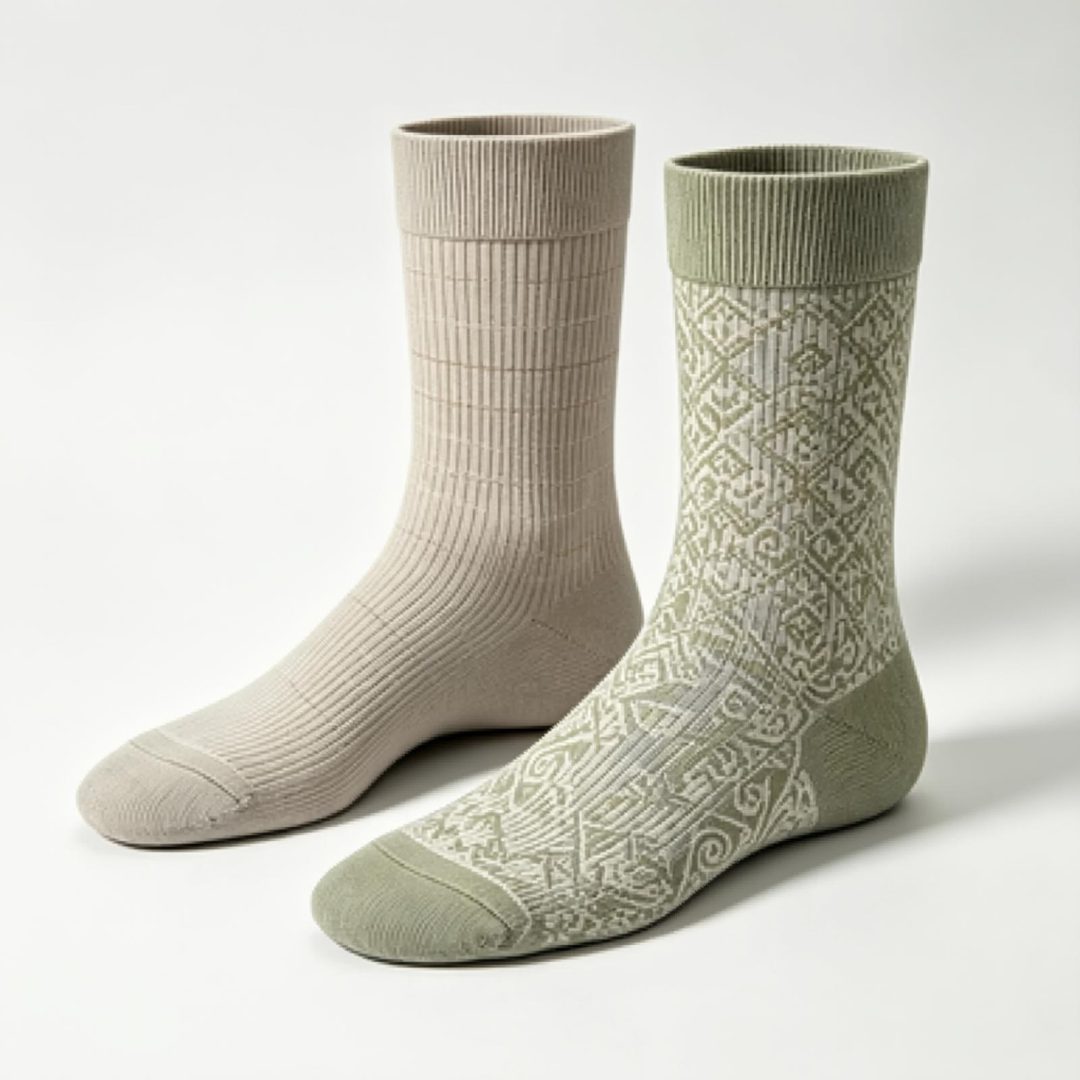
For boot and hiking socks, the yarn decides warmth, wicking and odor — the three things that matter on a long day on the trail or the site. Merino blends and synthetics each win different jobs. This guide helps spec the right one, so a buyer is not left guessing between “wool” and “synthetic” on a quote. The yarn is the first comfort decision in any boot sock, and getting it wrong is the difference between a foot that stays comfortable and one that is either soaked, stinky or cold by mid-shift.
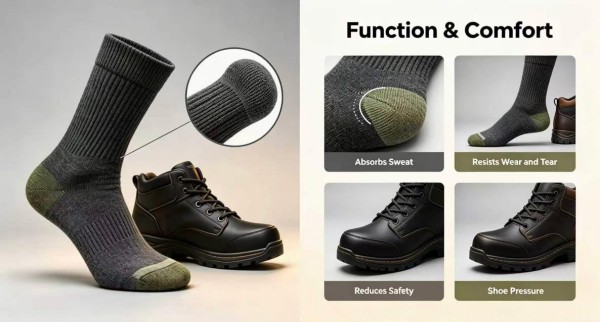
Both options are available through custom work sock range, and we can sample each one for side-by-side testing.
Merino Blends 50–65% merino plus nylon plus elastane. Merino buffers temperature (warm when cold, cool when warm), wicks moderately, and resists odor naturally — ideal for cold climates and multi-day trips where washing is rare. Cost is higher; the toe and heel stay synthetic-reinforced for wear, because pure merino alone holes fast at the abrasion points. We use merino as the comfort layer and nylon as the life layer, and the blend ratio is a deliberate spec, not a default.
Synthetics Polyester or nylon with elastane. Synthetics wick faster and dry quicker than merino, cost less, and suit hot-weather and high-sweat jobs. They odor faster, so many add a silver or charcoal finish to close the gap. Best for summer work and fast hiking where dry speed beats warmth. We reach for synthetics when the priority is “stay dry and cheap,” and for merino when the priority is “stay comfortable across a temperature swing.”
Blend Sweet Spot A 60/35/5 merino/nylon/elastane is the versatile hiking default. For industrial heat, a synthetic-only blend with a wicking finish. For extreme cold, push merino to 70% with a denser terry for insulation. The sweet spot is a ratio decision, not a brand decision — we set it by the use case and the climate, then lock it so reorders match the first batch exactly.
Durability Note Merino wears faster at the toe than nylon — so reinforcement (aramid or nylon plate) at wear zones is mandatory regardless of base yarn. The base decides comfort; the reinforcement decides life. We never ship a merino boot sock without a plated toe and heel, because the softness that makes merino nice is also what makes it vulnerable, and the plate is the only thing that lets a merino sock survive a boot.
Sourcing by Climate A practical way to spec the yarn is to start from the job site or the trail climate. Cold and wet: merino-heavy (65%) with a dense terry and a full aramid plate at toe and heel. Temperate and mixed: the 60/35/5 default, which handles most days without committing to either extreme. Hot and high-sweat: synthetic-only with a wicking finish and a lighter terry to keep dry speed up. We set the ratio against the climate the crew actually works in, because a technically excellent yarn specified for the wrong conditions is just an expensive mistake, and the wearer will blame the boot rather than the spec.
Hiking Socks Benefits picks up where this article leaves off.
FAQ
Q: Merino or synthetic for summer hiking?
A: Synthetic — wicks and dries faster; merino can feel warm and stays damp longer in heat.
Q: Does merino really resist odor?
A: Yes, naturally; synthetics need an additive finish to match, and even then merino holds the edge on multi-day use.
Q: Reinforcement needed on merino socks?
A: Yes — merino alone holes fast at the toe; plate the wear zones or the sock dies young.
CONCLUSION
Merino blends for cold and multi-day comfort; synthetics for heat and value. Either way, reinforce the wear zones — the base yarn earns comfort, the plate earns lifespan, and a boot sock needs both to do its job.
To move from plan to order, send artwork, size range and quantity through custom work socks.