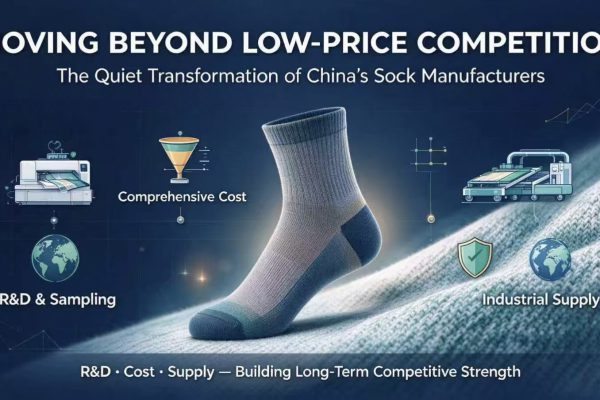
The global socks export market is undergoing a structural transformation in 2026. The old competition model that relied on basic commodity-style volume is gradually being replaced. Overseas B2B buyers are shifting their focus from price alone to product functionality, supply chain responsiveness, and compliance certifications — creating a window of opportunity for Chinese sock manufacturers willing to upgrade.
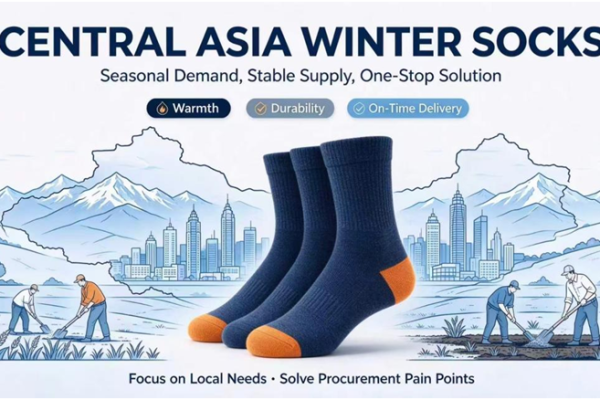
Procurement data shows a clear divergence in order structures across Europe, the Middle East, and Central Asia. European retailers and brand agents are increasing their share of functional sock purchases, with sustained growth in inquiries for compression socks, business performance socks, and recycled-material socks. The Middle East market concentrates demand on breathable antibacterial cotton socks and everyday long socks, with strict requirements for skin-friendly fabrics and wash durability — plain, minimalist designs dominate procurement lists. Meanwhile, small-to-medium batch orders continue to rise, with flexible OEM orders of several hundred to several thousand pairs growing significantly faster than traditional large orders of 100,000+ pairs. Overseas small wholesalers and independent brands have become an important buyer segment.
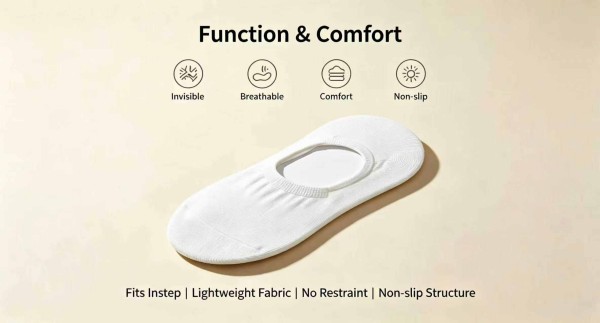
Industry research indicates that traditional low-price, homogeneous competition has compressed profit margins, leaving many factories that only produce basic cotton commodity socks struggling to win orders. In contrast, manufacturers with flexible production capabilities — capable of handling both brand annual bulk orders and small-batch rapid sampling and delivery — show noticeably stronger order stability. Buyers are no longer satisfied with simple logo printing; they now specify detailed 工艺 requirements such as seamless toe closure, terry loop zoning, arch support, and anti-slip silicone grip, driving sustained demand for full-chain OEM/ODM customization.
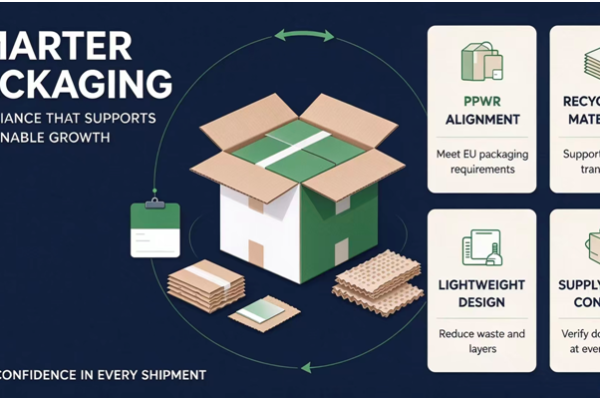
On the supply chain side, China has gradually formed a collaborative model of “Zhuji core production capacity + multi-location foreign trade companies.” Trading companies integrate factory resources to provide overseas buyers with one-stop services spanning fabric selection, pattern sampling, quality control testing, custom packaging, and export customs declaration — reducing procurement communication costs for international buyers. Industry insiders note that the survival space for pure price competition will continue to narrow. Deeply understanding target market demand, refining manufacturing capabilities, and building a complete compliance system are the core paths for sock exporters to break through.