Yoga and grip socks are a different manufacturing animal from ordinary knit socks: the grip is added after knitting, not during it. The defining feature — silicone dots on the sole — is applied in a post-knit process most general sock factories do not run, which is why a true grip sock line needs a partner with a silicone printing line in house. This article explains how grip socks are actually made, including the toe-open and hybrid variants studios love, and why the dot pattern — not the color — is what determines whether the sock performs on a mat. For a brand entering the studio market, understanding this process is what separates a sock that grips for a year from one that flakes in a month.
You will see every step below in wholesale anti-slip socks, where sampling runs before bulk production and MOQ starts at 100 pairs per design.
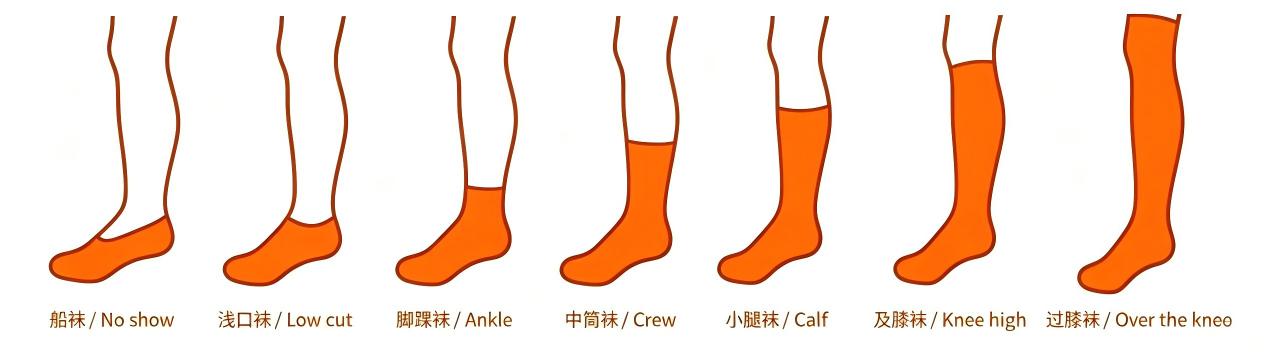
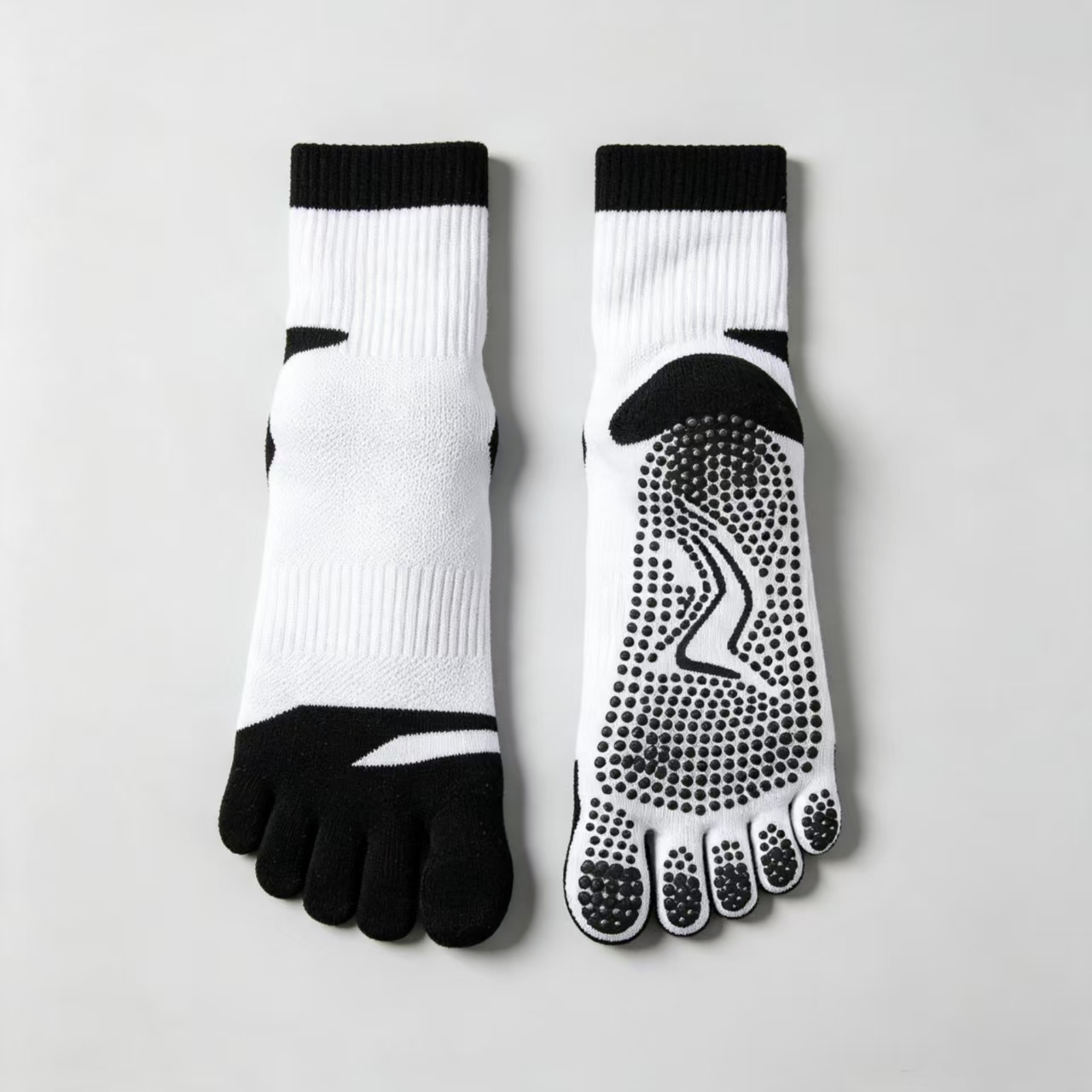
Knitting the Base The base is a lightweight circular-knit sock (cotton-modal or nylon-spandex blend) in ankle or crew length. Toe-open (five-toe or pew-open) versions require a different knit path that splits the toes or leaves the front open. Hybrid designs keep toes closed but add a grip on top of the foot for trampoline and reformer use, where the arch and instep also meet the equipment. The base knit is finer and lighter than a casual sock because the grip, not the cushion, does the work — bulk would defeat the barefoot feel practitioners want. We run the base on a finer gauge so the finished sock drapes close to the skin and the dots read flat against the floor.
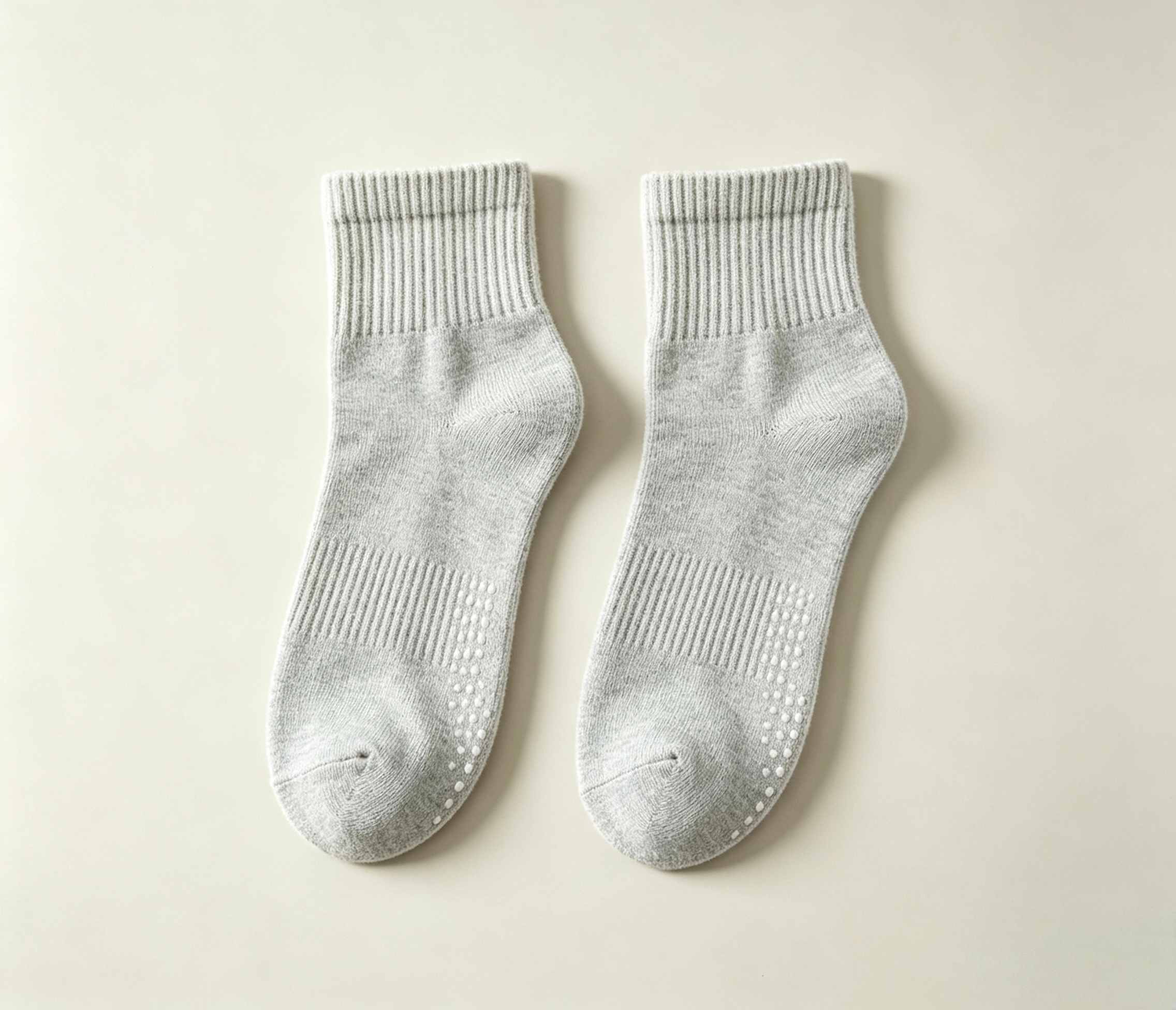
The Silicone Grip Process After knitting and boarding, dots are applied by a silicone screen-print head that deposits food-grade silicone in a programmed pattern — heel, ball-of-foot and arch zones. Dot size (2–4 mm), density and pattern are set in the print file, not guessed by hand. Random dots slip; zoned dots grip. We use a 3-zone pattern as standard because it locks the foot at the three points that actually slide on a mat. The print head is calibrated per design, and a misaligned screen is the most common defect we catch at sampling. A second cure pass at controlled temperature sets the dot so it flexes with the sole instead of sitting proud of it.
Silicone Grade and Durability Food-grade silicone is the safe, skin-contact standard. Durability depends on cure temperature and dot thickness — under-cured dots flake after 20 washes. We cure at a controlled temperature and wash-test 30 cycles before approving a grip formula. Cheap lines use a soft PVC that yellows and cracks, and because PVC is not skin-safe for prolonged contact, it is the wrong choice for a product worn against bare skin for an hour at a time. The difference is invisible at first wear but decisive by month two, which is why we never substitute PVC to cut cost on a grip line. A documented wash-test result travels with every grip order we ship.
Toe-Open vs Closed Toe-open (five-toe) gives a barefoot feel and is popular in hot yoga; it costs more because the toe knit path is more complex and slower. Closed-toe is cheaper and works for Pilates and general studio use. Hybrid (grip on top plus bottom) serves trampoline and rebounder users who need stability on both surfaces. The toe style changes the knit path and the MOQ, so a brand should pick the style by its core user, not by which looks novel — a five-toe sock sold to Pilates beginners confuses more than it helps, and the extra cost erodes margin on a volume SKU.
MOQ and Sampling Grip socks: MOQ ~100 pairs per design (the silicone screen adds setup). Always sample for dot adhesion — a dot-pull test confirms the grip will not flake. We supply a washed sample, not just a fresh one, because a dot that holds on day one but flakes at wash 15 is the failure mode that generates returns and bad reviews. Sampling the actual screen before bulk is non-negotiable on a grip line, and we recommend approving both a fresh and a 30-wash sample so the buyer feels the grip at the point of sale and at the point of failure.
We handle the adjacent decision in Grip Socks Size Chart.
FAQ
Q: Silicone or PVC grips?
A: Food-grade silicone — durable and skin-safe; PVC yellows and cracks, and it is not a skin-safe choice for prolonged contact.
Q: Toe-open worth the cost?
A: For hot yoga and barefoot-feel buyers, yes; otherwise closed-toe is fine and cheaper to produce.
Q: How long do grips last?
A: Quality silicone survives 30+ washes; cheap PVC fails by 20 and looks bad doing it.
CONCLUSION
Grip socks are knit socks plus a zoned silicone sole. Specify food-grade silicone, a 3-zone dot pattern and the right toe style, and the sock grips through hundreds of sessions instead of flaking after a month — which is what keeps studio customers coming back and reordering.
When you are ready to produce, Sockmader’s custom sock manufacturing team covers sampling, MOQ and lead times in one place.
Start your next order with custom anti-slip socks from Sockmader — send artwork, size range and target quantity for a quote.