Halloween is now the second-largest seasonal spending event in many Western markets, and Halloween socks have grown from a niche novelty into a legitimate seasonal category with dedicated design programs. The product itself sits at the playful end of hosiery manufacturing: glow-in-the-dark prints, 3D eyeballs, spider-web lace, and motifs from cute to genuinely spooky. Behind the fun, however, is a demanding production calendar and a set of specialized techniques worth understanding before you place an order.

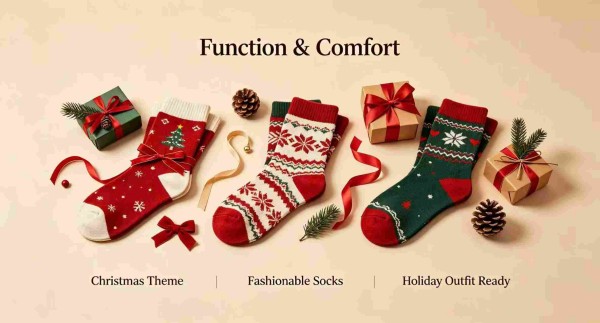
You will see every step below in wholesale Christmas socks, where sampling runs before bulk production and MOQ starts at 100 pairs per design.
Seasonal Timing: The First Manufacturing Decision
Halloween production shares the same compressed logic as Christmas, shifted earlier: goods must land on shelves by early September, meaning orders are confirmed by April–May and produced through summer. Because Halloween demand is more concentrated and less predictable than Christmas, experienced buyers order slightly deeper on hero designs and keep the assortment tighter — novelty categories punish over-assortment.
Jacquard Knitting for Classic Motifs
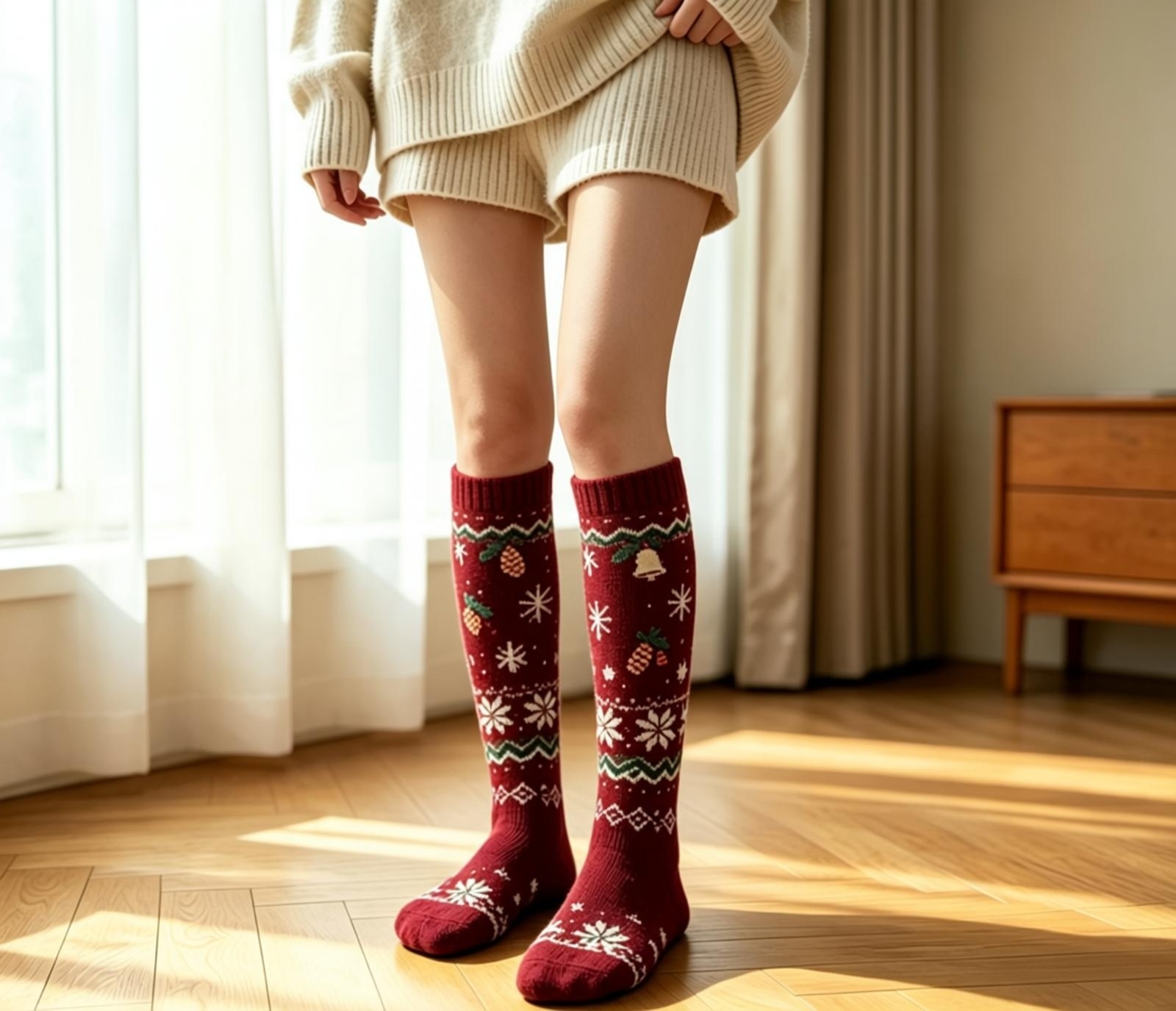
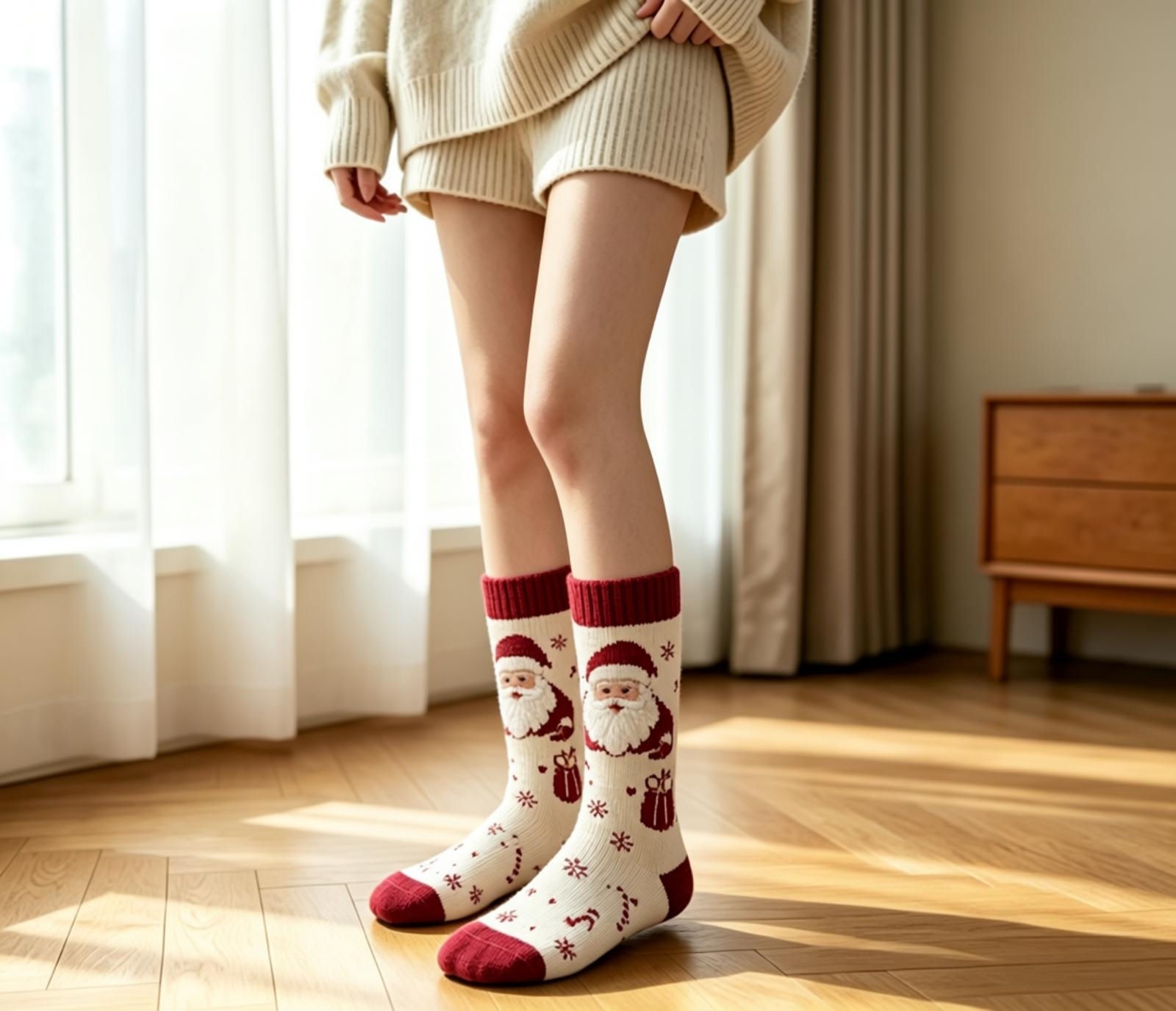
The backbone of the category is computerized jacquard knitting: pumpkins, ghosts, skeletons, bats and spider webs knitted into the fabric in orange, black, purple and glow-green. Jacquard motifs survive washing and wearing far better than prints, which matters for a product often worn through a full evening of parties. Design files are digitized from your artwork, and repeat designs reproduce exactly across every pair — the standard for quality seasonal programs.
Glow-in-the-Dark: The Category’s Signature Technique
Glow-in-the-dark effects are achieved two ways: printing phosphorescent ink onto the knit surface, or knitting with phosphorescent yarn for premium durability. Printed glow is cheaper but fades over washes; glow yarn integrates into the jacquard and lasts the life of the sock. Since “does it actually glow?” is the most common customer question in this category, honest brands test glow performance in their QC process — brightness and duration after light exposure — before shipping.
3D and Novelty Elements
The fun escalates with embellishments: appliqué felt pieces, pom “spider eggs,” dangling charms, attached bows and ribbons, and silicon molded elements like eyeballs or skulls. These are semi-manual operations that add both charm and lead time — embellishment capacity is the bottleneck in peak seasonal production, so factories with in-house embellishment lines deliver far more consistently than those outsourcing handwork. Attachment strength is a specific QC checkpoint: nothing that can be pulled off by a child belongs on a product that kids wear to parties.
Specialty Constructions
The category also uses structural novelty: mesh “spider web” lace panels, cut-out effects, toe-sock and knee-high silhouettes, and even light-up elements with small LED modules for premium costume pairings. Each specialty construction has its own failure modes (mesh snagging, LED washability), so sample testing must match how the product will actually be worn and washed.
Dyeing, Washing, and Quality Control
Deep orange and black dye lots demand strict colorfastness testing — orange bleed onto white glow motifs is the classic seasonal defect. QC also checks motif alignment between pairs, glow performance, embellishment attachment, and cuff elasticity. Packaging leans playful and retail-ready: header cards with Halloween artwork, party multipacks, and costume-counter counter displays.
We handle the adjacent decision in Christmas Socks Size Chart.
FAQ
Q: When should Halloween sock orders be placed?
A: Confirm designs by April–May for sea-freight delivery to shelves by early September; later orders depend on air freight or stock programs.
Q: Is glow-in-the-dark yarn safe and durable?
A: Certified phosphorescent yarns are skin-safe and survive washing far better than printed glow inks — the premium option for repeat-wear products.
Q: Can Halloween designs be mixed in one production order?
A: Yes, most factories allow design mixing against total order quantity, typically 500–1,000 pairs minimum per design.
CONCLUSION
Halloween socks are a creativity category with a hard calendar. Suppliers who combine jacquard capability, in-house embellishment, and honest glow-in-the-dark performance testing will make your seasonal program; those who miss any of the three will make your markdown bin. Order early, test the glow, and let the spookiness sell itself.
Ready to price this out? Start with a sample from Sockmader’s custom sock manufacturing team, or send your artwork and target quantity for a quote.
If you are planning your own line, our custom christmas socks program covers sampling, MOQ and lead times in one place.