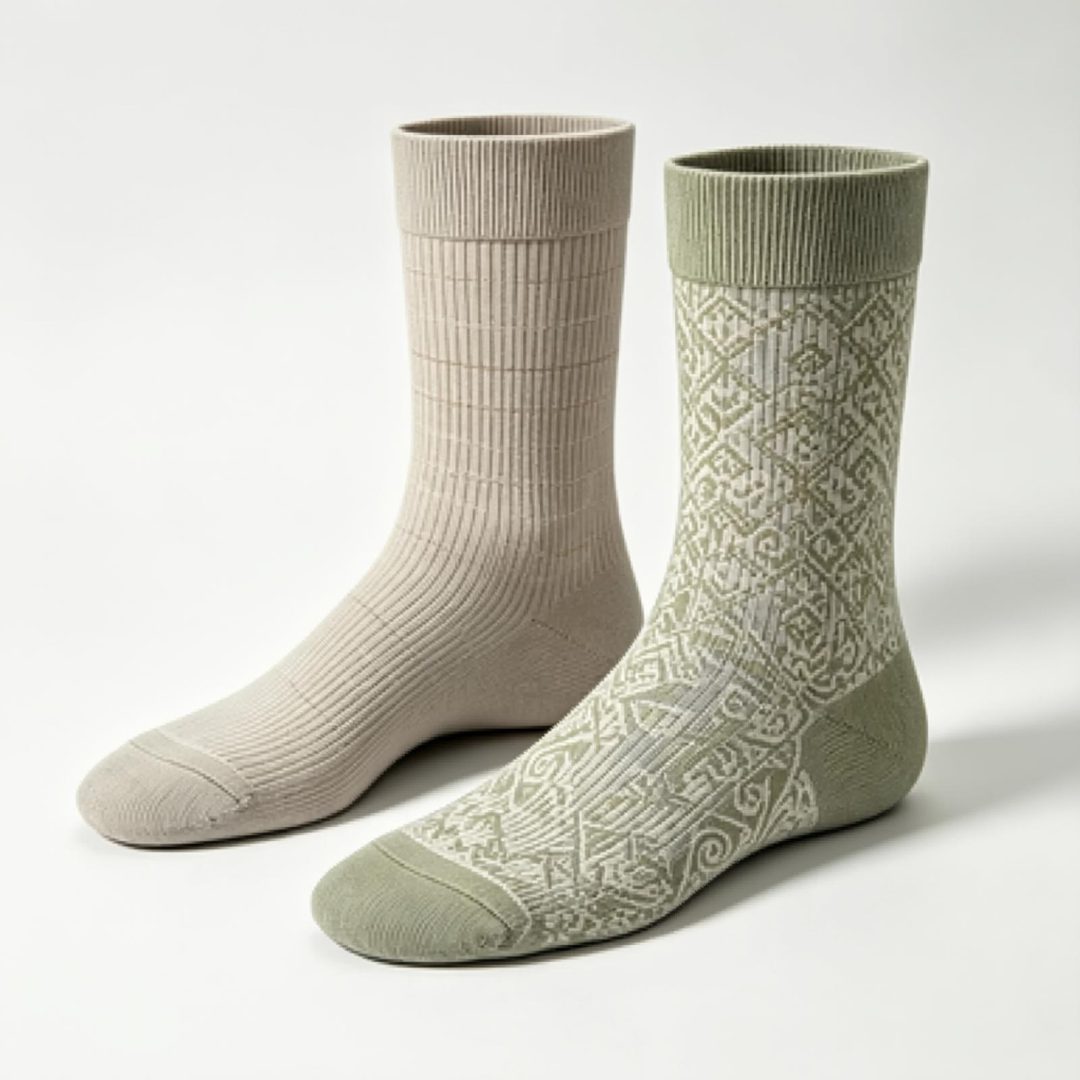
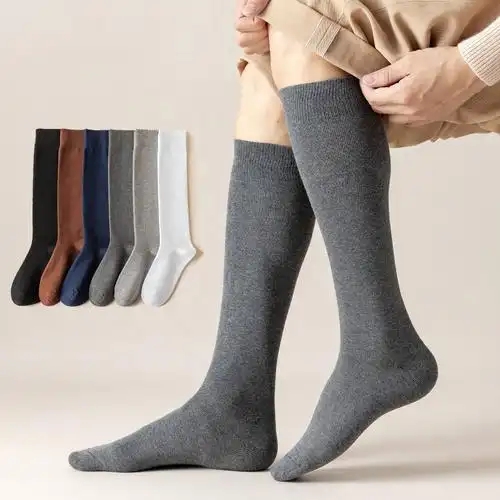
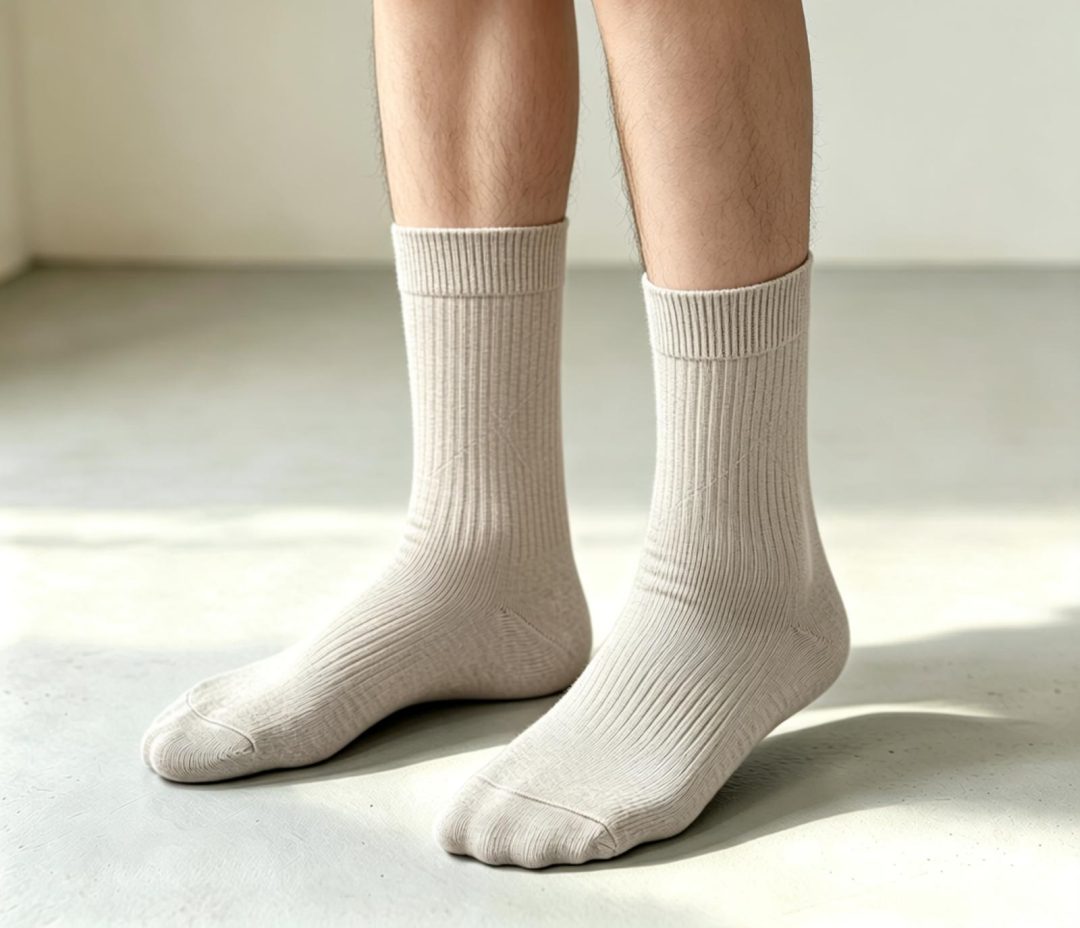
Dress socks are the opposite engineering problem from athletic socks. Where a sport sock adds cushioning and grip, a dress sock removes bulk to disappear inside a leather shoe while still breathing and looking refined. The defining technology is fine-gauge knitting. Here is how a dress sock is actually made, from yarn to finished pair, and why two socks that look alike on a shelf can feel worlds apart when worn with a suit. For a brand building a formal line, understanding the gauge and finish is the difference between “cheap” and “sharp” in the customer’s eye.
You will see every step below in custom dress socks, where sampling runs before bulk production and MOQ starts at 50 pairs per design.
Fine-Gauge Machines Dress socks run on 168–220 needle cylinders — far finer than the 96–144 used for casual socks. More needles per inch means a tighter, thinner, smoother fabric with no visible knit texture. The “gauge” number (e.g., 168N, 200N) is a selling point buyers should ask for: higher gauge = finer hand. Below 144N, the sock looks like a casual sock and fails the formal test. We recommend 168N as the entry for a credible dress line and 200N for a premium sheer hand that reads as luxury.
The Yarn: Combed Cotton and Long-Staple Merino Combed cotton (removed short fibers) gives a smooth, low-pill surface and a soft hand — the standard for dress socks. Merino (19.5 micron or finer) adds temperature buffering and natural odor resistance for premium lines. Both are spun to a fine count; coarse yarn can’t achieve the sheer formal look. Elastane (3–5%) is added only at the cuff and arch so the leg stays up without a tight band cutting circulation during a long seated meeting. Pure synthetic dress socks look shiny and cheap, so we avoid high-polyester content.
Smooth Toe and Minimal Seam A dress shoe is unforgiving about toe ridges. Premium dress socks use a linked (rosso) toe for a flat interior; budget lines use a fine flat seam. There is no cushioning in the foot — any loop would show as a bump through polished leather. The linked toe also removes the only interior seam a wearer feels, which is why it is the first thing a quality-conscious buyer checks.
Length and Patterns Dress socks are crew to mid-calf so they never show skin when crossing legs. The toe is closed with a linked (rosso) seam or a fully knit toe to avoid a ridge inside a tightly laced boot. A poorly linked toe is the #1 comfort complaint we see in returns. The cuff uses a taller, tighter rib with a silicone-free comfort band — silicone can shred in a boot dryer, so premium lines avoid it.
Finishing After knitting and toe-closing, dress socks are boarded on a low-heat steel form to set the smooth shape, then paired by shade. Shade matching matters more here than in athletic socks because a slight color drift shows in a stack of charcoals. We run a ±0.5 DE shade tolerance and keep a master chip so reorders match year to year — the thing that quietly makes or breaks a corporate gifting program.
We go deeper on Dress Socks Buying Guide in a separate guide.
FAQ
Q: What gauge is “fine” enough for dress? A: 168N minimum for a credible formal hand; 200N for a truly sheer premium feel. Below 144N the sock reads as casual.
Q: Combed cotton or merino for dress socks? A: Combed cotton for everyday formal; merino for travel and odor-sensitive wearers who pay a premium. Both must be fine-count spun.
Q: Why no cushion in dress socks? A: Cushion shows as a bump through leather and defeats the formal silhouette; the shoe provides comfort, the sock provides a smooth line.
CONCLUSION
A dress sock is defined by gauge and yarn, not features. Specify 168N+, combed cotton or fine merino, a linked toe and crew length, and the sock does its only job: looking sharp while disappearing — which is exactly what a formal line must deliver to earn the reorder.
When you are ready to produce, Sockmader covers sampling, MOQ and lead times in one place.
Start your next order with custom dress socks from Sockmader — send artwork, size range and target quantity for a quote.