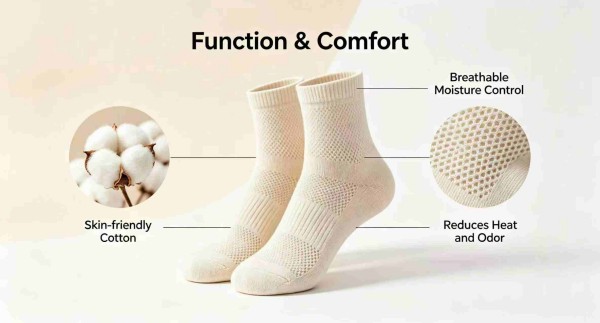
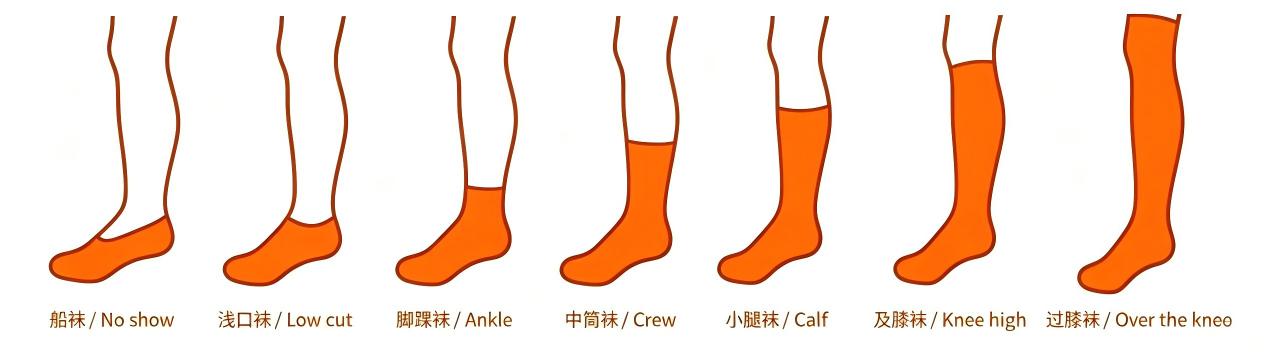
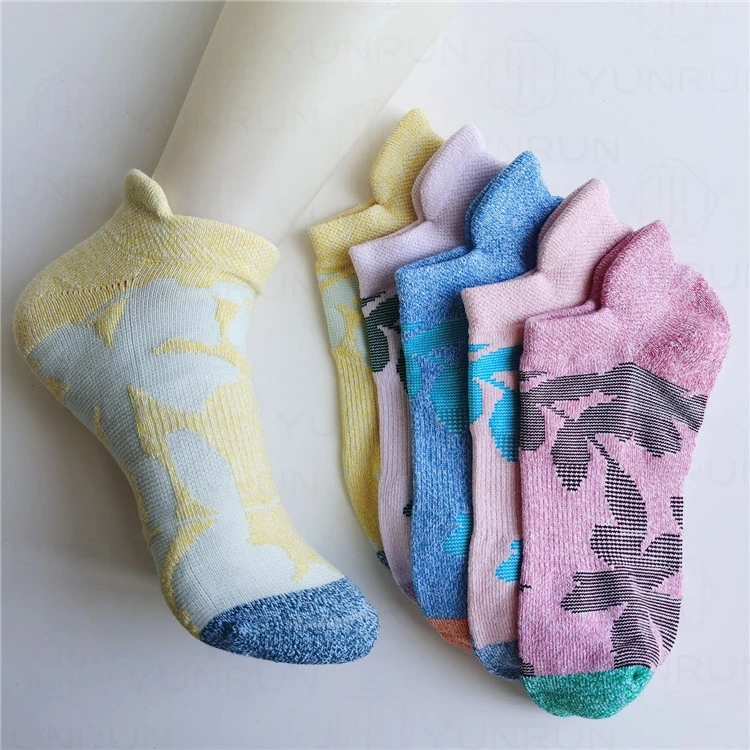
Cotton socks are the easiest category to buy badly, because they all look alike in a sample pack and they differ enormously in how they perform. Two socks can be identical in colour and shape, and one will still be soft after fifty washes while the other pills, sags and holes. The difference is in specifications that are invisible in a photograph: yarn count, staple length, blend ratio and knit construction. Knowing which numbers matter turns this from a guessing game into a straightforward purchase.
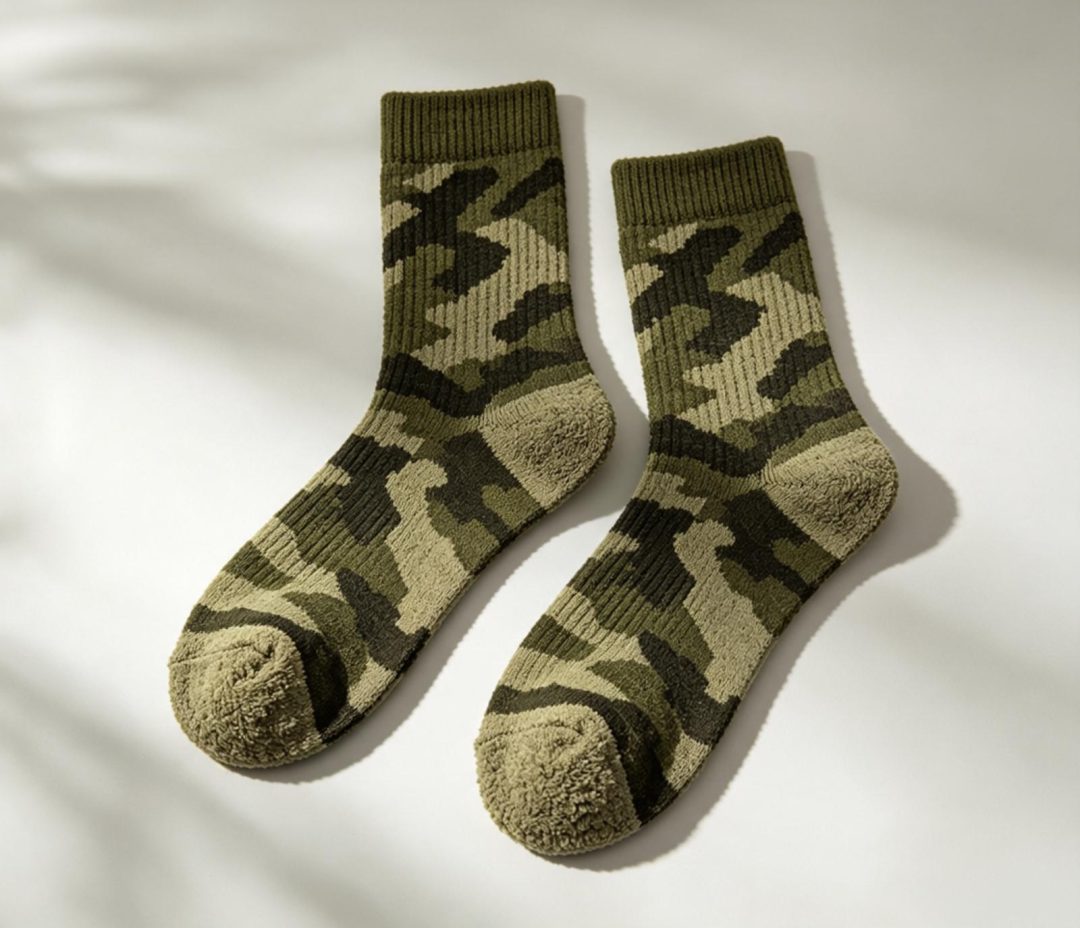
Production-ready specifications for all of the above are handled through wholesale cotton socks.
Yarn Count and Staple Length Cotton yarn is graded by count — higher numbers mean finer yarn. A 20s or 30s yarn produces a heavy, casual sock; 40s to 60s produces a finer, smoother one suitable for dress or premium casual. Staple length matters just as much: long-staple cotton, and especially combed cotton where short fibres are removed, produces a smoother yarn that resists pilling. Ask for both numbers. “Combed cotton 40s” tells you far more than “premium cotton.”
Blend Ratio Pure cotton socks are a poor product: cotton has no elasticity, so the sock loses shape, and it has poor abrasion resistance, so the heel wears through. A working cotton sock is a blend. The common formulation is 75 to 85 per cent cotton, 12 to 22 per cent polyamide or polyester for strength, and 2 to 5 per cent elastane for shape retention. Higher cotton content feels better initially and wears worse. For a durable everyday sock, do not go above about 85 per cent cotton.
Knit Type: Combed, Terry or Ribbed Combed plain knit is the everyday default — smooth, light, breathable. Terry or terrycloth has loops on the inside, adding cushioning and warmth, which suits winter, sports and children’s ranges. Ribbed knit adds elasticity and texture and stays up well. Each has a legitimate place, and the choice should follow the use case rather than the season’s fashion.
Weight and Season Sock weight is measured in grams per square metre of fabric, or more practically in grams per pair. A light summer sock might be 25 to 35 grams; a standard crew 40 to 55; a heavy terry sock 70 or more. Match weight to climate and shoe: a heavy sock in a slim leather shoe changes the fit, and a light sock in a winter boot provides no insulation.
Construction Details Worth Paying For Three details predict satisfaction better than any other spec. A linked or hand-closed toe seam, which sits flat rather than ridged across the toes. A reinforced heel, usually with plated nylon, which is the difference between months and years of life. And a properly graduated rib cuff that stays up without leaving a mark. All three cost little and all three appear in reviews.
Packaging and Presentation Cotton socks compete on shelf and screen, where packaging does more work than the fibre does. Kraft bands, recyclable boxes and printed sleeves all raise perceived value at a fraction of the cost of upgrading yarn. If the budget allows one upgrade at the end of the process, spend it here rather than on a marginally finer cotton.
We handle the adjacent decision in Best Material for Cotton Socks.
FAQ
Q: What is the best blend for an everyday cotton sock? A: Around 80 per cent combed cotton, 17 per cent polyamide and 3 per cent elastane — soft, durable and shape-stable.
Q: Does higher cotton content mean better quality? A: Not necessarily. Above about 85 per cent, socks lose shape and wear through faster.
Q: Combed or carded cotton? A: Combed, always, for anything above commodity grade. It removes the short fibres that cause pilling.
Q: How do I know if a sample will last? A: Wash it ten times and inspect the heel, the cuff elasticity and the surface for pilling.
CONCLUSION
Choosing cotton socks means reading the numbers: yarn count and staple for softness, blend ratio for durability, knit type and weight for use case, and three construction details — linked toe, reinforced heel, graduated cuff — that predict satisfaction. Get those right and put the remaining budget into packaging. The sock will perform, and it will look like what it costs.
Ready to price this out? Start with a sample from Sockmader’s custom sock manufacturing team, or send your artwork and target quantity for a quote.
If you are planning your own line, our custom cotton socks program covers sampling, MOQ and lead times in one place.