The no-show sock exists to resolve a contradiction. Bare feet in shoes are uncomfortable, unhygienic and destructive to the shoe — but socks with visible boat shoes look wrong. The no-show sock cuts the fabric down until it disappears below the shoe’s topline, delivering the barefoot look while keeping a barrier between foot and leather. Its benefits are real, but they depend entirely on one piece of engineering: if the sock slides off the heel, none of them matter.
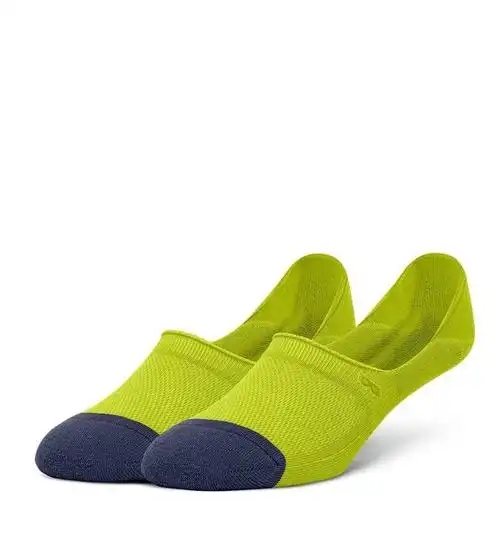
You get these same benefits through custom no-show sock range, with yarn and construction tuned to your target price point.
The Barefoot Look Without Barefoot Problems Wearing shoes without socks means sweat goes directly into the footbed, where it darkens leather, breaks down adhesives and produces odour that no amount of airing removes. It also means blisters, because bare skin rubs against a seam or a stiff heel counter. A no-show sock absorbs that sweat, protects the heel from friction, and is invisible from the side. The shoe looks the way it was designed to look, and the inside of it lasts years longer.
Reduced Heat and Bulk A no-show sock covers the sole, the toes and the heel, and very little else. In summer that means less insulation than any other length, and less fabric gathering under the arch. Inside a snug-fitting shoe — a loafer, a driving shoe, a slim trainer — that reduced bulk matters, because a thicker sock changes how the shoe fits and can make a correctly sized pair feel tight.
Hygiene and Shoe Longevity This is the benefit most buyers underestimate. Shoe linings are not designed to be washed. Once sweat, skin oils and bacteria soak into a footbed, the shoe is compromised permanently. A washable sock takes all of that instead, and costs a fraction of the shoe. For anyone rotating leather shoes daily, no-shows are not a fashion choice — they are maintenance.
The Heel Grip Is the Product Everything above falls apart if the sock slides. A no-show has almost no shaft to hold it up, so it relies on a silicone grip applied inside the heel, plus a shaped heel pocket and often an elasticated arch band. The grip is the single specification that separates a no-show sock that works from one that ends up bunched under the arch by mid-morning. When evaluating samples, put the sock on, walk on a hard floor for ten minutes, and check where the heel sits.
Where They Do Not Work No-show socks are the wrong choice for boots, high-tops, cold weather, and any shoe whose collar rubs. A shoe with a stiff or high heel counter will chafe the bare Achilles that a no-show leaves exposed. They are also a poor choice for people who walk long distances daily, where the extra coverage of an ankle sock prevents rubbing at the collar.
Ankle Socks Design Ideas picks up where this article leaves off.
FAQ
Q: Do no-show socks stay on? A: With a silicone heel grip and a shaped pocket, yes. Without one, reliably no.
Q: Will they show with loafers? A: A correctly cut no-show sits below the topline. Check the specific shoe, since collars vary.
Q: Are they suitable for sport? A: Not usually. They lack the coverage to prevent collar rubbing during running or court sports.
Q: How do you wash them without killing the grip? A: Cool wash, low tumble, and no fabric softener — softener leaves a film that kills the silicone.
CONCLUSION
The no-show sock’s benefits are straightforward: a barefoot look, a washable barrier that protects expensive shoes, and less heat than any other length. All of it rests on the heel grip. Specify silicone coverage, a shaped pocket and an arch band, test by walking rather than by looking, and the sock delivers everything it promises. Skip that step and you have an expensive drawer of disappointments.
To move from plan to order, send artwork, size range and quantity through Sockmader’s custom no-show socks team.