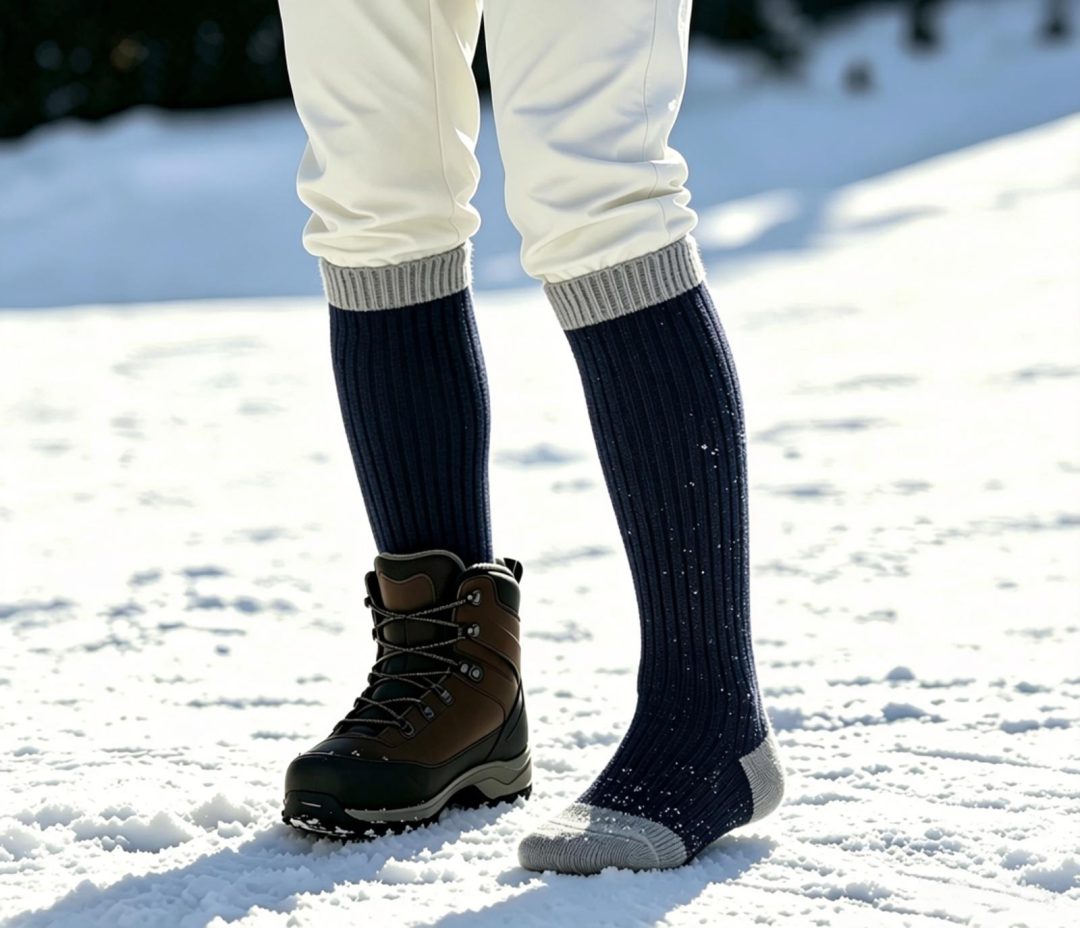
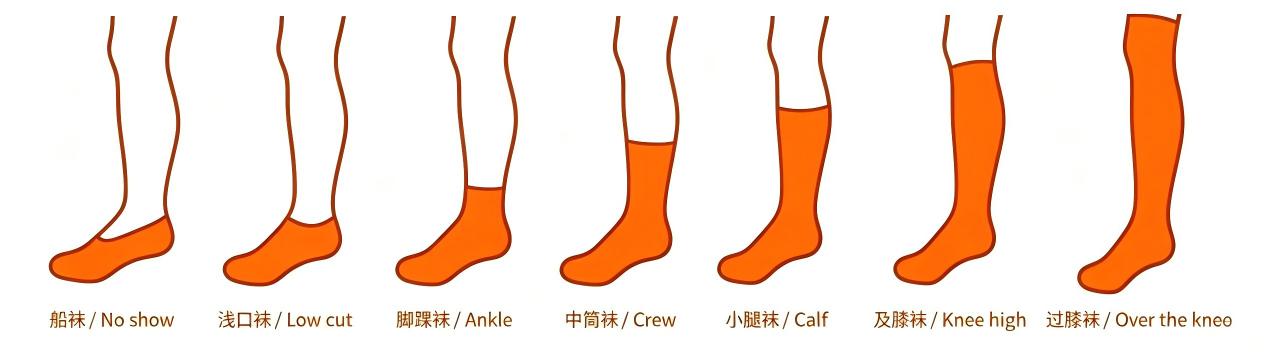
Every thigh-high sock fails in the same way: it slides down. Everything else — the colour, the yarn, the pattern, the price — is secondary to whether the sock stays where it is supposed to be. That single failure mode is the reason the category has a reputation problem and the reason a properly specified thigh-high costs more than a knee-high. Buying well means understanding the stay-up mechanism first and treating everything else as refinement.
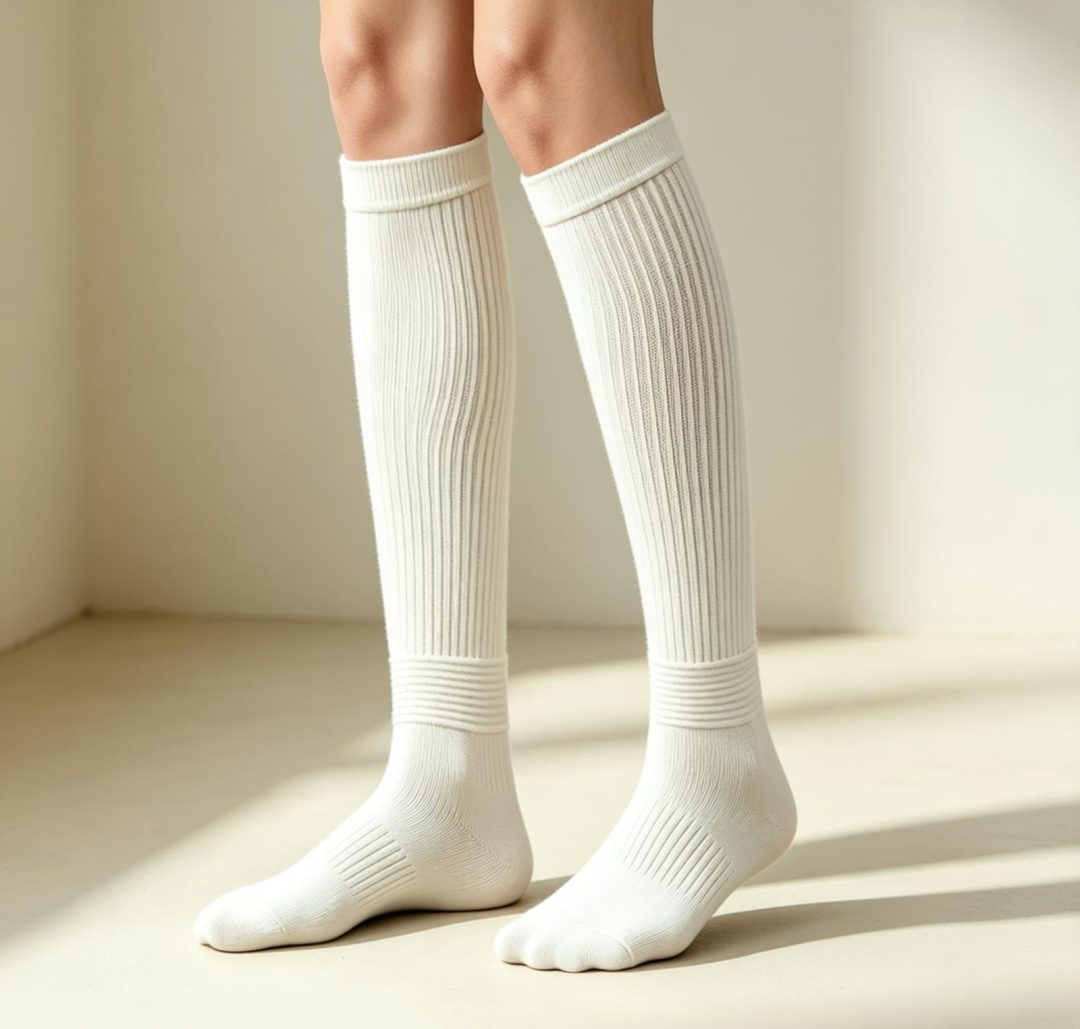
Every specification in this guide is adjustable through custom knee-high socks, from yarn and gauge to cushioning and packaging.
Stay-Up Mechanisms Three approaches dominate. A silicone band applied to the inside of the top edge is the most effective and the most common — a strip of medical-grade silicone, printed or injected and cured, which grips the skin. Graduated compression in the knit itself provides lift without silicone and is more comfortable for long wear, but it holds less firmly. Elasticated lace tops are traditional and decorative, and they work best when combined with one of the other two. For most commercial ranges, a silicone band plus a graduated rib is the reliable combination.
Sizing by Thigh, Not Shoe Thigh-high socks are sized by thigh circumference and by length from foot to the desired finish. Shoe size determines the foot section but is the lesser of the two measurements. A sock sized only on height will either cut in at the thigh or slide down it, and this is the most common specification error in the category. Ask for a size chart with both measurements and, for any bulk order, collect actual thigh measurements rather than assuming a standard split.
Yarn and Construction Nylon and elastane blends dominate because they provide the recovery a thigh-high needs — typically 85 to 92 per cent nylon with 8 to 15 per cent elastane. Cotton-rich thigh-highs exist for fashion but lack the recovery and will sag. Merino blends appear for warmth. Opaque knits are more forgiving than sheer ones, because a sheer fabric shows every irregularity in tension. Denier matters: 40 to 80 denier for sheers, and a heavier knit for opaque winter styles.
Use Cases and Their Requirements Fashion and everyday wear want appearance and comfort, with a silicone band that does not leave a lasting mark. Uniform and costume use want consistency and durability across a size run. Medical and therapeutic use requires graduated compression with documented pressure values — a different product entirely, and one that should be specified against a standard rather than bought as hosiery. Bridal and occasion wear wants fine denier and a band that will not slip during a long day.
Comfort Details That Matter A silicone band that is too tight leaves a red ring and can restrict circulation; too loose and the sock fails. The width of the band matters as much as its grip — wider distributes pressure better. The toe should be reinforced if the sock is worn with shoes. And the foot section should be shaped rather than a simple tube, or it will twist around the ankle during wear.
Care and Longevity Silicone bands degrade with heat and with fabric softener. Cool wash, low or no tumble drying, and no softener will extend the life of the grip substantially. Even with good care, the band is the first component to fail — typically after 30 to 60 wears — so this is a replacement-purchase category rather than a durable one, which is commercially useful to know.
We go deeper on Knee-High Socks Size Chart in a separate guide.
FAQ
Q: Why do thigh-highs slide down? A: Usually insufficient silicone grip, a band that is too narrow, or a sock sized on height rather than thigh circumference.
Q: Silicone band or compression? A: Silicone holds better; graduated compression is more comfortable for all-day wear. Many products use both.
Q: How do I size them? A: By thigh circumference first, then by length from foot to the desired finish.
Q: How long does the grip last? A: Typically 30 to 60 wears. Cool washing and no fabric softener extend it considerably.
CONCLUSION
Buying thigh-high socks comes down to one question: will they stay up? Answer it by specifying a silicone band with adequate width, sizing on thigh circumference rather than height, and choosing a yarn with enough elastane to recover. Then check the comfort details — reinforced toe, shaped foot, a band that grips without cutting. Do that and the sock does the one thing the category is judged on.
To move from plan to order, send artwork, size range and quantity through Sockmader.
When you are ready to source, the Sockmader custom knee-high socks team can quote sampling, MOQ and lead times for your quantity.