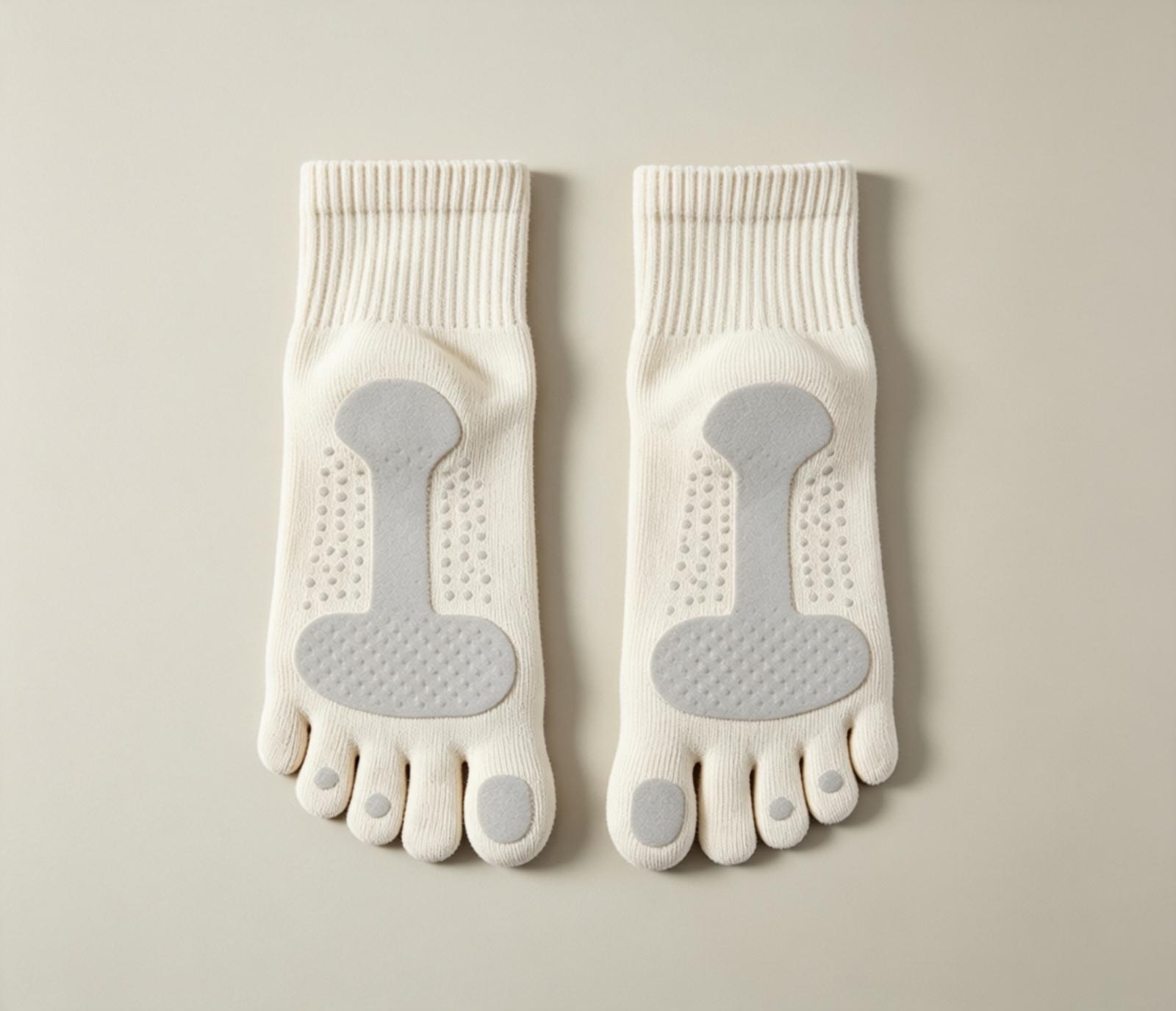
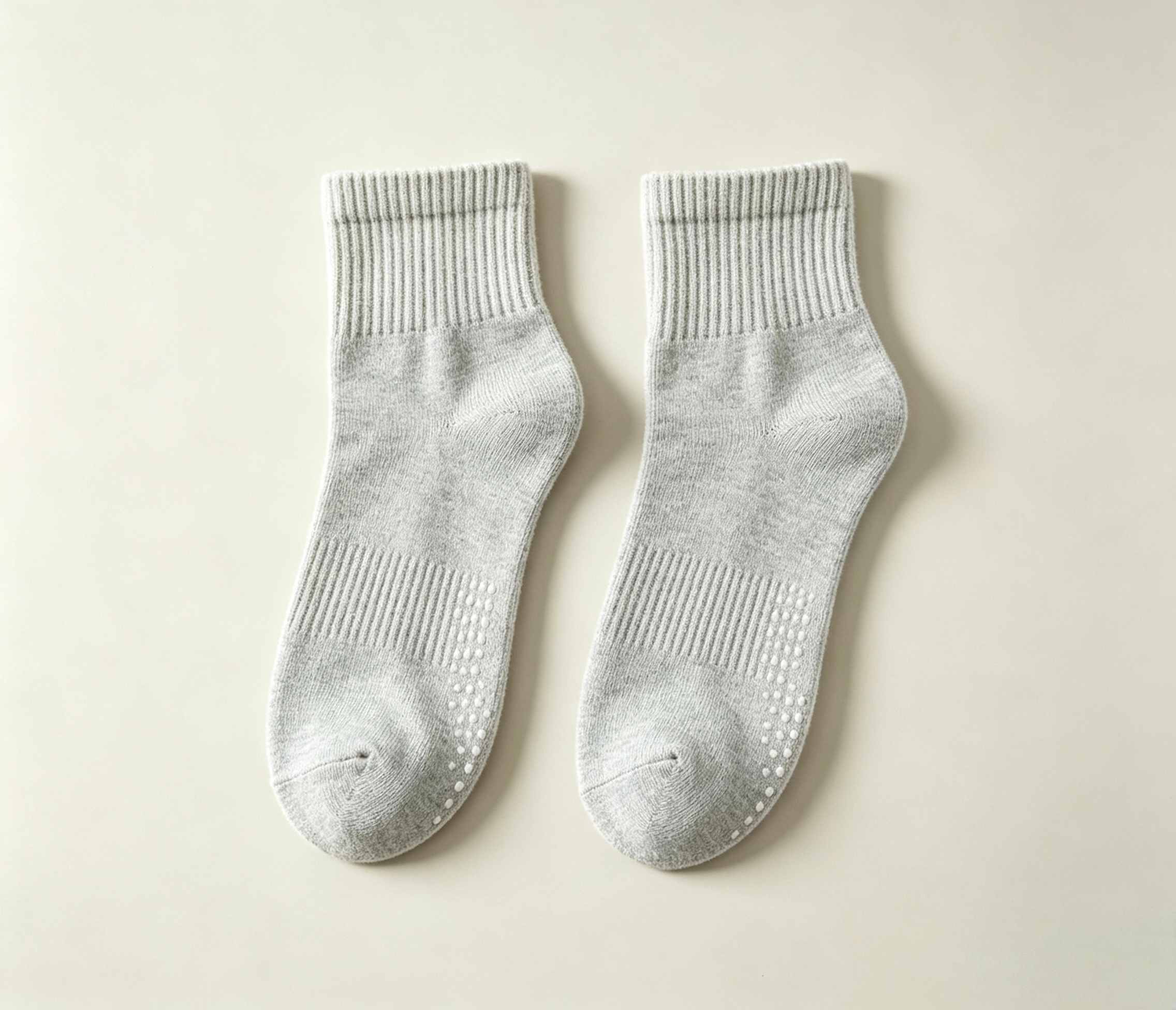
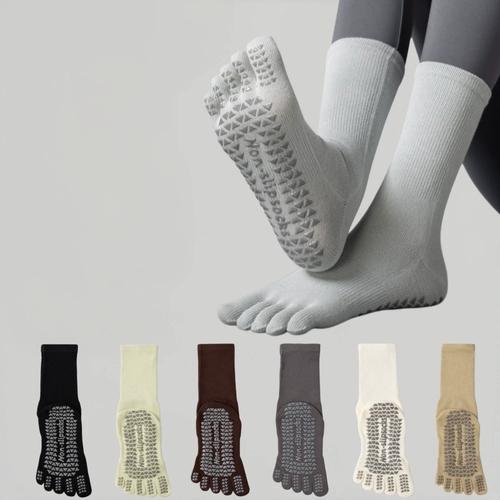
Grip socks are ordinary-looking socks with one job: stop you slipping on smooth floors. They do it with small silicone dots on the sole, applied after knitting. This plain-language guide explains what grip socks are, how they work and who actually wears them — useful if you are sourcing them for the first time or explaining them to a buyer who has only seen them on a studio shelf. The category is deceptively simple, and the most common confusion is assuming “any sock with dots” performs the same, when the dot material and pattern are everything that separates a safe grip sock from a decorative one.
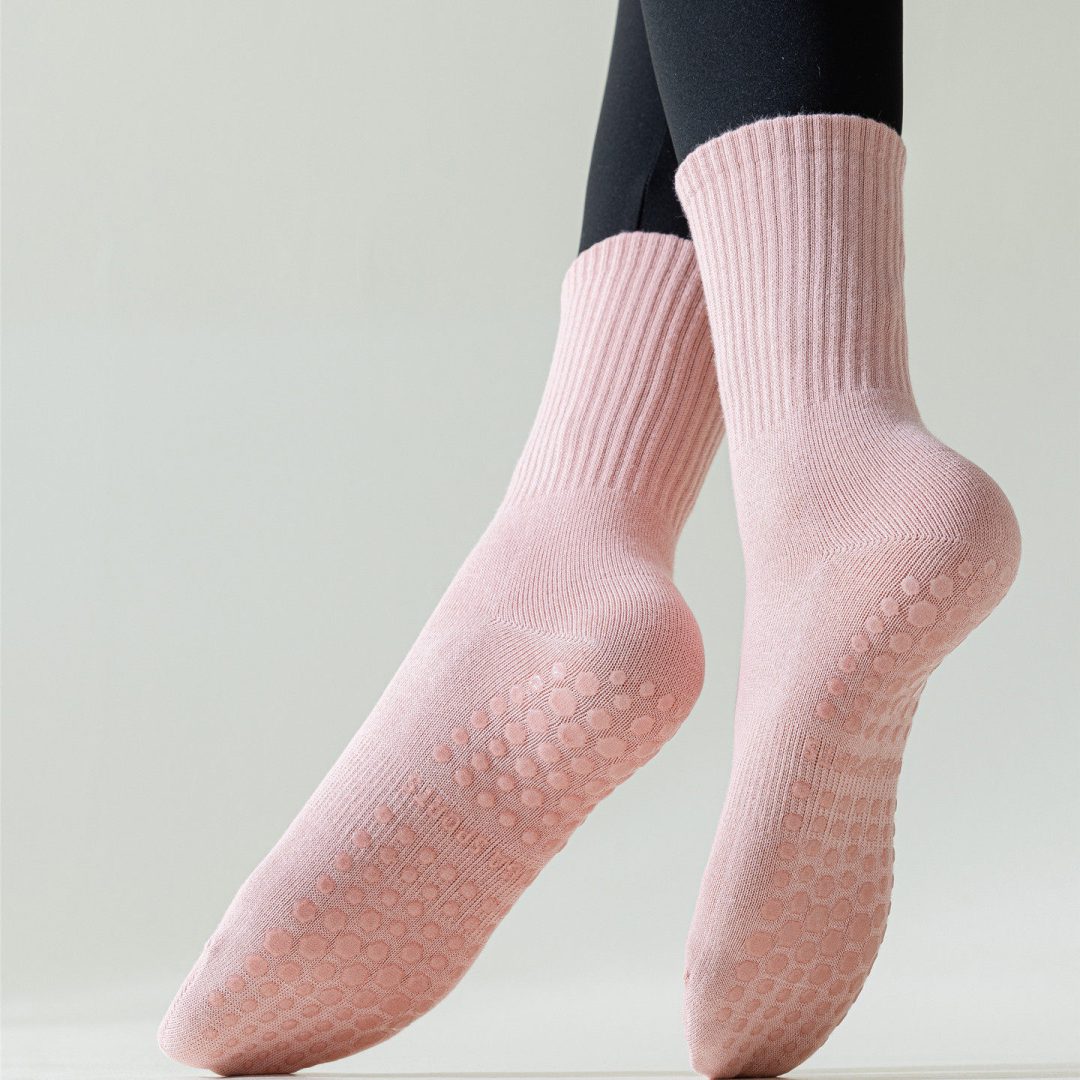
The yarn, gauge and MOQ options for this style are listed on the grip sock manufacturing page.
What They Are A grip sock is a lightweight knit sock (ankle or crew) with food-grade silicone dots printed on the bottom. The dots create friction against wood, tile or studio floors so the wearer does not slide. They look like normal socks until you turn them over. The base is thin and breathable because the grip, not the cushion, is the function — bulk would undermine the barefoot feel that makes them popular in practice settings. In a retail context, the grip is the hidden feature that justifies a premium over a plain ankle sock. They also serve a hygiene role: in shared studio and care spaces, a personal grip sock is worn instead of bare feet, which is why many studios now require them as a condition of entry rather than as an optional extra.
How the Grip Works The silicone is slightly tacky against smooth surfaces but flexible underfoot, so it bends with the sole rather than cracking. Zoned patterns put dots where grip matters most — heel, ball and arch. The dots do not help on carpet (where any sock grips) but are decisive on polished floors. A good pattern locks three points; a random scatter leaves gaps where the foot slides, which is why pattern design, not dot count alone, determines performance. We test grip by a slip-angle bench, not by eye, because the felt grip and the measured grip are not always the same.
Who Wears Them – Yoga and Pilates practitioners (studio hygiene plus stability) – Trampoline and reformer users (hybrid top-plus-bottom grip) – Hospital and elderly care (fall prevention on slick floors) – Home wearers (stairs, tiles, hardwood) Each use favors a different toe style and length, so “grip sock” is really a small family of products, not one item. Matching the style to the user is the first sourcing decision, and mis-matching is the most common reason a grip sock line underperforms in a specific channel.
Styles Toe-open (barefoot feel, hot yoga), closed-toe (Pilates, care), hybrid (grip top plus bottom, trampoline). Lengths: ankle (studio), crew (care and home). The style choice drives both comfort and the manufacturing path, so it should be made before the purchase order, not left to the factory to guess. A clear style brief also keeps sampling short, because the factory is not recovering from a wrong assumption about the end user.
If that is settled, the next question is usually answered in How to Buy Grip Socks Wholesale.
FAQ
Q: Do grip socks work on carpet?
A: Not needed — any sock grips carpet; they shine on tile and wood where slip risk is real.
Q: Are they washable?
A: Yes, cold wash, no softener; quality silicone survives 30+ washes and the grip returns every time.
Q: Safe for elderly?
A: Yes — non-slip soles reduce fall risk on slick home floors, which is a genuine safety benefit backed by care-home procurement.
CONCLUSION
Grip socks are knit socks with a silicone sole for slip resistance on smooth floors. Match the toe style and length to the user — studio, trampoline or care — and the grip does its quiet, important job of keeping people upright, which is why the category keeps growing across fitness and healthcare alike.
When you are ready to produce, the Sockmader custom sock factory covers sampling, MOQ and lead times in one place.
Start your next order with custom anti-slip socks from Sockmader — send artwork, size range and target quantity for a quote.