Buying grip socks in bulk means judging the part you cannot see: the silicone. Color and style are easy; grip durability is where bulk orders succeed or fail. This guide covers the specifications studios and brands should lock before ordering, so the sock grips for a year and not a month. The mistake we see most is a buyer who chooses a grip sock by color and price, then discovers at wash 20 that the dots are gone — by which point the season’s stock is already distributed and the returns have started. Below are the specs that keep that from happening.
Every specification in this guide is adjustable through custom grip socks, from yarn and gauge to cushioning and packaging.
Silicone Grade (The Key Spec) Specify food-grade silicone, not PVC. Ask for the cure process and a wash-test result (30 cycles, no flaking). A simple dot-pull test — can you flick a dot off with a fingernail? — separates quality from junk at the sample stage. We print the wash-test result on the QC sheet so the buyer sees the evidence, not just the claim. Silicone costs more than PVC, but the alternative is a return wave that costs far more than the per-pair saving, plus the reputational hit of a product that fails in plain sight on a studio floor.
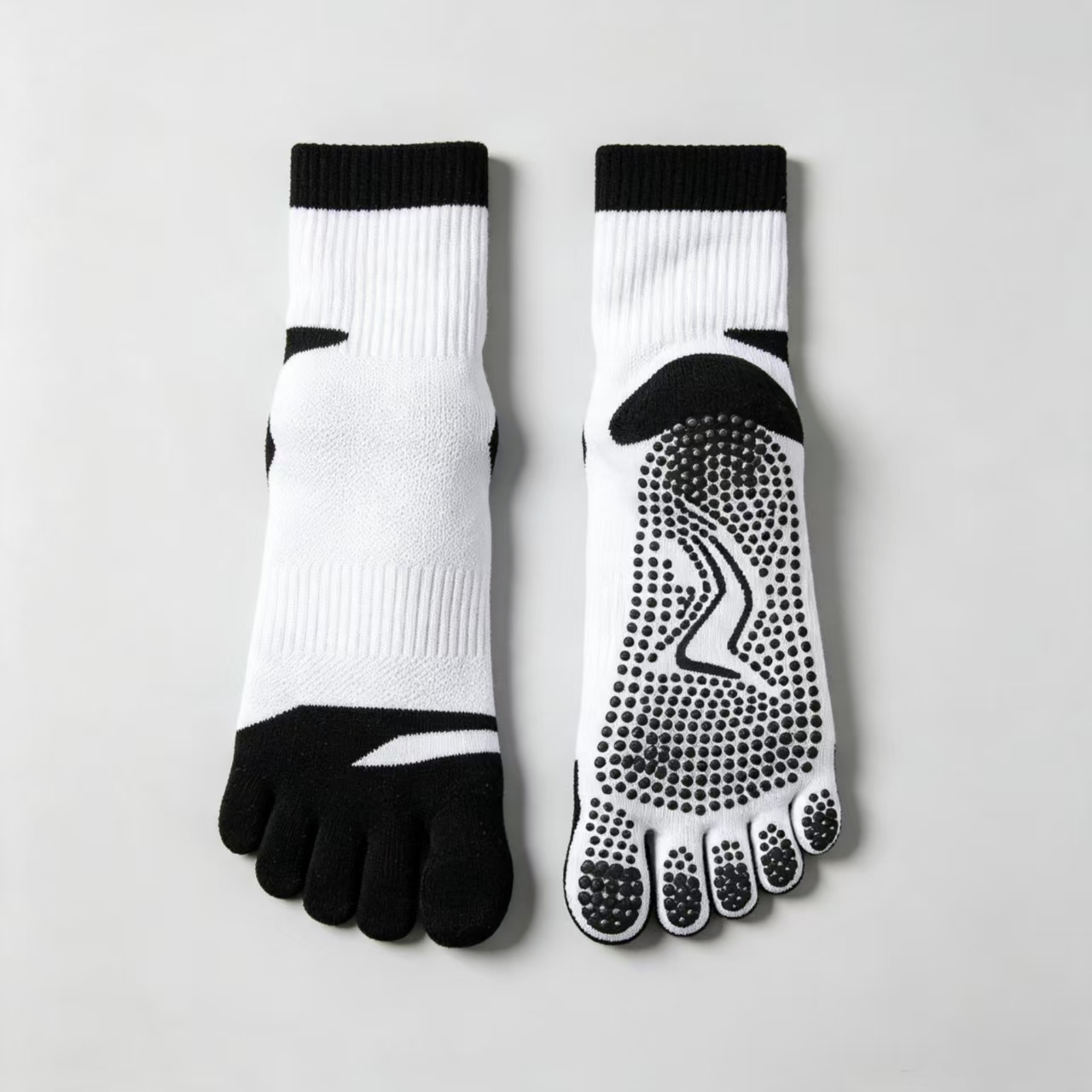
Dot Pattern and Density Zoned 3-point patterns (heel, ball, arch) grip better than a uniform scatter because they lock the three points that actually slide. Dot density of 25–40 dots per sole is the functional range; too few slips, too many stiffens the feel and adds cure time. Specify the pattern in the print file, not just “grippy.” A well-designed pattern also looks intentional, which matters for a product sold on sight in a studio retail corner where the sock competes with cheaper imports for the same shelf space.
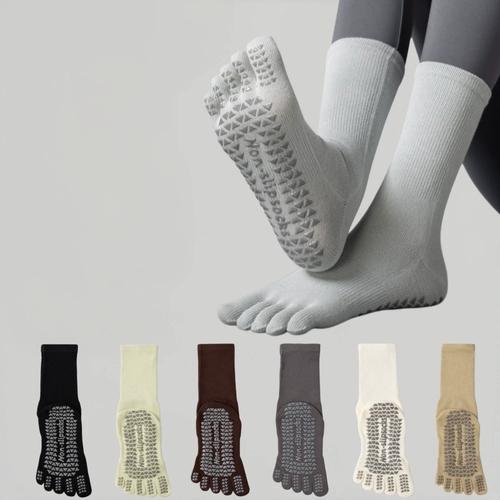
Toe Style Choose toe-open (hot yoga, barefoot feel), closed (Pilates, general) or hybrid (grip top plus bottom for trampoline). Each changes the knit path and MOQ. Pick by your core user — a trampoline park needs hybrid; a yoga studio needs closed or toe-open. Mixing styles in one order is fine, but each style is a separate screen and a separate line item, so a buyer should price them independently rather than assume one tooling covers all three.
Base Fabric Cotton-modal blends breathe for studio; nylon-spandex wicks for hot classes. Avoid 100% cotton (holds sweat, loses shape). The base should be light so the grip reads as the feature. We recommend cotton-modal for comfort-first studios and nylon-spandex for high-heat classes where wicking matters more than softness. The base weight also affects how the dots sit — a heavy base makes even good dots feel proud of the sole.
MOQ and Quality Gates MOQ ~100 pairs per design. Require: dot-pull test, 30-wash grip check, and shade consistency. Sample the actual print file, not a similar stock sock — a near-miss pattern grips worse than the spec. We send a washed sample so the buyer feels the grip after 30 cycles, which is the only honest test. Put the durability standard in the purchase order as a line item, not a hope, so the factory is accountable to a number and not a vibe.
We go deeper on What Are Grip Socks? in a separate guide.
FAQ
Q: How to verify grip durability fast?
A: Dot-pull test plus a 30-wash sample; flaking or yellowing fails immediately, and PVC shows it first. Q: Silicone or PVC — does it matter?
A: Yes — silicone lasts and is skin-safe; PVC cracks, yellows and is not suited to prolonged skin contact.
Q: What raises grip sock MOQ? A
: Toe-open knit path and a custom silicone screen per design; a standard closed-toe with a stock screen is cheapest.
CONCLUSION
Buy grip socks on silicone grade and dot pattern, not color. Lock food-grade silicone, a zoned pattern and a wash-test gate, and bulk orders grip for the long haul instead of flaking into a return problem that damages both the studio and the supplier relationship.
To move from plan to order, send artwork, size range and quantity through Sockmader.
When you are ready to source, the Sockmader custom anti-slip socks team can quote sampling, MOQ and lead times for your quantity.