Cashmere is the softest fibre used in commercial hosiery and the most temperamental. It comes from the undercoat of a goat, it is measured in microns, and the difference between a luxurious sock and a disappointing one is decided before the yarn ever reaches a knitting machine. Making cashmere socks is a matter of protecting a delicate fibre through every step, and of being honest with the customer about what the resulting sock can and cannot do.
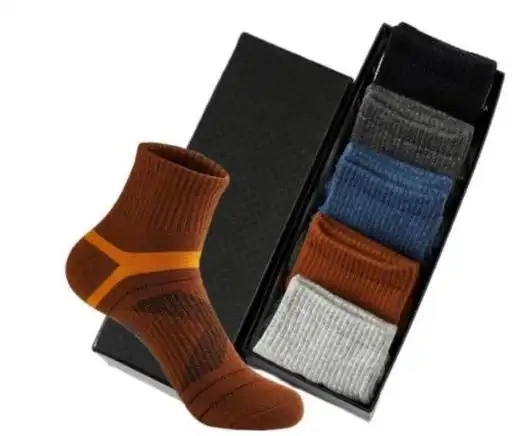
You will see every step below in crew sock manufacturing, where sampling runs before bulk production and MOQ starts at 300 pairs per design.
Fibre Grading: Micron and Length Cashmere is graded on two numbers. Fibre diameter, measured in microns, typically runs from 14 to 19 microns — finer is softer and more expensive. Fibre length, or staple, typically 28 to 42 mm, determines how well the yarn holds together; short staple produces a softer yarn that pills badly. Socks need a longer staple than a sweater, because the fabric is abraded constantly. The best cashmere sock yarns trade a little softness for length, which is why a sock yarn at 16 microns with a 38 mm staple outperforms a 14-micron sweater yarn every time.
Blending Is Not a Compromise Pure cashmere socks exist, and they wear out quickly. Cashmere has poor abrasion resistance and no crimp resilience, so a pure cashmere sock holes at the heel within a season. Almost all serious cashmere socks are blended — commonly 30 to 70 per cent cashmere with merino wool for resilience and a small percentage of nylon for strength. This is not diluting the product; it is what makes a sock rather than a novelty. A supplier offering 100 per cent cashmere socks should be asked how long they expect them to last.
Knitting Gently Cashmere yarn is soft, low-twist and fragile compared with the yarn a standard sock machine expects. Knitting is therefore slower, with lower yarn tension and carefully controlled feed, to avoid breaking the fibre or producing uneven stitch formation. Machines are usually run at 96 to 168 needles — a chunkier bed-sock construction rather than a fine dress gauge — because a heavier, looser knit suits the fibre and hides wear better.
Finishing: Brush, Do Not Scour Cashmere’s softness comes from its surface, and the finishing process exists to develop it. Socks are lightly brushed or milled to raise a fine halo, then boarded at low heat. Aggressive scouring, high temperatures or long tumbling will felt the fibre and destroy the hand feel. This is the step where inexperienced factories ruin good yarn, and it is the reason a cashmere sock from a specialist mill feels entirely different from one produced on a general-purpose line.
Pilling and Realistic Expectations Cashmere socks pill. This is not a defect; it is what a short, fine, low-crimp fibre does under friction. Better yarns with longer staple pill less, and a gentle first wash removes the loose surface fibre. Brands selling cashmere should say so plainly and include care instructions, because the alternative is a customer who believes they have been sold a faulty product. A cashmere pill comb is a cheap and effective inclusion that turns a complaint into a service.
Care Requirements Cashmere socks should be hand-washed or machine-washed on a wool cycle in cool water, dried flat, and never tumble dried. They should be stored folded rather than hung, and protected from moths. Anyone buying cashmere socks for their softness is buying into that care regime, and the care label is part of the product rather than a formality.
If that is settled, the next question is usually answered in Crew Socks Buying Guide.
FAQ
Q: Are 100 per cent cashmere socks worth buying? A: Rarely. A blend with merino and nylon lasts several times longer and feels nearly as good.
Q: Why do cashmere socks pill? A: Short, fine fibres work loose under friction. Longer staple yarns pill less; a comb removes it easily.
Q: What is the best cashmere blend for socks? A: Roughly 30 to 50 per cent cashmere with merino and a little nylon — soft, warm and genuinely wearable.
Q: How should they be washed? A: Cool wool cycle or hand wash, no tumble drying, dry flat.
CONCLUSION
Making cashmere socks is about protecting a fragile, expensive fibre: grade it for staple length as well as softness, blend it with merino and nylon so it survives being worn, knit it slowly and finish it gently. Do that and the result is the warmest, softest sock in the drawer. Skip any of it and you have an expensive sock that holes in a season.
When you are ready to produce, the Sockmader custom sock factory covers sampling, MOQ and lead times in one place.
Start your next order with custom crew socks from Sockmader — send artwork, size range and target quantity for a quote.