A toe sock is the most structurally unusual sock in commercial production. Instead of a single tube closed at one end, it is five small tubes, each individually knitted and individually closed, joined to a common foot and leg. That structure is what lets each toe move independently and stay dry — the two benefits the category sells — and it is also why toe socks cost several times more to make than a standard crew. Almost every step of the process is slower.
You will see every step below in crew sock manufacturing, where sampling runs before bulk production and MOQ starts at 300 pairs per design.
Knitting Five Tubes Toe socks are knitted on specialised machines that can form multiple small tubes in sequence, or on standard small-diameter machines with a programme that knits each toe pocket separately and joins them into the foot as it progresses. The machine works from the toe end, forming each tube to its programmed length, then combining them into the sole and instep. Each toe needs its own stitch count, its own tension setting and its own transition into the foot — five times the programming of a normal sock.
The Sizing Problem A single-toe tube has to fit a toe, and toes vary far more in proportion than feet do. A person whose second toe is longer than their big toe — a very common foot shape — will find a badly graded toe sock uncomfortable or impossible to wear. Good manufacturers address this by grading each toe separately rather than scaling the whole sock, and by using a stretch yarn blend that tolerates variation. This is the single biggest reason toe socks have higher return rates than other socks.
Closing Five Seams Where a normal sock has one toe seam, a toe sock has five, and each is smaller and harder to work on. The seams are usually linked or rosso closed, since a bulky seam between toes is immediately uncomfortable. Hand-linking five tiny tubes is slow, skilled work, and it is a major component of the cost. A poorly finished toe sock is obvious within minutes of putting it on: the seams rub, and there are four more of them than you are used to.
Yarn Requirements Toe socks need yarn with good elastic recovery and low bulk, because each tube is small and there is no room for excess fabric. Fine combed cotton with elastane, merino blends, and synthetic performance yarns are all used. The yarn must also be strong at the join points, where five tubes converge into the foot — that junction is under more stress than any comparable point on a standard sock and is where cheap toe socks fail first.
Benefits That Justify the Construction The reason anyone tolerates the cost and the fit risk is that the construction delivers something no other sock can. Separating the toes removes skin-on-skin contact, which is the primary cause of interdigital blisters in runners and hikers. It spreads the toes into a more natural splay, which some wearers find improves balance and comfort in minimal footwear. And it lets each toe be wrapped in moisture-managing yarn, keeping the whole foot drier.
Finishing and Pairing Toe socks are boarded on specialised forms with five prongs, which set each tube to its finished dimensions. They are then paired, and unlike normal socks they must be paired left and right — a task that is largely manual because the asymmetry makes automated pairing unreliable. Inspection covers each of the five seams and the junction with the foot.
If that is settled, the next question is usually answered in How Are Waterproof Socks Made?.
FAQ
Q: Why are toe socks so much more expensive? A: Five tubes to knit, five seams to close, specialised boarding forms, and largely manual pairing.
Q: Do toe socks really prevent blisters? A: Between the toes, yes — they eliminate skin-on-skin friction, which is the usual cause.
Q: Why do some people find them uncomfortable? A: Toe proportion. If the sock’s grading does not match your toe lengths, the fit will be wrong.
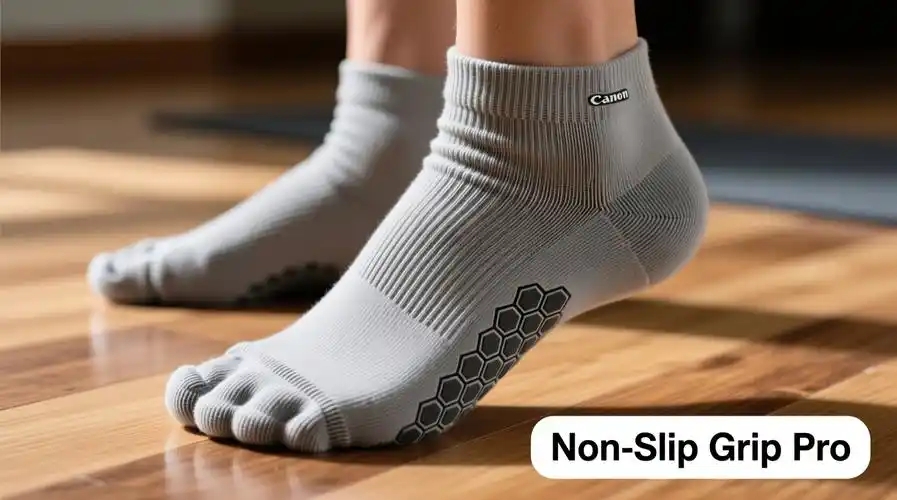
Q: Can they be made with grip soles? A: Yes, though the dot pattern has to be applied carefully around the individual toe tubes.
CONCLUSION
Toe sock manufacturing is what happens when a simple garment gets five times more complex: five tubes knitted to individual dimensions, five seams closed by hand, five-prong boarding and manual left-right pairing. The payoff is genuine — no skin-on-skin friction, natural toe splay, a drier foot. The cost is real too, and it is mostly in the labour that no machine has yet replaced.
To move from plan to order, send artwork, size range and quantity through the Sockmader custom sock factory.
When you are ready to source, the Sockmader custom crew socks team can quote sampling, MOQ and lead times for your quantity.