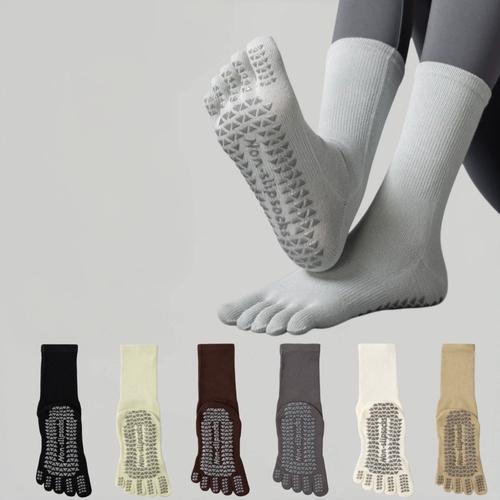
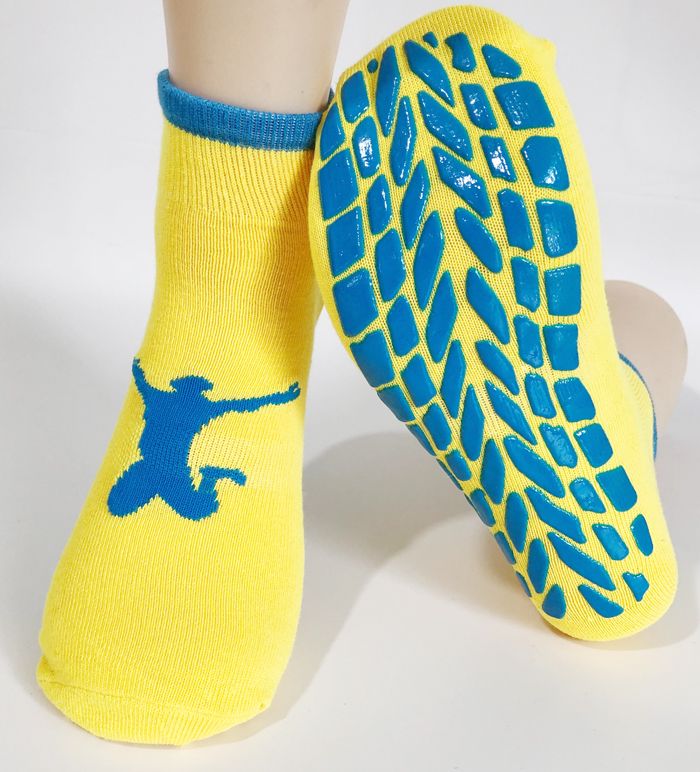
If you are sourcing grip socks wholesale, the most common mistake is asking for a price before there is a specification. A quote built without yarn composition, gauge and a size set is a guess, and guesses turn into disputes several weeks later. What follows covers the specification, the cost structure, the minimum per design and the calendar. The product route starts at grip socks wholesale.
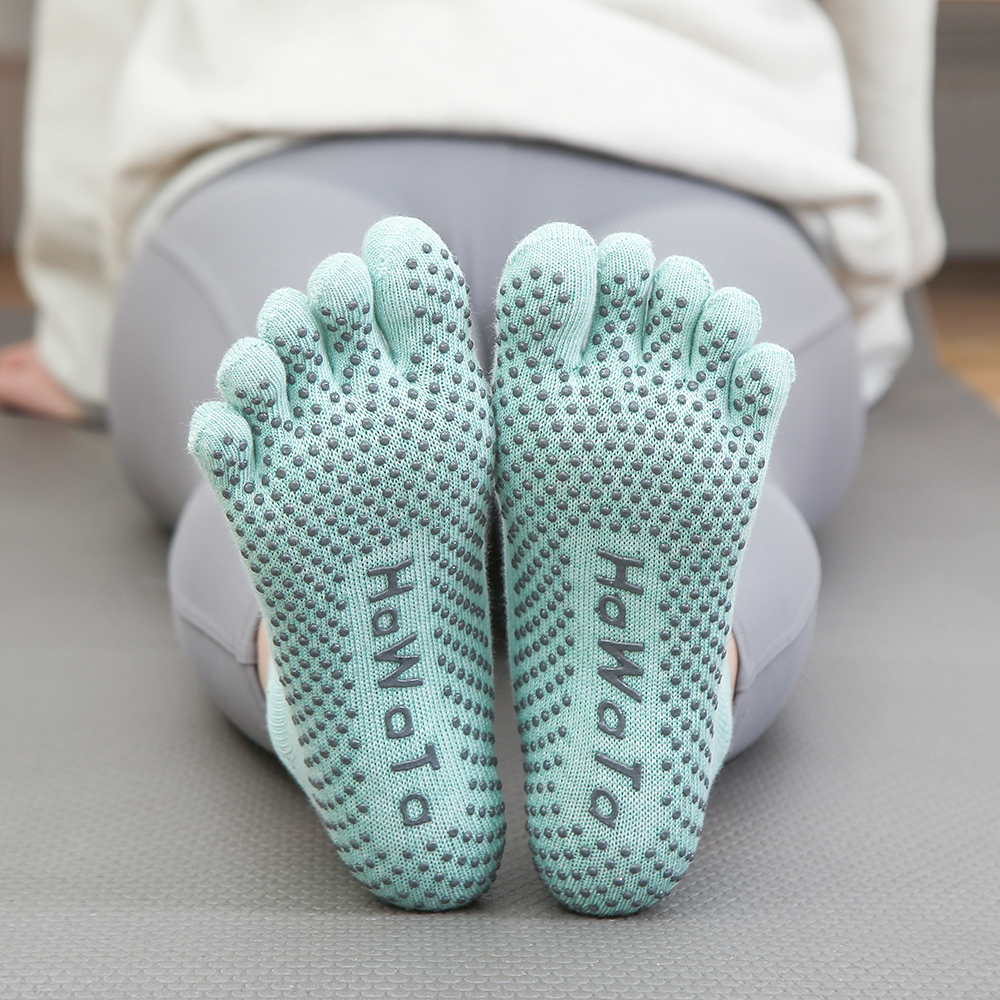
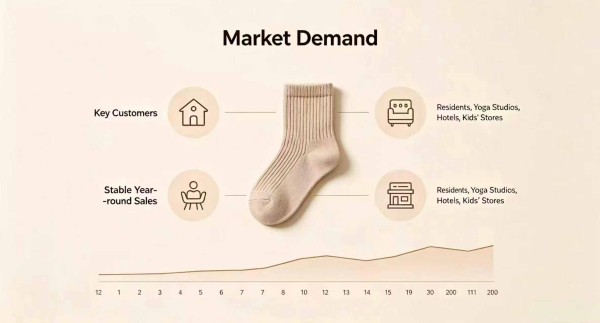
In plain terms: if you are buying grip socks wholesale, plan on 50 pairs minimum per design, 3-7 days for samples and 5-25 days for a bulk run. Searches like this usually come from buyers who are usually building a resale or distribution programme, not buying for personal use, which is why this page goes straight to numbers rather than marketing copy.
Three specifications decide both the outcome and the price: grip material, grip pattern and wash durability. Get those on your enquiry sheet and quotes become comparable.
What this covers:
- Due diligence questions to put to any anti-slip socks supplier
- Certificates and reports to request up front
- Where your money actually goes
Search variants worth knowing about: custom grip socks; custom grip socks manufacturer; custom non-slip socks – they cover the same ground from a different starting point.
Due diligence questions to put to any anti-slip socks supplier
Send these in the first two emails. The value is not the answer itself but how quickly and specifically it comes back.
1. Which gauges do you hold, and how many machines of each? The gauge set decides what they can physically make for you.
2. Can you name three clients buying this exact construction? General references say little; category-specific references say everything.
3. What does your in-line checking actually look like? Ask what is written down at the machine, not what is promised in the quote.
4. How do you trace a batch back to a yarn lot? Traceability is what separates a factory from a trader.
5. What is your policy when colour lands outside tolerance? Every bulk shipment drifts slightly; the question is what happens next.
6. Who signs off production before it leaves? A named person beats a department every time.
7. What are your payment terms and why? Terms reveal how confident a supplier is in their own delivery record.
8. Can you hold yarn for a reorder, and for how long? Reorders fail on yarn availability more often than on capacity.
9. What happens if my artwork needs changing mid-run? Programmes change. The process for handling that should already exist.
10. What is your defect rate by failure mode? A factory that measures this tends to manage it.
Keep the answers. They become the baseline you audit the second order against, which is where supplier relationships are actually tested. Start from custom sock manufacturer for the category baseline.
Nearly every sourcing dispute traces back to a spec that was never written down. Put these on your enquiry sheet and most of the risk disappears.
| Spec | What to write | Why it matters |
|---|---|---|
| Grip pattern | Dots, stripes, full coverage or a logo shape. | Coverage changes how grippy the sock feels. |
| Wash durability | Specify no loss after 20 washes. | The single most common complaint in this category. |
| Grip material | Silicone as the default, PVC or hot-melt as alternatives. | Silicone survives washing, PVC is cheaper but fails sooner. |
Also pin down the packing method (pairing, folding, hang tag, polybag, carton count) — it is the last step and the one that most often gets assumed rather than specified. Related reading: custom sock manufacturer.
Certificates and reports to request up front
Certificates prove a management system exists; test reports prove a specific batch passed. You generally need both. For anti-slip socks, request:
- OEKO-TEX Standard 100
- CPSIA for children’s styles
- SGS wash durability report
Match the certificate to the channel, not to a checklist. A promotional giveaway and a pharmacy listing do not need the same paperwork, and over-buying tests is as wasteful as under-buying. Commercial terms and compliance handling: bulk custom socks.
Where your money actually goes
Take a typical first order of a few hundred pairs. Four lines decide almost everything.
| Cost line | Typical share | What moves it |
|---|---|---|
| Yarn | 35 to 50 percent | fibre type, staple quality, whether it is custom-dyed |
| Knitting and labour | 20 to 30 percent | gauge, structure complexity, number of colours |
| Technique and setup | 5 to 15 percent | artwork route, screens, machine set-up |
| Finishing and packing | 8 to 12 percent | washing, boarding, labelling, cartons |
Note that only one of those four is negotiable through quantity alone. The technique line is fixed per design, so it either gets spread across many pairs or it sits heavily on few.
The worst place to save money on anti-slip socks is the grip material: switching to PVC saves a little per pair and costs far more in returns and complaints.
If two quotes differ by more than a few percent, the difference is usually the specification rather than the supplier. The commercial route is explained on bulk custom socks.
FAQ
Can we claim a slip-resistance rating?
Describe construction and measured friction data. Avoid fall-prevention or medical claims.
What is the minimum order?
50 pairs per design; logo-shaped grip usually only makes sense from 300 pairs because of the screen cost.
Will the grip dots wash off?
Properly cured silicone passes 20 washes; PVC generally does not. The material has to be named in the contract.
What is the fastest way to get an accurate quote?
Send a specification sheet — yarn composition, needle count, size set, construction, artwork route, quantity and packing. A quote built from that is usually within a few percent of final; a quote built from a photo is not.
To place it in context, compare it against sock packaging options and sock resource library.
Where to go from here
If you take one thing from this: the cheapest quote is usually the one with the loosest spec. Write the spec first and the quotes become comparable. grip socks wholesale is the place to begin; custom sock manufacturer covers the commercial terms.