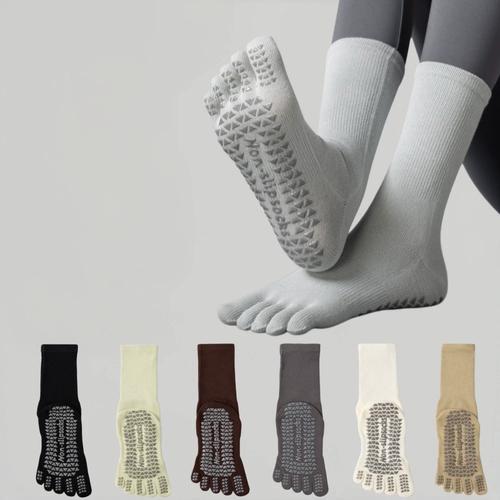
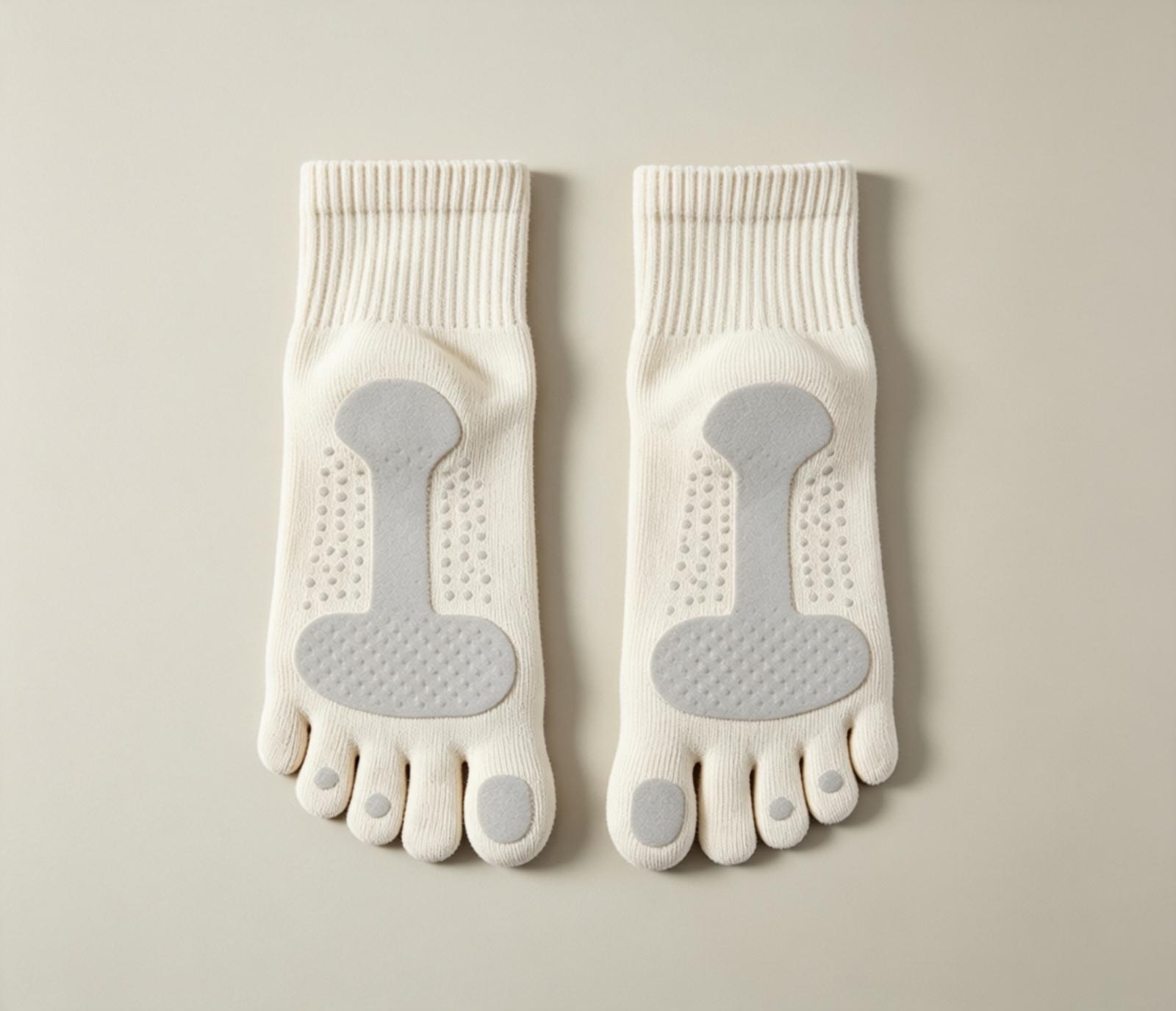
Yoga is practised barefoot, which is why the idea of a yoga sock sounds like a contradiction until you stand on a mat in a shared studio and feel your foot slide. The benefit of a yoga sock is not warmth and it is not modesty — it is friction. A silicone-dotted sole gives the foot the purchase it would otherwise get from skin, which changes balance in standing poses and removes the small adjustments that break concentration in a held posture. Add hygiene in a room where dozens of bare feet have been, and a product that looks like an accessory turns out to solve two real problems at once.
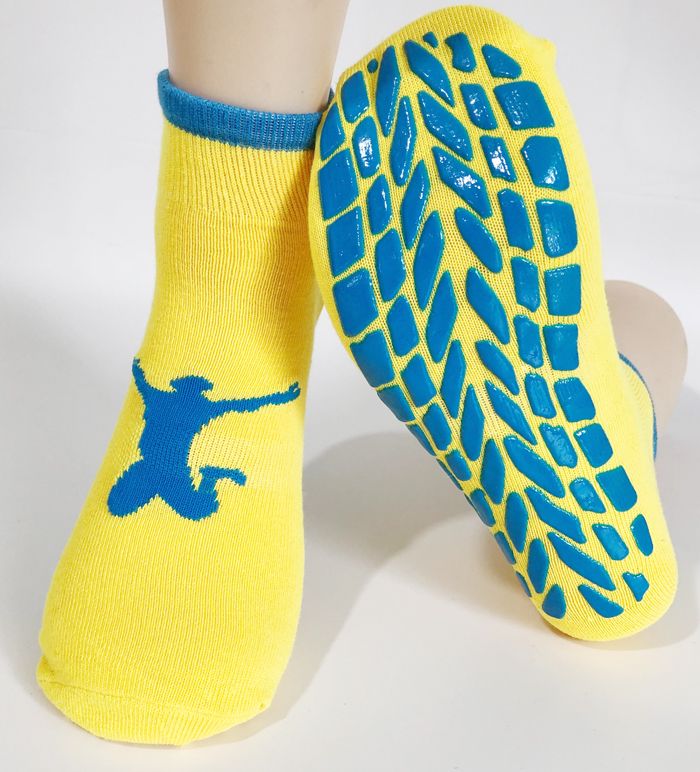
You get these same benefits through grip sock manufacturing, with yarn and construction tuned to your target price point.
Stability in Standing and Balancing Poses Tree pose, warrior three and half moon all ask the standing foot to grip a surface that gets slicker as the session goes on. Sweat is the enemy. A dotted silicone sole bites into the mat’s texture and holds, which means the small stabilising muscles around the ankle do less corrective work and the pose holds longer. The effect is most obvious for beginners, who spend their first months fighting for balance rather than holding alignment. For a studio, that translates into a class where fewer people wobble out of a pose.
Hygiene in Shared Spaces Studio mats are shared, and although most studios clean them, the reality is that cleaning happens between classes rather than between poses. A sock puts a washable barrier between the foot and the mat. For hot yoga in particular, where sweat pools on the surface, this is the reason many practitioners adopt grip socks and never go back. Studios that sell or rent them get a secondary benefit: a retail line with genuine repeat purchase, because socks wear out and get washed constantly.
Toe-Open vs Closed Designs Two constructions dominate. Toe-open socks leave the toes and part of the forefoot exposed so the wearer can still feel the mat and splay the toes for balance. Closed-toe versions cover the whole foot and grip through the silicone pattern alone. Toe-open designs suit practitioners who want grip without losing ground feel; closed designs suit barre, Pilates and studio retail where coverage and appearance matter more. Most brands end up stocking both, because the preference is personal and strongly held.
Warmth Without Bulk Yoga socks are knitted on a fine gauge with a thin base, so they add almost no volume inside the foot. In a cool studio or during the stillness of a closing relaxation, that thin layer keeps the foot from stiffening without changing how the foot sits on the mat. Bulk would defeat the purpose — the grip, not the cushion, is the function.
What Studios Should Specify Grip dot coverage, silicone grade and wash durability are the three variables that decide whether a studio reorders. Dots should cover the heel and the ball of the foot, where load lands, and run across the toes for poses that press the forefoot down. Silicone should be soft enough to stay flexible after fifty washes and firm enough not to smear. Ask for a wash-test report rather than a sample you can only look at.
If that is settled, the next question is usually answered in How to Design Grip Socks.
FAQ
Q: Do yoga socks actually stop slipping? A: On a standard mat, yes — the silicone dots bite into the surface. On a very smooth PVC mat the improvement is smaller.
Q: Are they worth it for hot yoga? A: That is where they help most, because sweat is what makes a mat slippery.
Q: Toe-open or closed for a beginner? A: Toe-open. It preserves ground feel, which is what beginners are still learning to use.
Q: How long do the dots last? A: Fifty to eighty home washes for good-grade silicone. Commercial laundering shortens that, so studios should specify a higher grade.
CONCLUSION
Yoga socks earn their place on three counts: they give the foot grip on a surface that gets slick, they put a washable layer between skin and a shared mat, and they do both without adding bulk. For studios, that is a retail product customers genuinely need to replace. For brands, it is a category where the specification — dot coverage and silicone grade — matters far more than the pattern.
Ready to price this out? Start with a sample from the Sockmader custom sock factory, or send your artwork and target quantity for a quote.
If you are planning your own line, our custom anti-slip socks program covers sampling, MOQ and lead times in one place.