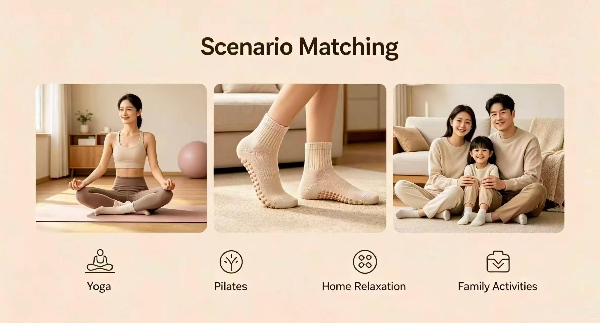
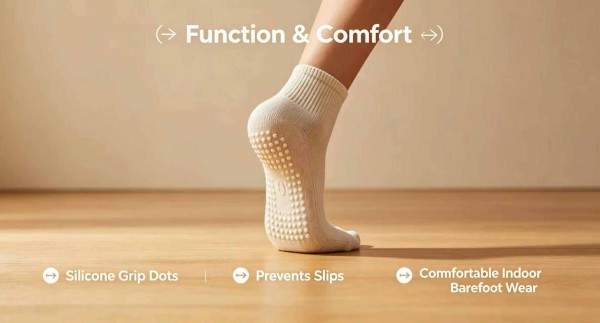
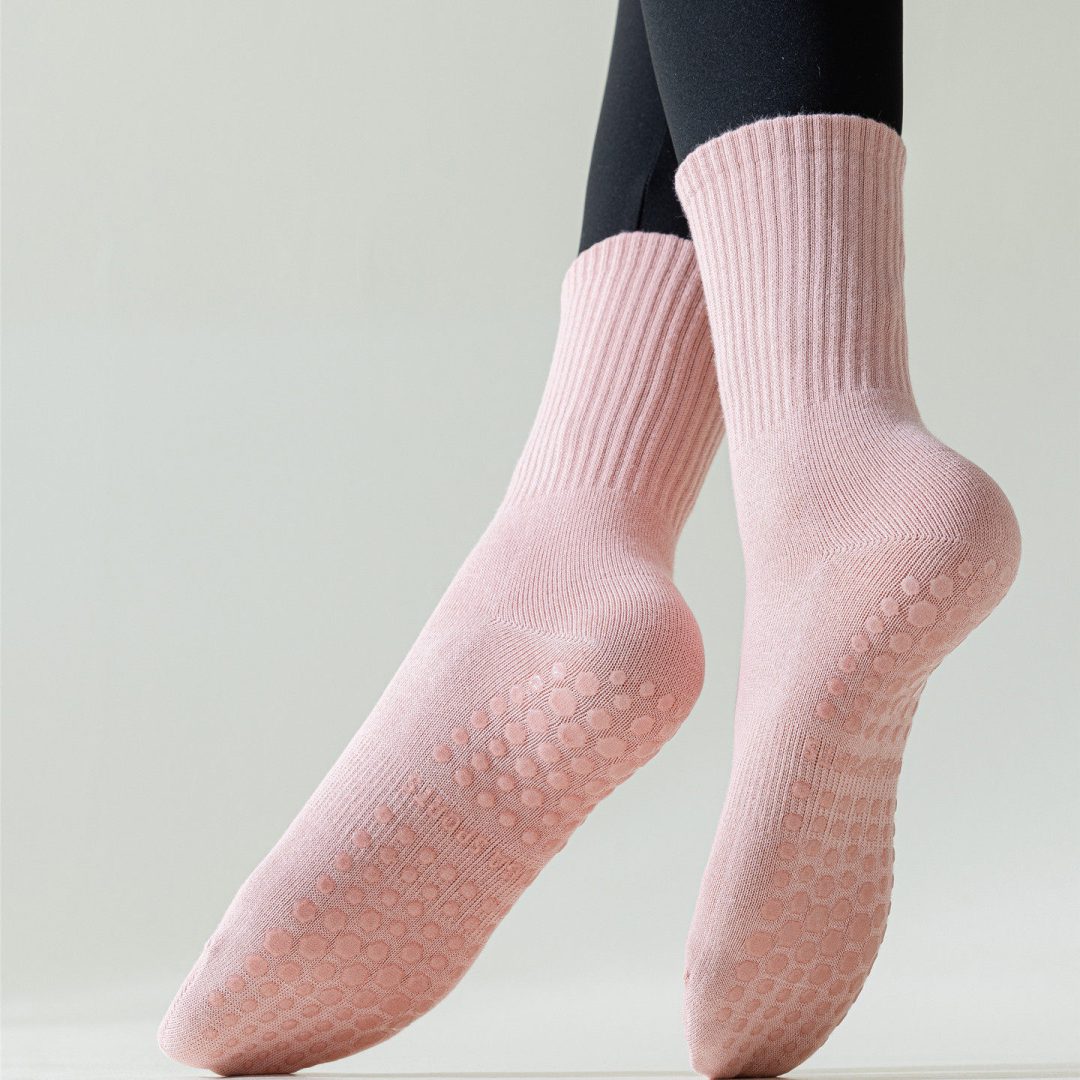
A custom grip socks manufacturer is best understood as three operations wearing one name: knitting, finishing and packing. Programmes go wrong when one of those is outsourced and nobody mentions it. This page sets out what to ask, and why each answer changes your plan. Reference point: custom grip socks manufacturer.
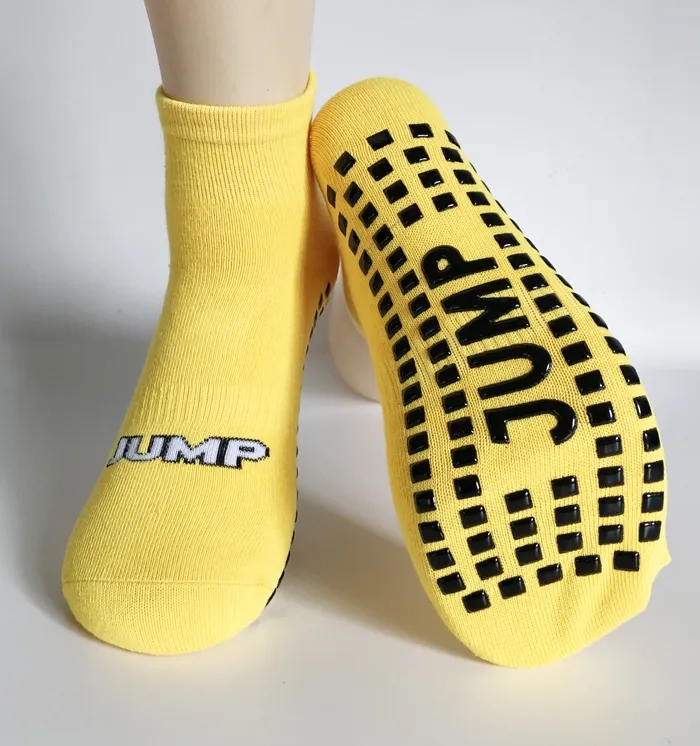
If you landed here by searching custom grip socks manufacturer, you are probably building a shortlist or checking whether a quote already received makes sense. Either way the reference points are the same – MOQ from 50 pairs, 3-7 days to sample, 5-25 days to produce – because buyers who are shortlisting production partners rather than shopping for a single pair all run into the same four cost lines.
Note those down with grip material, grip pattern and wash durability before you send anything out.
On this page:
- Four things that decide your unit price
- Sizing the first order
- Certificates and reports to request up front
- The critical path, and where it slips
If that is not the wording you used, these are the common alternatives: custom grip socks; grip socks wholesale; custom non-slip socks.
Four things that decide your unit price
Every quote you receive for anti-slip socks comes back to the same four variables.
1. Fibre system. Bamboo blend – The handfeel yoga channels prefer.; Combed cotton 78% / nylon 19% / elastane 3% – Soft, absorbent and easy to print dots on.; Polyester / cotton blend – Dimensionally stable, holds shape after washing.
2. Construction time. Higher gauges knit more loops per pair, and every added zone, band or colour slows the machine down further. This is usually 20 to 30 percent of what you pay.
3. Fixed setup cost. Programming, screens and machine changeovers are charged per design, not per pair. This is why the jump from 50 to 500 pairs moves the price far more than 500 to 5,000.
4. Everything after knitting. Washing, boarding, pairing, labels and cartons add another 8 to 12 percent and are frequently forgotten in comparisons.
The worst place to save money on anti-slip socks is the grip material: switching to PVC saves a little per pair and costs far more in returns and complaints.
Ask for the quote broken into those lines. A supplier who can split it will; one who cannot usually has not costed it. The commercial route is explained on sock packaging options.
Nearly every sourcing dispute traces back to a spec that was never written down. Put these on your enquiry sheet and most of the risk disappears.
| Spec | What to write | Why it matters |
|---|---|---|
| Wash durability | Specify no loss after 20 washes. | The single most common complaint in this category. |
| Grip material | Silicone as the default, PVC or hot-melt as alternatives. | Silicone survives washing, PVC is cheaper but fails sooner. |
| Grip pattern | Dots, stripes, full coverage or a logo shape. | Coverage changes how grippy the sock feels. |
Finally, agree the tolerance: size ±0.5 cm, weight ±5%, colour ΔE within an agreed range. Without tolerance, “close enough” becomes an argument. Related reading: custom sock manufacturer.
Sizing the first order
There is no advantage in ordering more than you can sell through, and no advantage in ordering less than the factory can schedule cleanly. The useful question is what the first order is for.
| Purpose | Sensible first order | Why |
|---|---|---|
| Quality and communication test | close to the minimum | you are buying information, not margin |
| Live launch with a known sell-through | one to three months of cover | avoids a forced reorder mid-season |
| Seasonal or gift programme | full season cover in one run | colours and yarn lots will not match later |
The standard minimum is 50 pairs per design. Ask separately for the minimum per colourway and per size, because those are the numbers that actually shape the order, and a supplier who answers with a single figure is usually quoting a stock item.
Seasonal and highly constructed styles carry a higher minimum for a simple reason: the machine spends longer being set up than it does knitting. Terms and sampling rules are set out on sock packaging options.
Certificates and reports to request up front
Certificates prove a management system exists; test reports prove a specific batch passed. You generally need both. For anti-slip socks, request:
- OEKO-TEX Standard 100
- CPSIA for children’s styles
- SGS wash durability report
If the goods contain a certified input (organic cotton, recycled polyester, responsible wool), you also need the transaction certificate for that batch — the certificate alone does not cover it. Commercial terms and compliance handling: sock packaging options.
The critical path, and where it slips
There are only three places a schedule genuinely slips, and none of them is knitting capacity.
Yarn availability. If your colour needs dyeing rather than coming from stock, add one to two weeks before anything else can start. Choosing stock yarn is the fastest schedule decision you can make.
Sample rounds. Every clarification costs three to five days. Three rounds will push most programmes past their selling window, which is why the first brief matters so much.
Finishing and packing. Closing, boarding and packing are labour-intensive and are where work queues. A full sea container takes roughly 30-40 days to the US West Coast and 35-45 days to major European ports. Air freight takes 5-8 days but usually costs four to six times the sea rate per unit, and courier shipments for small trial orders arrive in 3-5 days.
Build in a buffer: one week for sample revisions and one week for shipping volatility. Process detail is documented under sock resource library.
FAQ
What is the minimum order?
50 pairs per design; logo-shaped grip usually only makes sense from 300 pairs because of the screen cost.
Will the grip dots wash off?
Properly cured silicone passes 20 washes; PVC generally does not. The material has to be named in the contract.
Can the grip be a logo shape?
Yes. Silicone can be formed into a logo, but it needs a screen or mould and carries a one-off cost.
What is the fastest way to get an accurate quote?
Send a specification sheet — yarn composition, needle count, size set, construction, artwork route, quantity and packing. A quote built from that is usually within a few percent of final; a quote built from a photo is not.
If you are still deciding, these pages help: custom compression socks.
Where to go from here
Ready to move? Put the spec sheet together first — yarn, needle count, sizes, construction, artwork, quantity, packing. Then custom grip socks manufacturer and custom sock manufacturer will get you a number you can plan against.