yoga socks wholesale is better understood as a specification range than as a product. What you receive depends almost entirely on what you write down first. This guide goes through the numbers worth confirming before you contact anyone, starting with yoga socks wholesale.
If you landed here by searching yoga socks wholesale, you are probably one of two people: someone building a buying brief, or someone checking whether a quote already received makes sense. Either way the reference points are the same – MOQ of 300 pairs per color, 3-7 days to sample, 5-25 days to produce – because buyers who are usually building a resale or distribution programme, not buying for personal use all run into the same four cost lines.
Note those down with grip material, grip pattern and wash durability before you send anything out.
What this covers:
- QC: the checks to ask for before the shipment leaves
- Four things that decide your unit price
- Additional checks for repeat orders
Search variants worth knowing about: custom grip socks; grip socks wholesale; custom grip socks manufacturer – they cover the same ground from a different starting point.
QC: the checks to ask for before the shipment leaves
AQL 2.5 is the common default for apparel, and many European and US buyers additionally require zero tolerance for critical defects. AQL 4.0 suits promotional goods, and AQL 1.0 is used for high-value or medical channels. Then the product-specific checks:
| Check | Method |
|---|---|
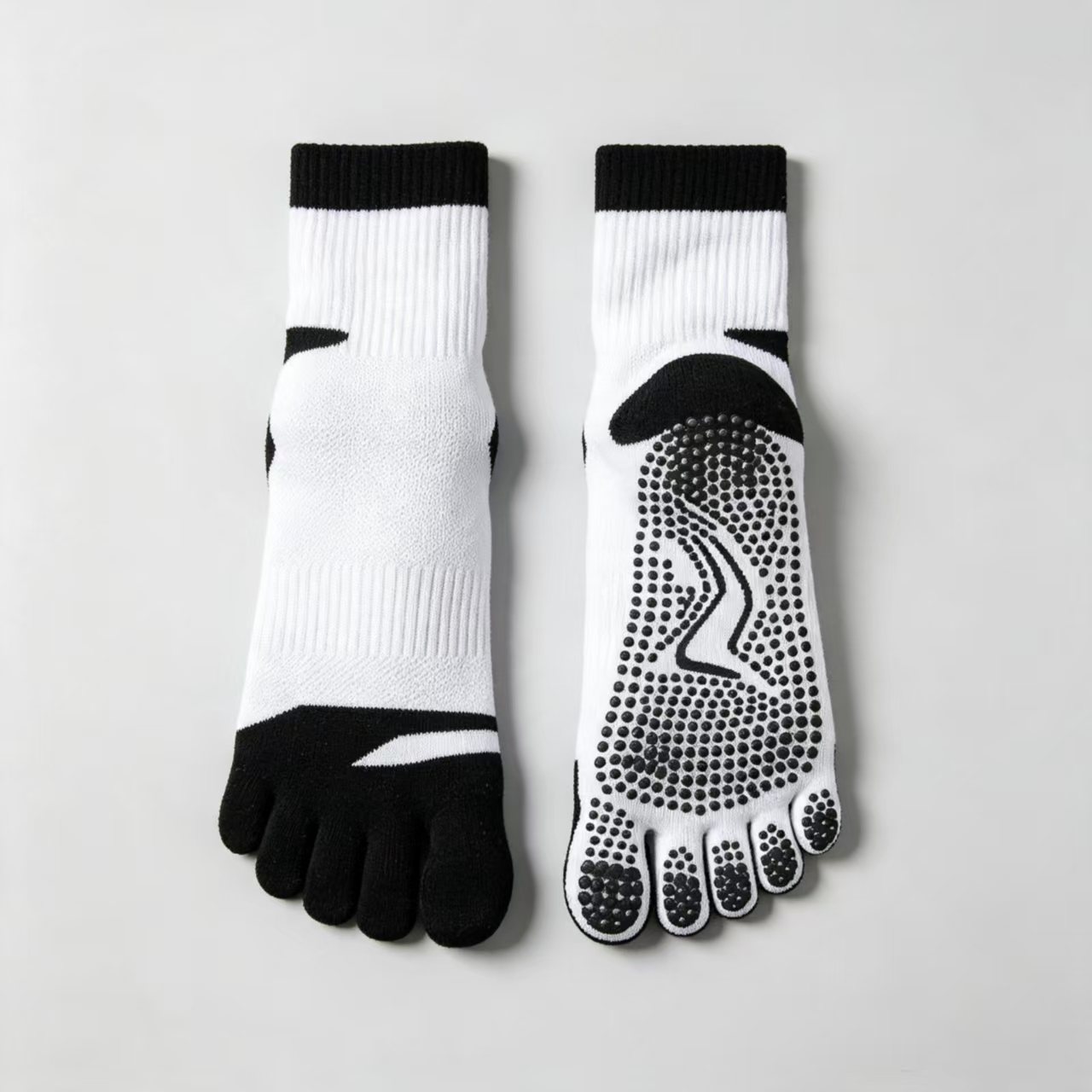
| Dot placement accuracy | Whether dots drift outside the functional area. |
| Odour and handfeel | Whether the silicone is fully cured. |
| Grip adhesion | Visual check and a scratch test after washing. |
| Coefficient of friction | Sample per batch and keep a trend record. |
Agree in writing what happens to rejected goods: rework, replacement or credit. Without that clause, an inspection report is just a document. Process and test references: ODM socks.
Nearly every sourcing dispute traces back to a spec that was never written down. Put these on your enquiry sheet and most of the risk disappears.
| Spec | What to write | Why it matters |
|---|---|---|
| Wash durability | Specify no loss after 20 washes. | The single most common complaint in this category. |
| Grip material | Silicone as the default, PVC or hot-melt as alternatives. | Silicone survives washing, PVC is cheaper but fails sooner. |
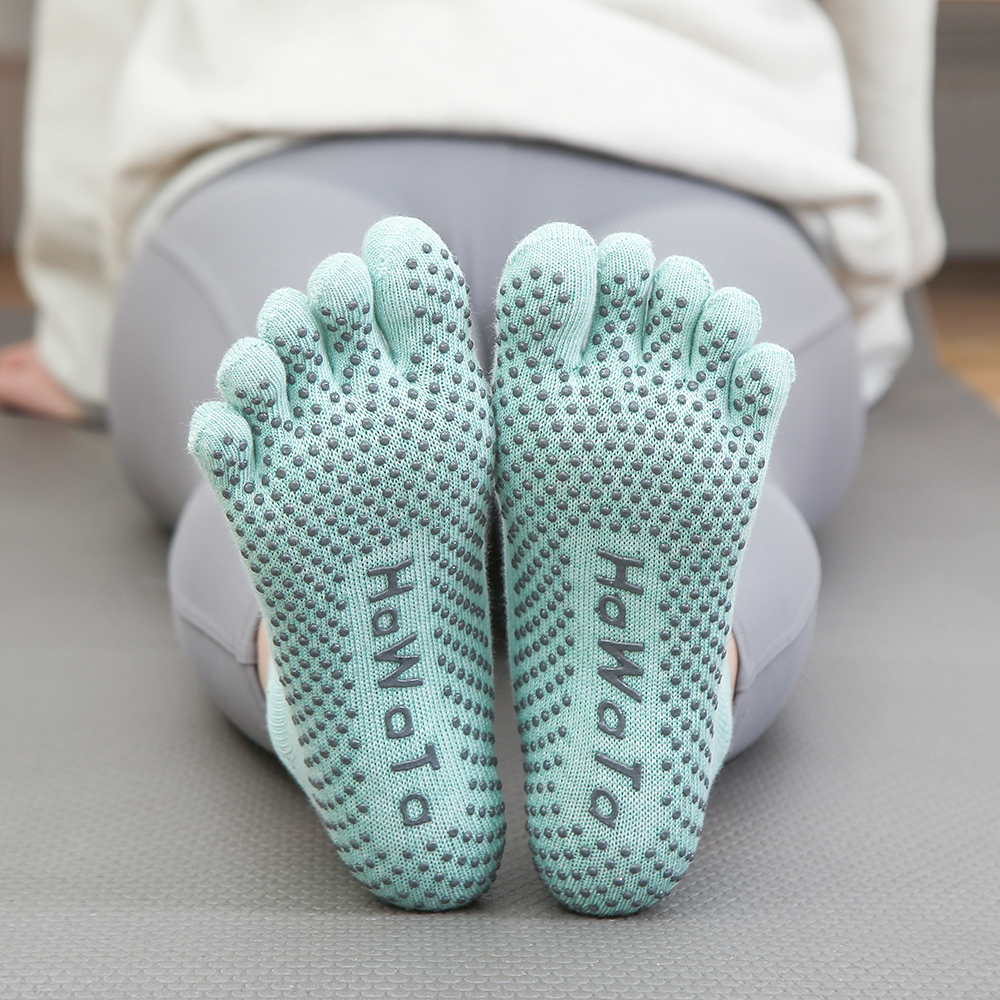
| Grip pattern | Dots, stripes, full coverage or a logo shape. | Coverage changes how grippy the sock feels. |
Finally, agree the tolerance: size ±0.5 cm, weight ±5%, colour ΔE within an agreed range. Without tolerance, “close enough” becomes an argument. Related reading: custom sock manufacturer.
Four things that decide your unit price
Every quote you receive for anti-slip socks comes back to the same four variables.
1. Fibre system. Bamboo blend – The handfeel yoga channels prefer.; Combed cotton 78% / nylon 19% / elastane 3% – Soft, absorbent and easy to print dots on.; Polyester / cotton blend – Dimensionally stable, holds shape after washing.
2. Construction time. Higher gauges knit more loops per pair, and every added zone, band or colour slows the machine down further. This is usually 20 to 30 percent of what you pay.
3. Fixed setup cost. Programming, screens and machine changeovers are charged per design, not per pair. This is why the first step up from the minimum moves the price far more than doubling an already large order.
4. Everything after knitting. Washing, boarding, pairing, labels and cartons add another 8 to 12 percent and are frequently forgotten in comparisons.
The worst place to save money on anti-slip socks is the grip material: switching to PVC saves a little per pair and costs far more in returns and complaints.
Ask for the quote broken into those lines. A supplier who can split it will; one who cannot usually has not costed it. The commercial route is explained on wholesale socks.
Additional checks for repeat orders
QC: the checks to ask for before the shipment leaves
AQL 2.5 is the common default for apparel, and many European and US buyers additionally require zero tolerance for critical defects. AQL 4.0 suits promotional goods, and AQL 1.0 is used for high-value or medical channels. Then the product-specific checks:
| Check | Method |
|---|---|
| Dot placement accuracy | Whether dots drift outside the functional area. |
| Odour and handfeel | Whether the silicone is fully cured. |
| Grip adhesion | Visual check and a scratch test after washing. |
| Coefficient of friction | Sample per batch and keep a trend record. |
Agree in writing what happens to rejected goods: rework, replacement or credit. Without that clause, an inspection report is just a document. Process and test references: ODM socks.
FAQ
Can we claim a slip-resistance rating?
Describe construction and measured friction data. Avoid fall-prevention or medical claims.
What is the minimum order?
300 pairs per color; a logo-shaped grip adds a screen charge that is worth costing separately.
Will the grip dots wash off?
Properly cured silicone passes 20 washes; PVC generally does not. The material has to be named in the contract.
What is the fastest way to get an accurate quote?
Send a specification sheet — yarn composition, needle count, size set, construction, artwork route, quantity and packing. A quote built from that is usually within a few percent of final; a quote built from a photo is not.
To place it in context, compare it against sock material guide.
Where to go from here
Ready to move? Put the spec sheet together first — yarn, needle count, sizes, construction, artwork, quantity, packing. Then yoga socks wholesale and custom sock manufacturer will get you a number you can plan against.