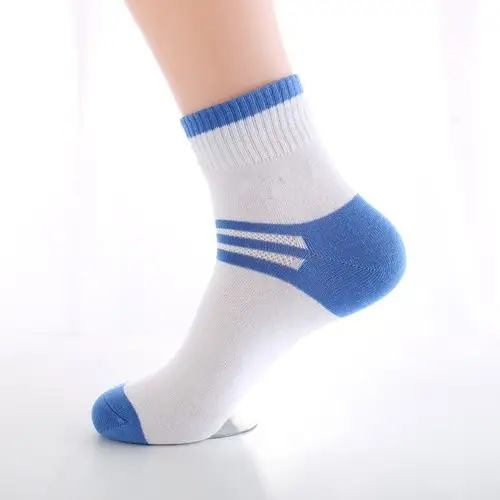
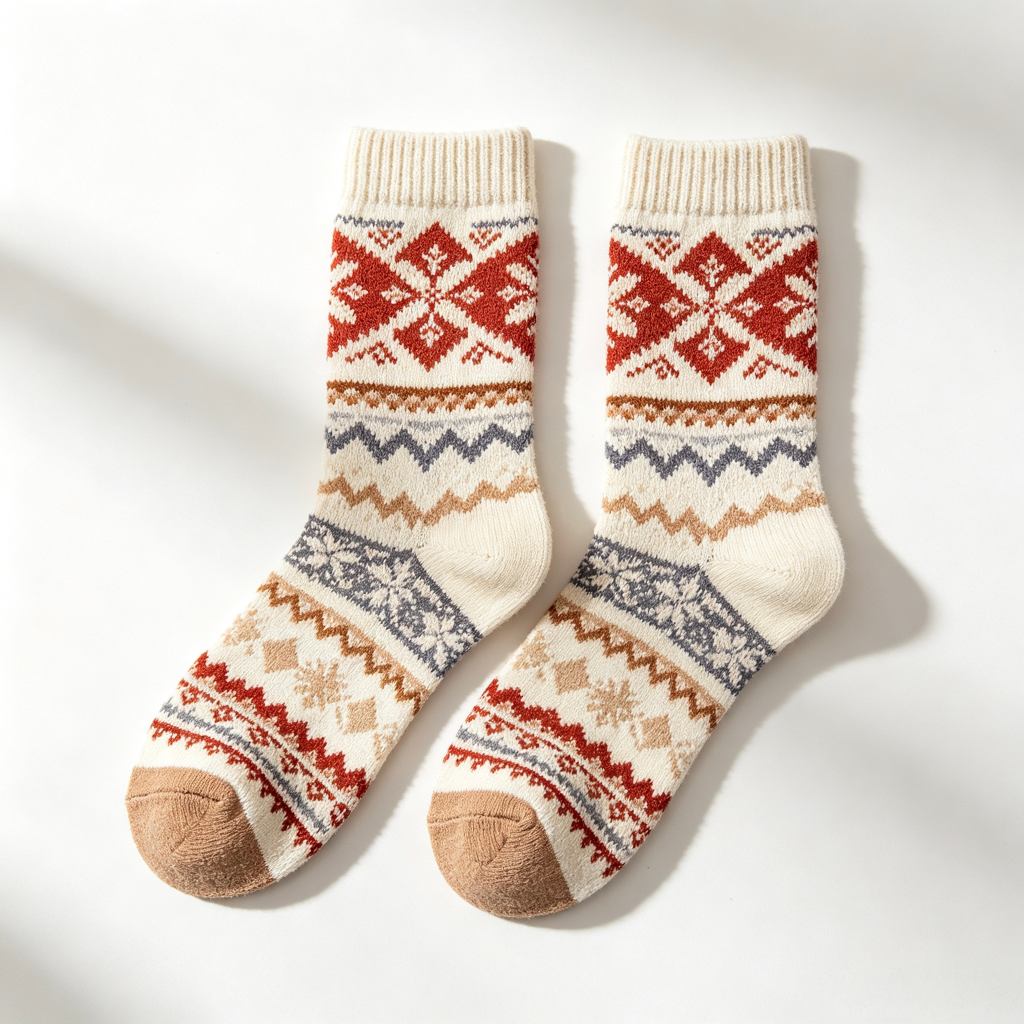
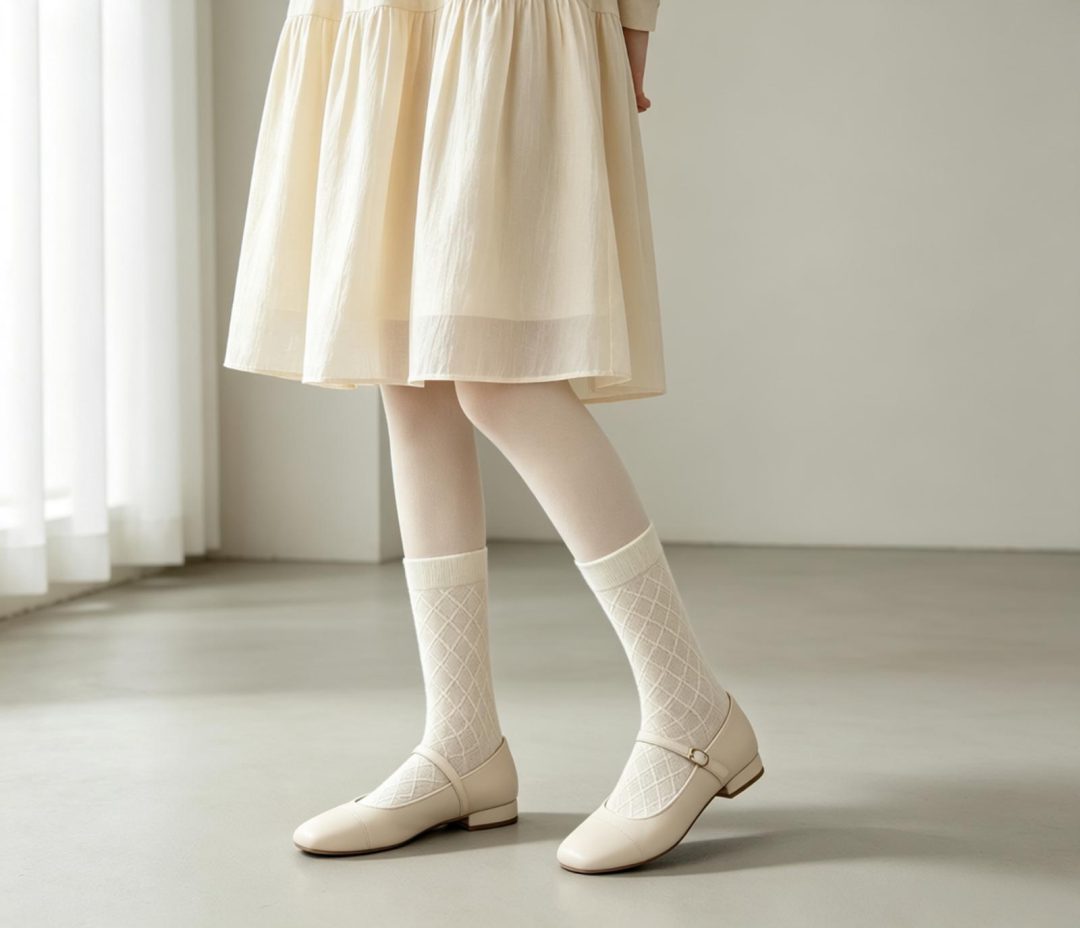
If you are sourcing custom knit pattern socks, the most common mistake is asking for a price before there is a specification. A quote built without yarn composition, gauge and a size set is a guess, and guesses turn into disputes several weeks later. What follows covers the specification, the cost structure, the minimum per color and the calendar. The product route starts at custom knit pattern socks.
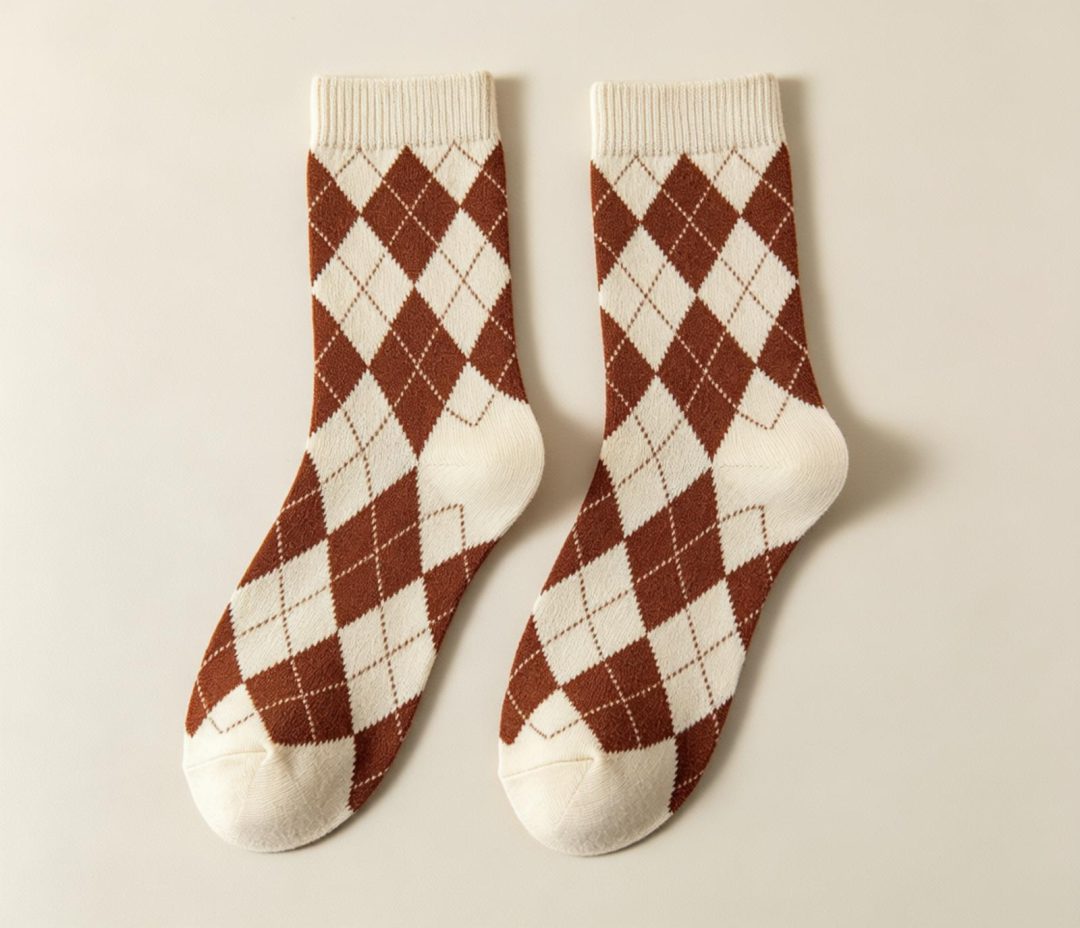
In plain terms: if you are buying custom knit pattern socks, plan on 300 pairs per color, 3-7 days for samples and 5-25 days for a bulk run. Searches like this usually come from buyers who want the specification and the commercial terms settled before asking anyone for a quote, which is why this page goes straight to numbers rather than marketing copy.
Three specifications decide both the outcome and the price: number of colours, float length and minimum stroke width. Get those on your enquiry sheet and quotes become comparable.
On this page:
- QC: the checks to ask for before the shipment leaves
- How jacquard socks are made, step by step
- Certificates and reports to request up front
- Minimum per color, and why the number is what it is
If that is not the wording you used, these are the common alternatives: custom knit socks; custom jacquard socks; custom knit socks manufacturer.
QC: the checks to ask for before the shipment leaves
AQL 2.5 is the common default for apparel, and many European and US buyers additionally require zero tolerance for critical defects. AQL 4.0 suits promotional goods, and AQL 1.0 is used for high-value or medical channels. Then the product-specific checks:
| Check | Method |
|---|---|
| Distortion after washing | Whether the pattern twists or shrinks. |
| Pattern symmetry and centring | Left/right and front/back placement within 3 mm. |
| Colour difference | Compare with the approval sample under D65 light. |
| Snags and broken yarn | Visual check across every float area. |
For the first order, add a pre-production sample and an in-line check. Two checkpoints cost very little compared with finding a defect at final inspection. Process and test references: sock packaging options.
How jacquard socks are made, step by step
Understanding the production sequence tells you where delays and defects come from.
1. Yarn preparation. Cones are inspected and, if the programme needs it, dyed to a confirmed shade. Custom dyeing adds 7–14 days and carries a mill minimum.
2. Knitting. Socks are knitted as tubes on circular sock machines. 84N-96N coarse gauges serve terry and heavy socks, 108N-120N is the workhorse for everyday styles, 144N-168N carries fine jacquard and athletic structure, and 200N tops the range for dress socks and very fine jacquard.
3. Toe closing. There are three toe closures: standard overlock, the cheapest and the one that leaves a seam ridge; Rosso linking, which is substantially flat; and hand-linked seamless, the most comfortable and the most expensive per pair.
4. Washing and boarding. Washing removes knitting oils and sets dimensions; boarding (heat-setting on forms) gives the final shape and smoothness.
5. Inspection and pairing. Each pair is checked for defects, matched by size and shade, and paired.
6. Packing. Hang tags, polybags, inner boxes and cartons per the packing specification.
The bottleneck for jacquard socks is rarely knitting capacity; it is finishing and packing, which is where most schedule slips actually happen. Full process notes: sock packaging options.
Certificates and reports to request up front
Certificates prove a management system exists; test reports prove a specific batch passed. You generally need both. For jacquard socks, request:
- OEKO-TEX Standard 100
- BSCI / Sedex-SMETA
- ISO 9001
Match the certificate to the channel, not to a checklist. A promotional giveaway and a pharmacy listing do not need the same paperwork, and over-buying tests is as wasteful as under-buying. Commercial terms and compliance handling: custom socks wholesale.
Minimum per color, and why the number is what it is
Buyers often treat MOQ as a negotiating position. It is not: it is arithmetic done by the production planner. Three costs have to be covered before the first pair is worth knitting.
- Machine programming and set-up. Fixed per design, regardless of how many pairs follow.
- Yarn minimum. A dyelot has a floor, which is why custom shades raise the entry point.
- Changeover labour. Every swap of yarn, needle setting or programme costs machine hours.
The standard minimum is 300 pairs per color. What shapes the order is not the design but the way it is split: each colourway is its own production run, and each size block is knitted and paired separately.
If you are unsure about size split, ask how the 300 pairs are distributed across sizes within one colourway; that is the number that actually constrains the order. Terms and sampling rules are set out on custom socks wholesale.
FAQ
What is the minimum order?
300 pairs per color; gauge and construction affect how the minimum is applied.
Can small logo details be knitted?
The smallest unit in jacquard is a loop, so fine lines need simplifying. Very small text is better embroidered or printed on a label.
Can you do gradient colour?
No. Jacquard switches between colour yarns, so continuous gradients are not possible; digital printing is the right route for that.
What is the fastest way to get an accurate quote?
Send a specification sheet — yarn composition, needle count, size set, construction, artwork route, quantity and packing. A quote built from that is usually within a few percent of final; a quote built from a photo is not.
If you are still deciding, these pages help: sock resources.
Where to go from here
If you take one thing from this: the cheapest quote is usually the one with the loosest spec. Write the spec first and the quotes become comparable. custom knit pattern socks is the place to begin; custom socks covers the commercial terms.