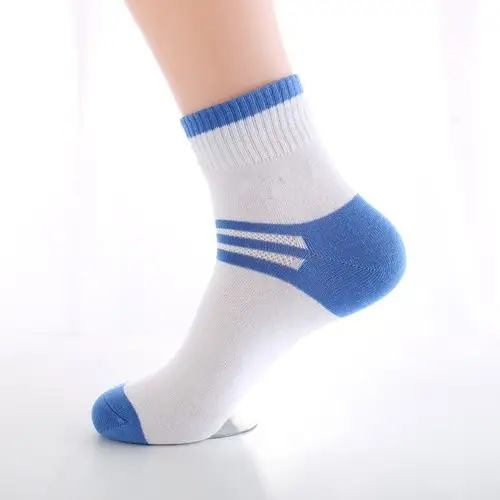
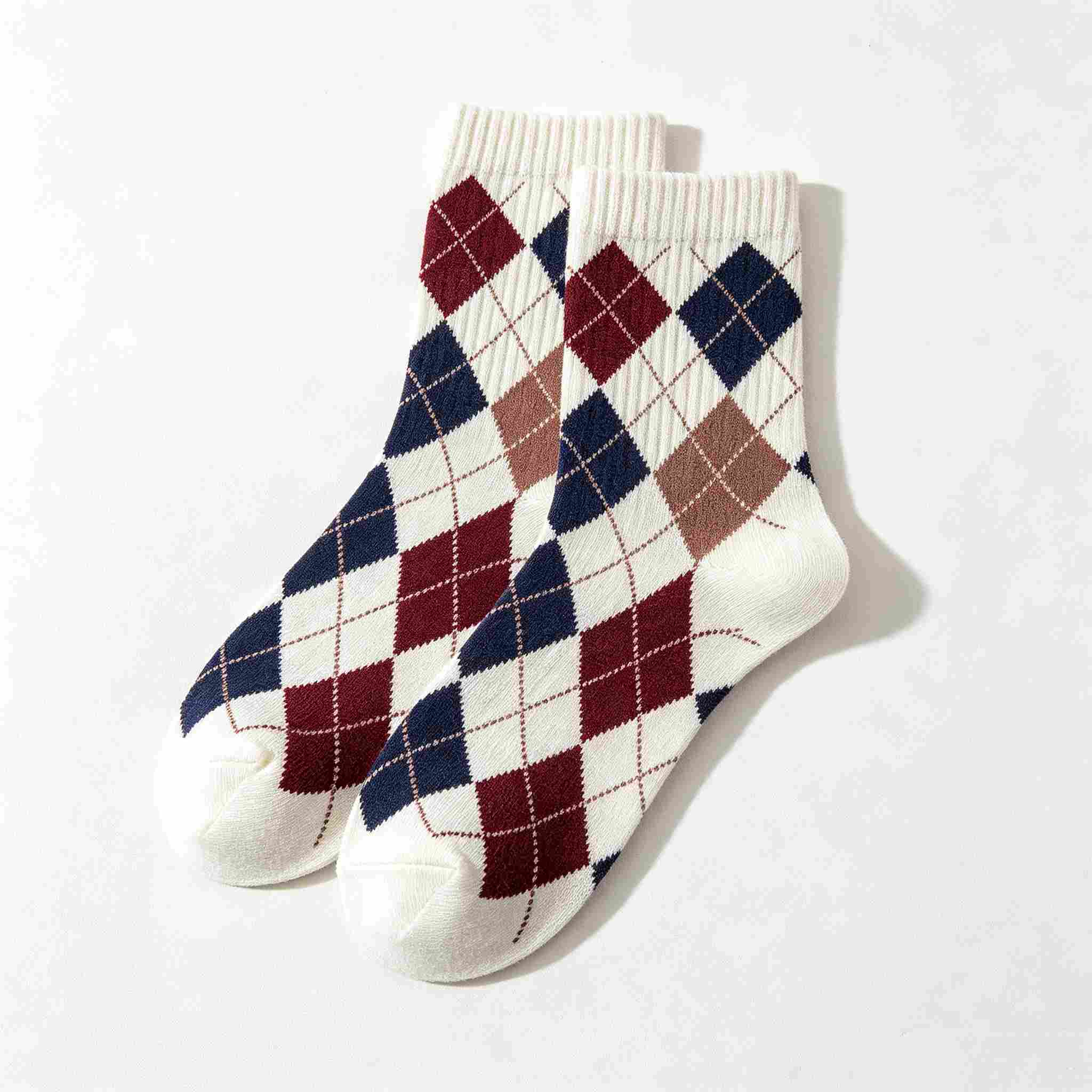
custom knit pattern socks bulk is better understood as a specification range than as a product. What you receive depends almost entirely on what you write down first. This guide goes through the numbers worth confirming before you contact anyone, starting with custom knit pattern socks bulk.
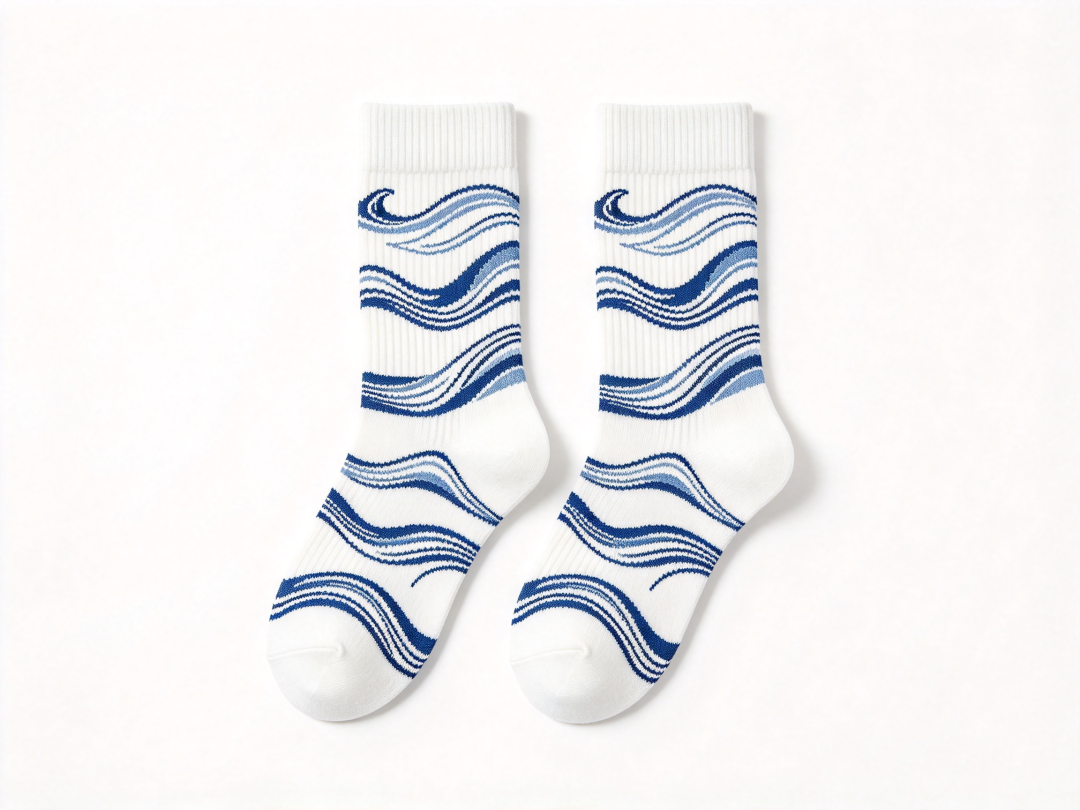
Buyers also arrive here searching: custom knit socks; custom jacquard socks; custom knit socks manufacturer. They are the same question asked from different angles.
4 mistakes buyers make with jacquard socks
1. Sending a vector file and calling it done
Why it happens: Jacquard is a loop structure, not printing.
What to do instead: Supply simplified grid artwork at loop resolution.
2. Asking for too many colours
Why it happens: Beyond 8 colours efficiency collapses and floats get long.
What to do instead: Approve a 4-colour sample first.
3. Ignoring the reverse floats
Why it happens: A real snag risk, especially in children’s socks.
What to do instead: Specify floats of 5 needles or fewer, or a clip-float finish.
4. Not agreeing the yarn source
Why it happens: Stock yarn and custom-dyed yarn can differ by delta E 2-3.
What to do instead: Sign a colour approval sample before bulk.
A useful test: if you cannot point to where each of these is addressed in your spec sheet, the spec sheet is not finished. The commercial terms that prevent most of them: wholesale sock program.
Four things that decide your unit price
Every quote you receive for jacquard socks comes back to the same four variables.
1. Fibre system. Mercerised cotton – Lustrous surface, the usual choice for dress jacquard.; Combed cotton 75% / nylon 22% / elastane 3% – Crisp pattern definition with a dry handfeel.; Cotton / polyester blend – Brighter colours, but breathability drops as polyester rises.
2. Construction time. Higher gauges knit more loops per pair, and every added zone, band or colour slows the machine down further. This is usually 20 to 30 percent of what you pay.
3. Fixed setup cost. Programming, screens and machine changeovers are charged per design, not per pair. This is why the first step up from the minimum moves the price far more than doubling an already large order.
4. Everything after knitting. Washing, boarding, pairing, labels and cartons add another 8 to 12 percent and are frequently forgotten in comparisons.
The fixed cost in jacquard sits in pattern programming and machine set-up, which is why the gap between a minimum run and a full production run comes from amortising that, not from yarn.
Ask for the quote broken into those lines. A supplier who can split it will; one who cannot usually has not costed it. The commercial route is explained on wholesale sock program.
QC: the checks to ask for before the shipment leaves
AQL 2.5 is the common default for apparel, and many European and US buyers additionally require zero tolerance for critical defects. AQL 4.0 suits promotional goods, and AQL 1.0 is used for high-value or medical channels. Then the product-specific checks:
| Check | Method |
|---|---|
| Pattern symmetry and centring | Left/right and front/back placement within 3 mm. |
| Colour difference | Compare with the approval sample under D65 light. |
| Snags and broken yarn | Visual check across every float area. |
| Distortion after washing | Whether the pattern twists or shrinks. |
Agree in writing what happens to rejected goods: rework, replacement or credit. Without that clause, an inspection report is just a document. Process and test references: ODM socks.
Sizing the first order
There is no advantage in ordering more than you can sell through, and no advantage in ordering less than the factory can schedule cleanly. The useful question is what the first order is for.
| Purpose | Sensible first order | Why |
|---|---|---|
| Quality and communication test | close to the minimum | you are buying information, not margin |
| Live launch with a known sell-through | one to three months of cover | avoids a forced reorder mid-season |
| Seasonal or gift programme | full season cover in one run | colours and yarn lots will not match later |
The standard minimum is 300 pairs per color. Ask separately about the size split within a colourway, because a supplier who answers with a single figure is usually quoting a stock item.
Seasonal and highly constructed styles carry a higher minimum for a simple reason: the machine spends longer being set up than it does knitting. Terms and sampling rules are set out on wholesale sock program.
FAQ
Can small logo details be knitted?
The smallest unit in jacquard is a loop, so fine lines need simplifying. Very small text is better embroidered or printed on a label.
Can you do gradient colour?
No. Jacquard switches between colour yarns, so continuous gradients are not possible; digital printing is the right route for that.
How long does sampling take?
Normally 3-7 days including pattern programming and trial knitting; each revision round adds 2-4 days.
What is the fastest way to get an accurate quote?
Send a specification sheet — yarn composition, needle count, size set, construction, artwork route, quantity and packing. A quote built from that is usually within a few percent of final; a quote built from a photo is not.
Related reading across the range: sock sizing guide.
Where to go from here
Ready to move? Put the spec sheet together first — yarn, needle count, sizes, construction, artwork, quantity, packing. Then custom knit pattern socks bulk and custom socks will get you a number you can plan against.