Ankle socks look like the easiest product in hosiery — less fabric, less coverage, simpler design. Manufacturing tells the opposite story: shorter socks expose every fitting challenge with nowhere to hide. The sock must stay on a moving, perspiring foot with minimal fabric, avoid sliding into the shoe, and remain invisible where designed to be invisible. Here is how they are made.
You will see every step below in custom no-show socks, where sampling runs before bulk production and MOQ starts at 300 pairs per design.
The Ankle Sock Family
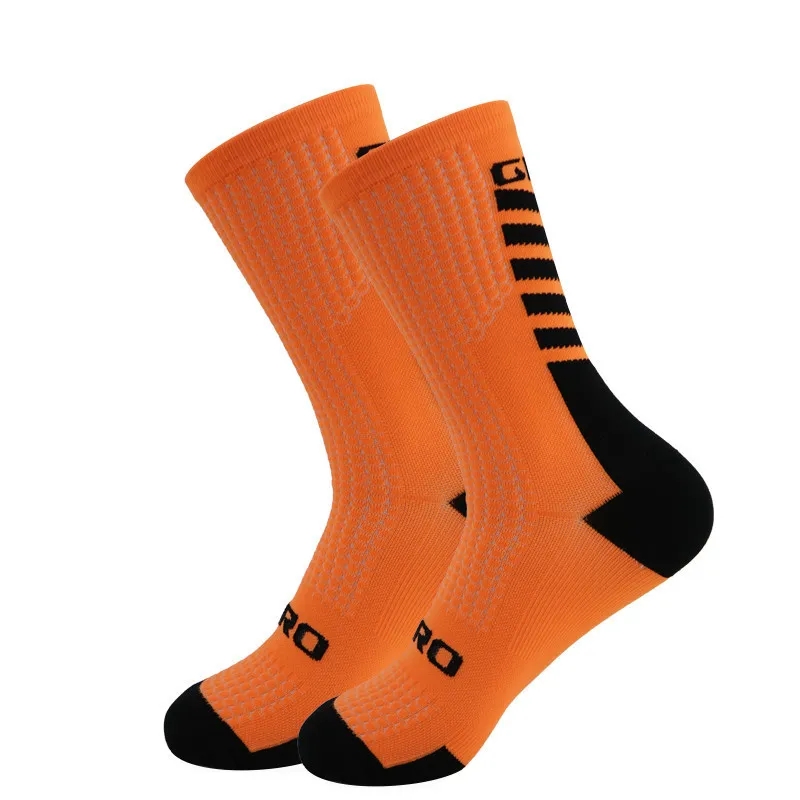
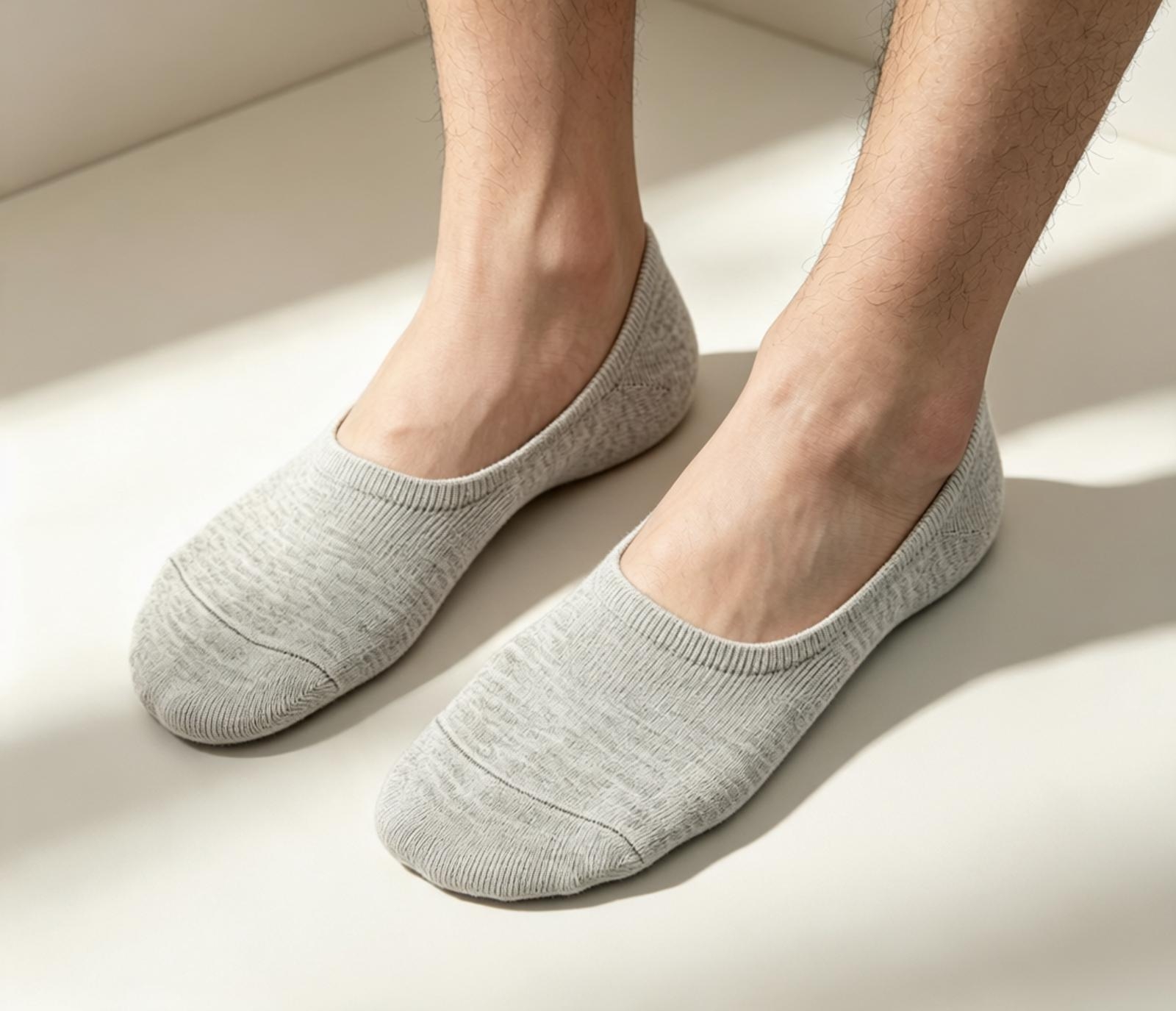
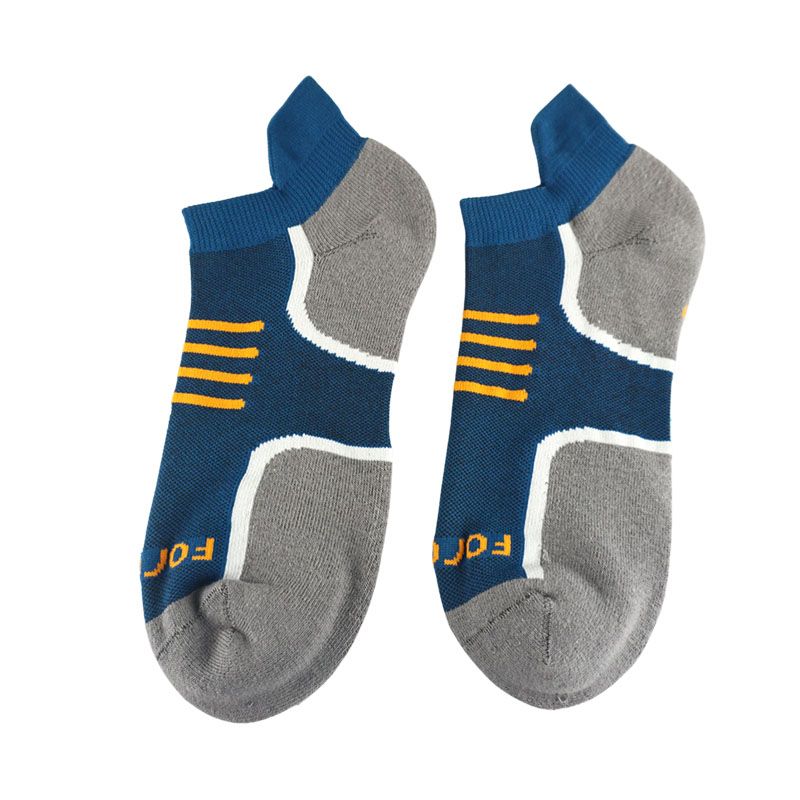
The category spans a height spectrum, each with distinct engineering: quarter socks (sitting above the ankle bone — the most forgiving fit), ankle/low-cut socks (at the bone), and no-show socks (below it, hidden in the shoe). The shorter the sock, the more critical the mechanics — a no-show lives or dies on its heel grip system, because there is almost no sock to hold it in place.
Heel Engineering: The Core Challenge
Every ankle sock’s fit depends on its heel pocket — the three-dimensional cup that anchors the sock to the foot. In short socks, a shallow or misplaced heel pocket causes the classic failure: the sock slides down into the shoe within minutes of walking. Quality ankle socks knit deeper, precisely-positioned heel pockets matched to the foot’s geometry, and QC checks heel positioning on worn samples. This invisible detail is the difference between the category’s best and worst products.
Silicone Grip Systems for No-Shows
No-show socks add the industry’s cleverest retention tricks: silicone grip strips or dots on the inside of the heel band that adhere lightly to skin and prevent downward slide. Applied and cured like grip-sole compounds, these grips carry the no-show category — quality grades survive many washes, cheap ones lose grip within weeks and doom the product to drawer exile. Grip durability is the number one no-show purchase criterion and the first thing to test in samples.
Cuffs and Elastic Bands
The cuff of an ankle sock has the hardest job in casual hosiery: stay snug around the ankle without pressure marks, through movement, in shoes that push against it. Solutions include covered-elastane rib bands (standard), relaxed self-gripping knits, and — in premium sport lines — arch compression bands that run under the foot, anchoring the sock from below. Cuff recovery after wear and washing is a routine QC check.
Materials for a Sweat Zone
Ankle socks live inside the hottest, most enclosed environment in footwear, in the shortest possible fabric. Fiber selection compensates: moisture-wicking combed cotton blends, polyamide and polyester performance yarns, and mesh or rib ventilation zones on the instep. Cushioning is concentrated in the sole (terry under heel and forefoot) since the top of the foot wants breathability, not bulk. Deep colors require strict colorfastness — ankle socks meet the most frequent laundering of any sock type.
Knitting and Finishing
Production runs on the same circular machines as longer socks with shorter, faster programs — ankle socks are efficient to knit, which explains their attractive pricing. Finishing focuses on dimensional stability: boarding sets heel pocket depth and cuff elasticity so the sock keeps its shape after the first washes. Seamless or rosso toe closing is standard in quality lines, since irritation complaints surface fastest in low-cut socks worn with minimal shoe coverage.
We go deeper on How Are No-Show Socks Made? in a separate guide.
FAQ
Q: Why do no-show socks slide off my heel? A: Poor heel pocket depth or weak silicone grip strips — the two engineering features that define the category’s quality products.
Q: Are ankle socks and no-show socks the same thing? A: No — ankle socks sit at or above the ankle bone; no-shows sit below it and rely on silicone heel grips to stay on.
Q: What is the most important quality test for ankle socks? A: Wear-and-wash testing: after five machine washes, the cuff should still recover and no-show grips should still hold.
CONCLUSION
Ankle socks are compact engineering problems: heel pockets, grip systems, cuff recovery and moisture management packed into minimal fabric. The category’s winners sweat these invisible details — and buyers who wash-test samples before ordering find them reliably.
When you are ready to produce, Sockmader covers sampling, MOQ and lead times in one place.
Start your next order with custom no-show socks from Sockmader — send artwork, size range and target quantity for a quote.