No-show socks solve a contradiction: be there for comfort and hygiene, but be invisible in a low shoe. That contradiction is an engineering problem — the sock must grip without a tall cuff to hold it. This article explains how no-show socks are made to disappear and stay put, and why most “they keep slipping off” complaints trace back to one missing component rather than to the sock as a whole. For a brand building a low-cut line, understanding the invisible-fit problem is the difference between a hero SKU and a return magnet.
You will see every step below in no-show sock manufacturing, where sampling runs before bulk production and MOQ starts at 50 pairs per design.
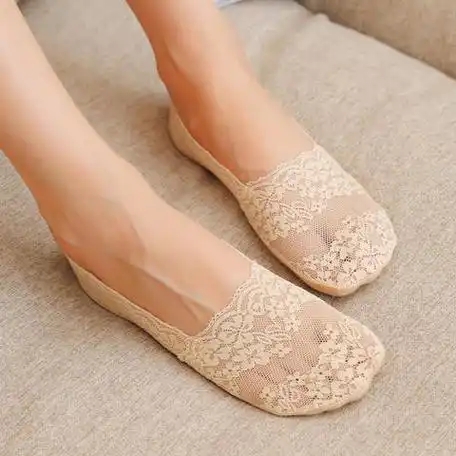
The Low-Profile Knit No-show socks are knit short — covering the foot to just below the ankle bone. The knit uses a fine, smooth yarn (combed cotton or a nylon-elastane blend) with a thin hand so it does not bulge under a loafer or sneaker. A thicker yarn would show as a lump, defeating the purpose. We run the leg on a finer gauge than a crew sock and keep the footbed light so the silhouette disappears the moment a shoe is on. The short profile also means less yarn and faster knitting, which is why no-shows are a cost-efficient volume item when done right.
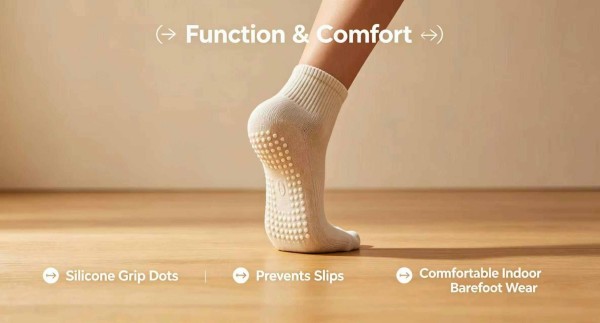
The Silicone Heel Grip With no tall cuff to hold the sock, the grip comes from a silicone strip inside the heel. The strip catches the skin and stops the sock sliding into the shoe. Quality no-shows use a soft, skin-safe silicone applied in a post-knit step (like grip socks, but a single strip rather than a full sole). Cheap versions omit it or use a weak elastic that fails within weeks. We treat the heel strip as the defining feature of a no-show: if it is missing, the sock is just a short ankle sock that will not stay put, and the buyer will blame the brand, not the omission.
Bonded or Knit Cuff The top edge is either a soft knit rib (discreet) or a bonded (heat-sealed) cuff that lies flat and does not roll. Bonded cuffs stay invisible better but cost more. Either way, the cuff must sit below the shoe opening — measured against the target shoe, because a cuff that peeks above a loafer reads as a styling error. We sample the cuff against the actual shoe type the sock is meant for, not against a generic form, because the same cuff can vanish in a sneaker and peek in a loafer.
Toe and Fit A linked toe prevents ridge complaints in low shoes, where every seam is felt. The arch gets a light elastane band for shape. Some no-shows add a silicone dot at the ball for athletic use, but that risks show-through in dress loafers, so we keep it off fashion no-shows. The footbed profile is tuned so the sock follows the shoe last; a flat, unshaped footbed bunches under the ball of the foot and the wearer feels it with every step, which is a subtle but real reason cheap no-shows get abandoned.
Manufacturing Notes No-shows knit fast but need precise cuff placement; a mis-set cuff rolls or shows. Boarding uses a low-heat form sized to the short profile so the sock relaxes into the correct shape without stretching the heel strip. Pair-match by shade; the smooth hand means shade drift shows more than on a textured crew. Because the product is judged largely by whether it disappears, we QC every pair against a reference shoe photo so the cuff line is consistent across the run.
If that is settled, the next question is usually answered in No-Show Socks Size Chart.
FAQ
Q: Why do no-shows slip off? A: Missing or weak heel silicone; a quality strip is non-negotiable, and elastic alone will not hold a cuffless sock.
Q: Is the silicone heel safe for skin? A: Yes — skin-safe silicone, the same grade used on grip socks, applied in a thin, flexible strip.
Q: Bonded or knit cuff? A: Bonded stays invisible better; knit is cheaper and softer, but rolls more easily under a low opening.
CONCLUSION
No-show socks are hidden by a low knit and held by a silicone heel grip — not a cuff. Spec the heel strip, a flat bonded cuff and a linked toe, and the sock stays on and out of sight, which is exactly what the buyer paid for when they chose “no-show” over “ankle.”
Ready to price this out? Start with a sample from the Sockmader custom sock factory, or send your artwork and target quantity for a quote.
If you are planning your own line, our custom no-show socks program covers sampling, MOQ and lead times in one place.