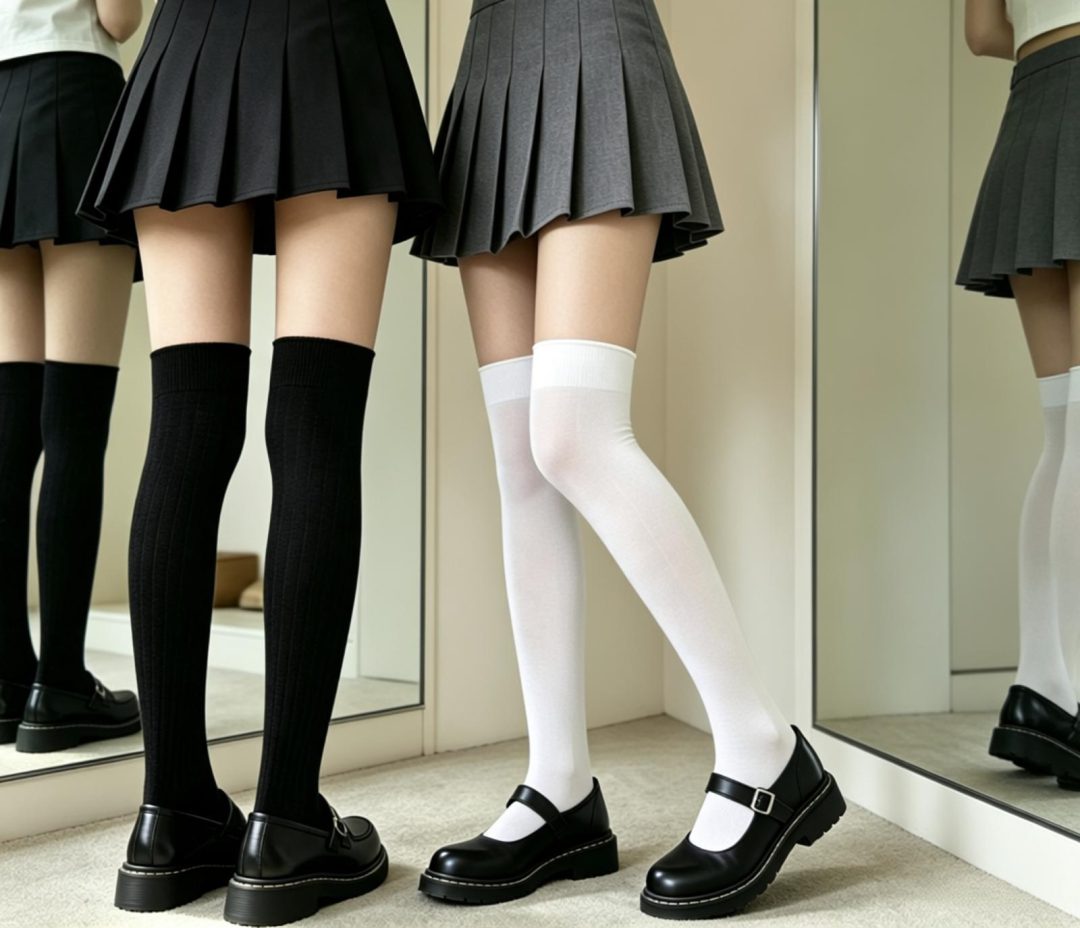
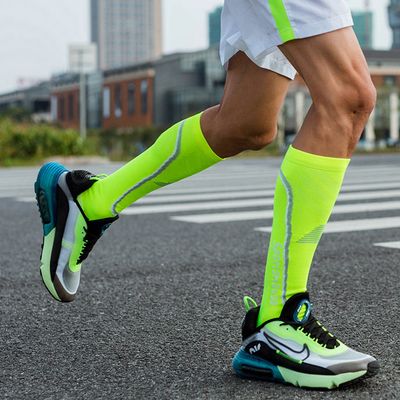
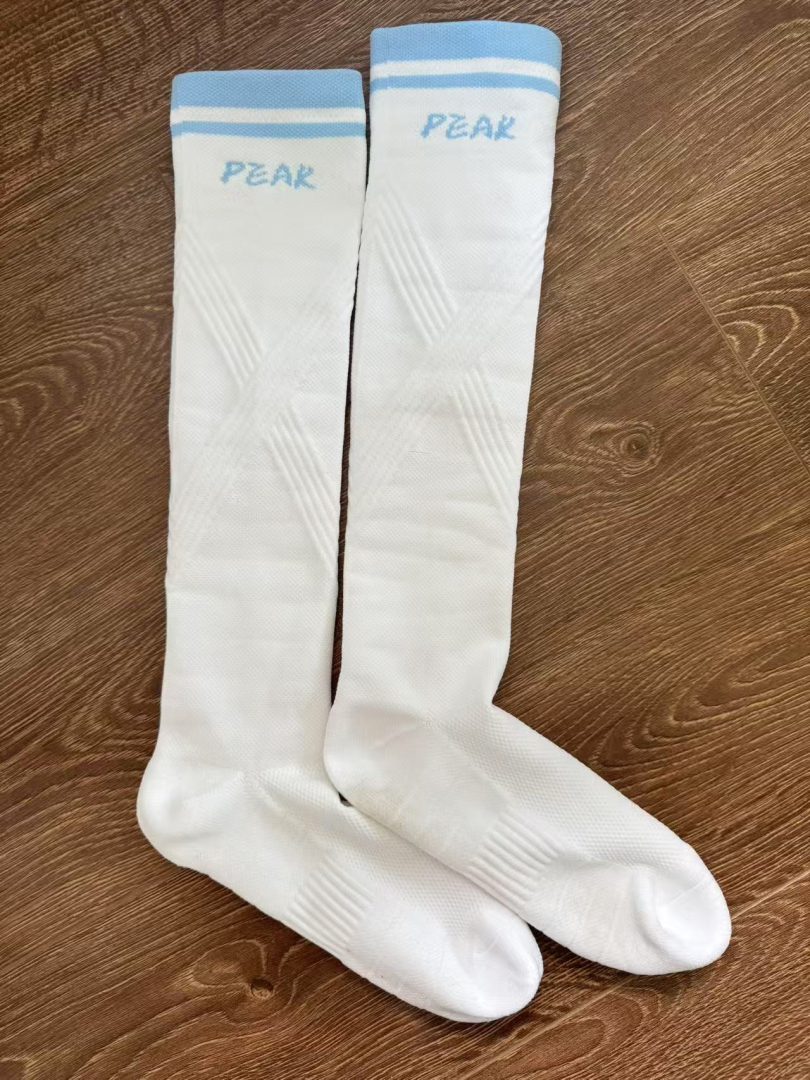
Leg warmers are a distinct product from socks — open at both ends, pulled over the calf, worn for dance warmth or fashion layering. Buying them in bulk means matching the knit to the use, because the two main markets want almost opposite things from the same-looking tube. This guide covers dance versus fashion specs, the construction details that matter, and how to run a wholesale leg warmer order. For studios and brands alike, the decision that matters most is made before sampling: is this a garment that must stay up, or one that must slouch?
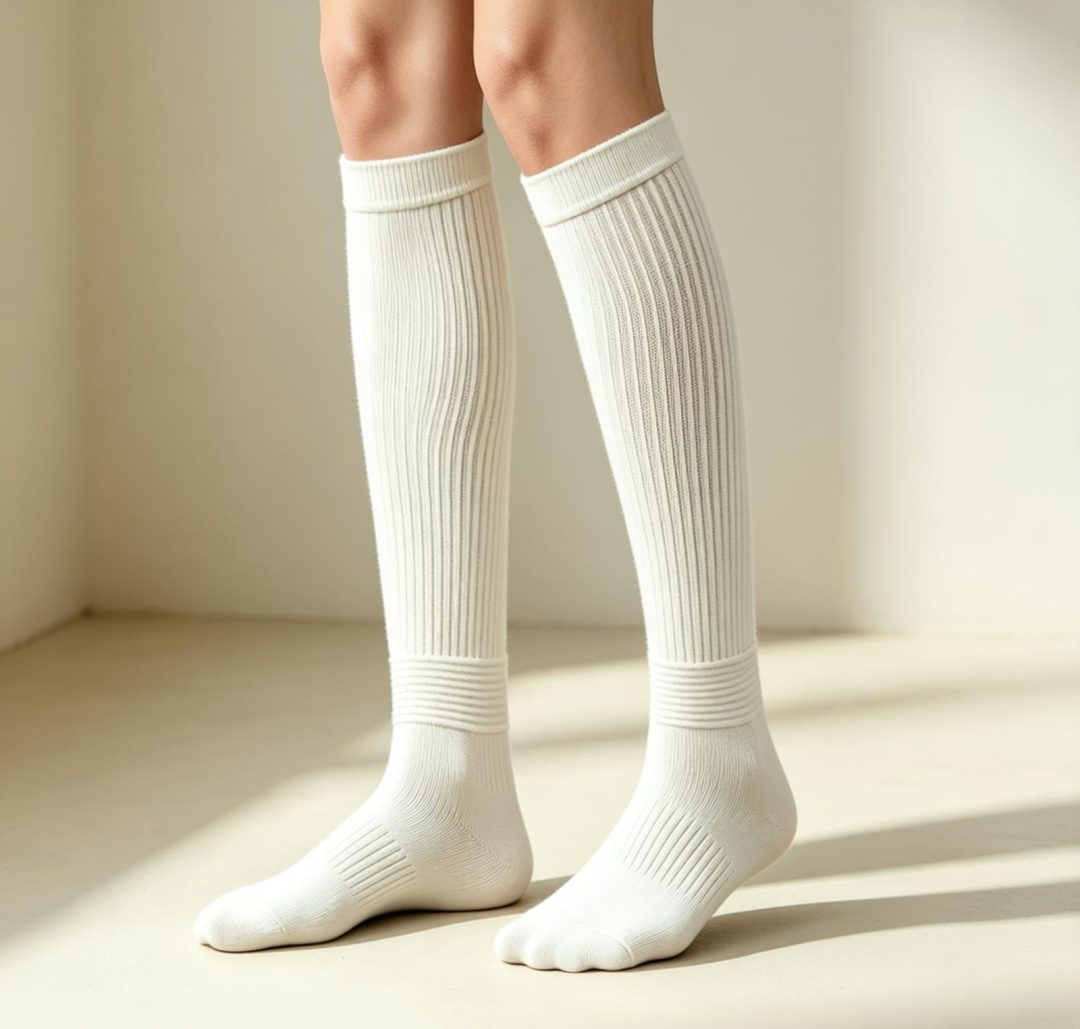
Every specification in this guide is adjustable through wholesale knee-high socks, from yarn and gauge to cushioning and packaging.
Dance vs Fashion – Dance: a snug 2×2 rib that stays up through movement, usually black or skin-tone, knee-to-thigh length. Prioritises stay-up and warmth, and is worn at the barre to keep muscles warm between exercises. – Fashion: a softer, often scrunchy knit in statement colors, worn pushed down around the ankle. Prioritises look over tension. The two need different rib tension, and mixing them in one purchase order is the classic cause of returns — half the batch grips when it should slouch, or slides when it should hold.
Length and Fit Dance warmers: knee or thigh, snug, cut to cover the calf without bunching at the back of the knee. Fashion: any length, worn scrunched. Specify length and whether the top should grip (dance) or slouch (fashion). A dancer’s warmer that slouches is useless, because it will not hold position through a plié; a fashion one that grips looks wrong, because the whole point is the relaxed stack. We sample both behaviours rather than trusting the length measurement alone.
Knit and Yarn Acrylic-wool blends are common (warm, cheap, washable and easy to care for); merino blends suit premium lines where softness and temperature buffering justify the cost. A soft hand matters more than durability for fashion, where the piece is worn occasionally; for dance, recovery — the snap-back after stretching — matters most, because a warmer that bags after an hour looks and feels worn out. Specify recovery explicitly if the use is dance, since it is not a property most buyers think to ask for.
Construction Details Both ends are finished, usually with a ribbed or turned cuff, and the open construction means there is no heel or toe to engineer. The seam should be flat and soft, because it sits against the calf for hours. Elastic can be added at the top for dance stay-up, but it must be soft and wide enough not to dig. We finish both ends on the same machine setting so the two cuffs match, which sounds minor but is the detail that makes a wholesale batch look considered rather than improvised.
Bulk Sourcing Leg warmers: MOQ ~50 pairs per style (simpler than socks — no heel or toe). Lead 5-25 days. Require a recovery test for dance (stretch 200%, check return) and a color-fastness check on statement shades. Sample the slouch or grip behaviour, not just the color, because two warmers of identical dimensions can behave completely differently depending on rib tension. We lock the rib tension as a spec line so reorders behave the same as the first batch.
We handle the adjacent decision in Leg Warmers Size Chart.
FAQ
Q: Dance or fashion knit for a first order? A: Pick one — they differ in rib tension. Dance needs recovery and grip; fashion needs softness and slouch.
Q: Acrylic or merino blend? A: Acrylic-wool for value and easy care; merino for premium softness and temperature buffering.
Q: Why lower MOQ than socks? A: No heel or toe engineering — a simpler, faster knit that is cheaper to set up.
CONCLUSION
Leg warmers are bought by use: dance needs a grippy, recovering rib; fashion needs a soft scrunch. Match the knit and the rib tension to the wearer and the bulk order performs, instead of coming back as a return that was entirely predictable at the sampling stage.
When you are ready to produce, Sockmader’s custom sock manufacturing team covers sampling, MOQ and lead times in one place.
Start your next order with custom knee-high socks from Sockmader — send artwork, size range and target quantity for a quote.