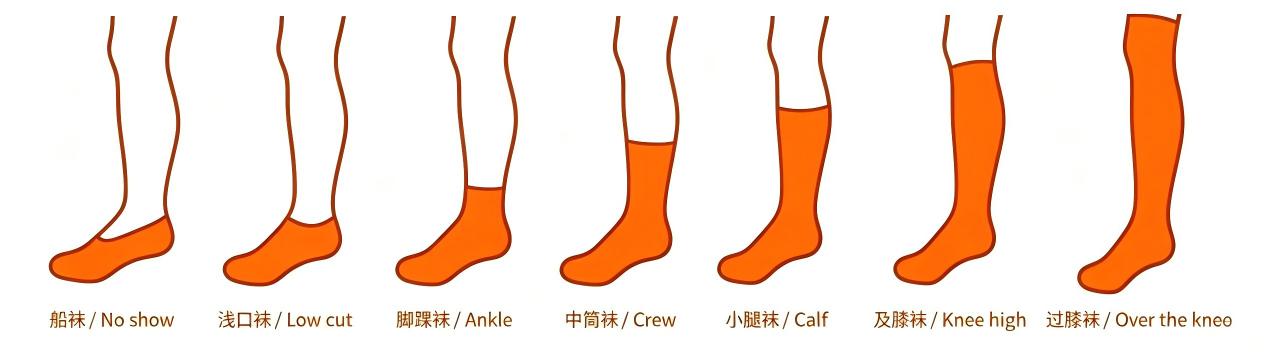
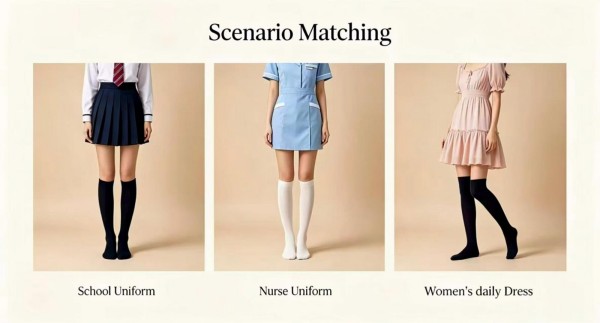
Leg warmers size by calf and length, not shoe — and the “scrunch” look depends on getting both right. For dance studios ordering bulk, this chart covers the bands, the length options, and the fit detail that makes or breaks the look. Sizing a leg warmer is a two-dimensional problem, and treating it as one-dimensional is why studio orders so often arrive with a pile of warmers nobody can wear.
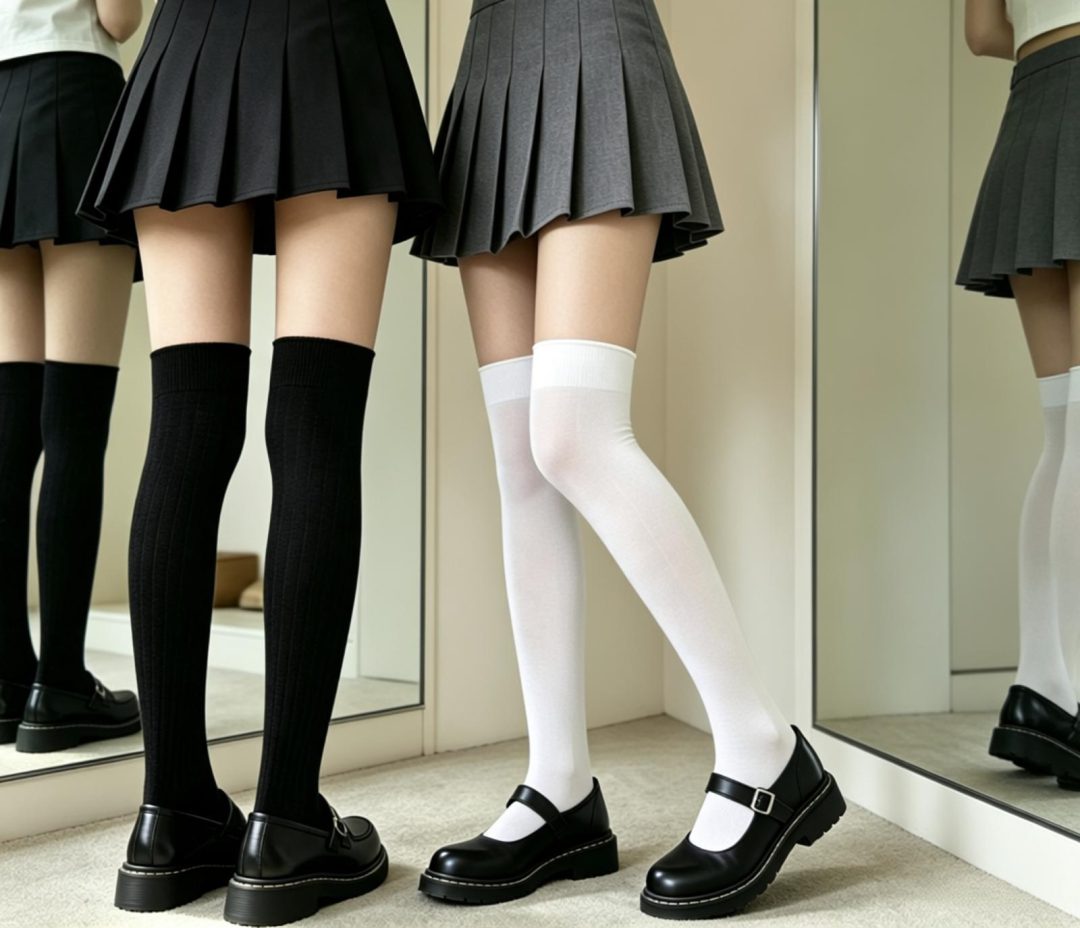
Sizes in this chart are available through custom knee-high sock range, and every size run can be graded and sampled before bulk production.
Size Bands – S: calf 28–34 cm – M: calf 34–40 cm – L: calf 40–46 cm – XL: calf 46 cm+ Unlike socks, leg warmers need circumference, not foot size. Measure the widest part of the calf, with the leg relaxed, and order by your wearers’ calf distribution — dance studios skew M and L, because dancers’ calves are typically more developed than the general population’s at any given body size.
Length Knee (40–45 cm) and thigh (60–70 cm) are the common lengths, with a mid-calf fashion option around 30 cm. Specify length per band; a thigh warmer on a short leg bunches awkwardly behind the knee, and a knee warmer on a tall dancer leaves a gap where warmth is needed. We set length against the band rather than as a single number, because the same nominal length sits differently on different calf and leg proportions.
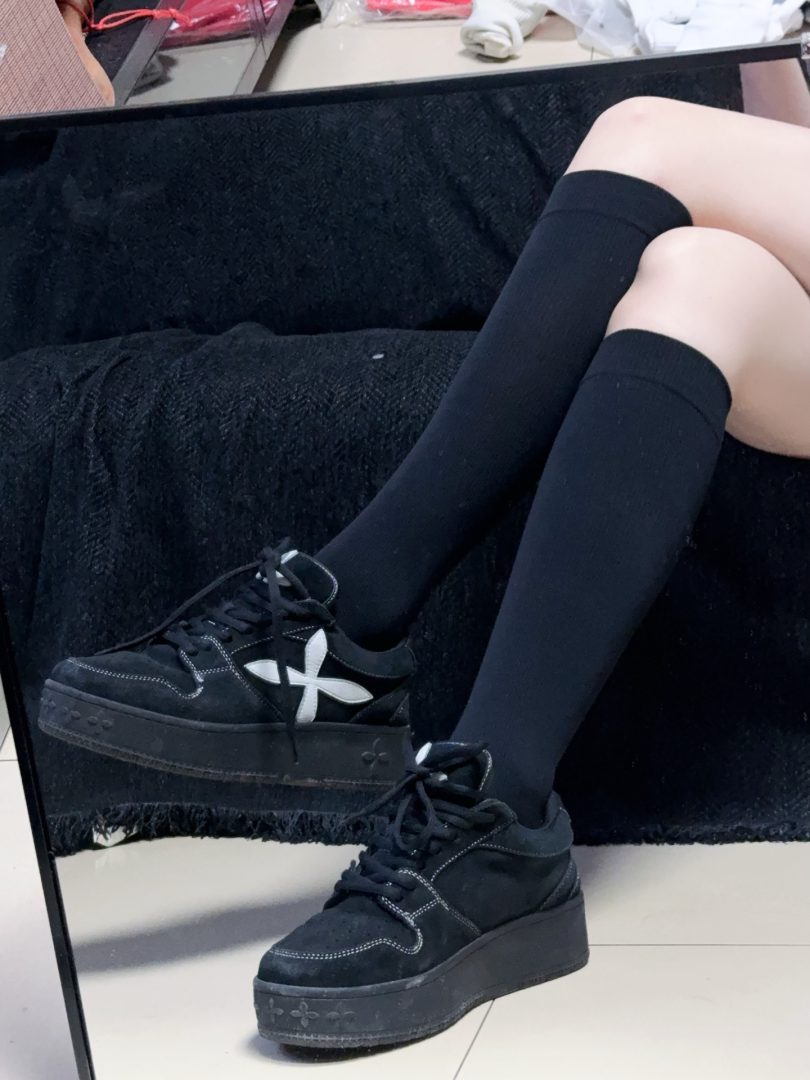
Scrunch Fit The fashion “scrunch” needs a warmer slightly shorter than the leg so it stacks into folds — too long and it just covers, too short and it slips down. Dance fit is the opposite: long enough to stay up, snug enough not to migrate. Confirm the intent before sampling, because the same size can be right for one use and wrong for the other. We ask buyers to state “grip” or “slouch” on the PO so the factory is not left to guess which look is wanted.
Fabric Stretch and Recovery Stretch determines how forgiving a band is; a high-elastane rib will cover a wider calf range but may lose shape faster. Recovery determines whether the warmer still fits at the end of a class. For dance, prioritise recovery — a warmer that stretches well but does not return will creep down the leg. For fashion, stretch can be prioritised since the slouch is forgiving. We test both on every leg warmer yarn before it goes into a studio quote.
Studio Split Dance studios: 45% M, 40% L, 15% S, with XL on request. Fashion wholesale: weight to M with a spread of lengths, since the slouch look works across a wider calf range. Add 10% M for replacement, because warmers go missing in shared studio spaces as often as shoes do. We recommend studios collect a simple calf-size spreadsheet at enrolment, which turns the second order into a data-driven split instead of another guess.
Measuring for a Bulk Order Measure the calf at its widest point with the leg relaxed and standing, not seated, because a seated measurement runs smaller and will push the whole order a band down. Record length from just below the knee to the intended top of the warmer, and note whether the wearer wants coverage or scrunch. We supply a simple measuring guide studios can use at enrolment, which converts a guess into a dataset and makes every subsequent order more accurate than the last.
Knee-High Socks Buying Guide picks up where this article leaves off.
FAQ
Q: Calf or shoe size for leg warmers? A: Calf circumference — they do not cover the foot, so foot size tells you nothing useful.
Q: How to get the scrunch look? A: Size slightly short for fashion; dance wants long and snug instead, with good recovery.
Q: Unisex? A: Yes — sized by calf band, though male dancers typically skew to the larger bands.
CONCLUSION
Size leg warmers by calf and length, and decide scrunch versus stay-up before sampling. Right bands make the warmer perform for dance or read right for fashion, and the decision only has to be made once to get years of reorders right.
Ready to price this out? Start with a sample from Sockmader’s custom knee-high socks team, or send your artwork and target quantity for a quote.