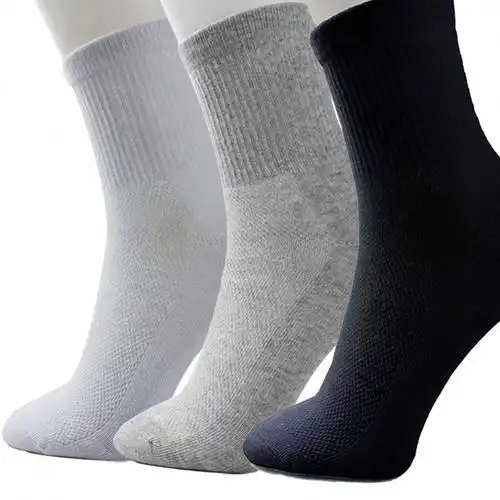
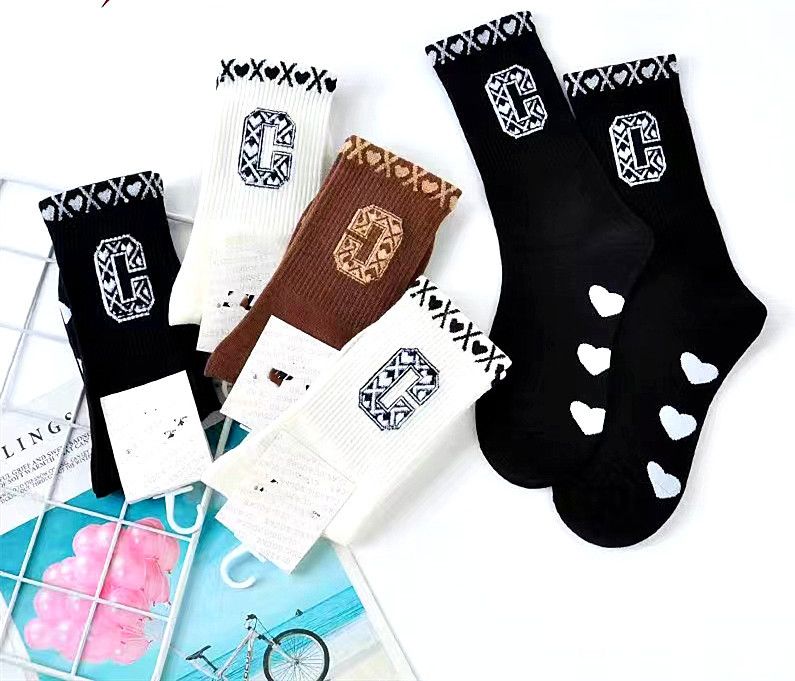
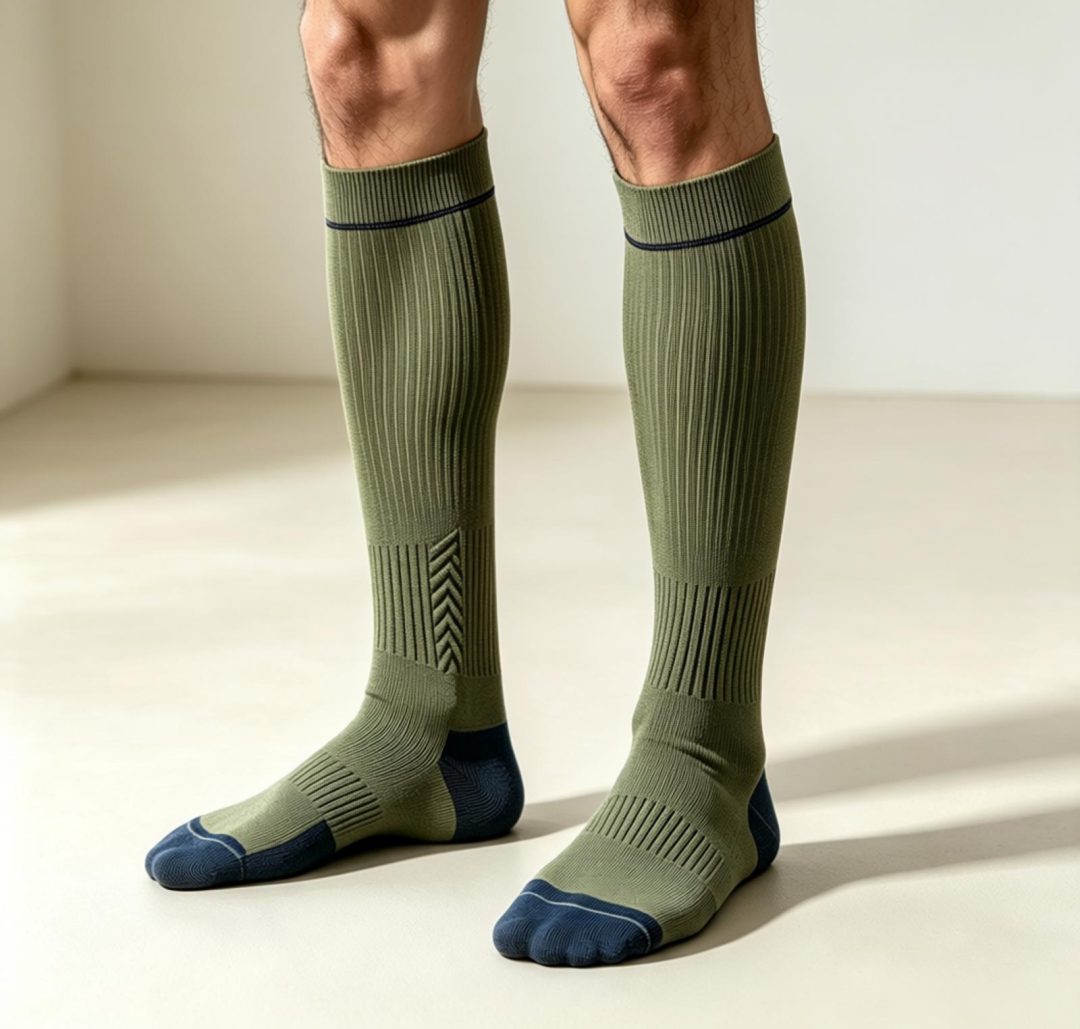
boot socks wholesale looks like a simple purchase until you try to specify one. Two orders with the same name can differ in yarn, needle count, cushion structure and finishing, and end up at very different prices. This page is written for buyers who already know they want the product and now need the parameters behind it. Full route: boot socks wholesale.
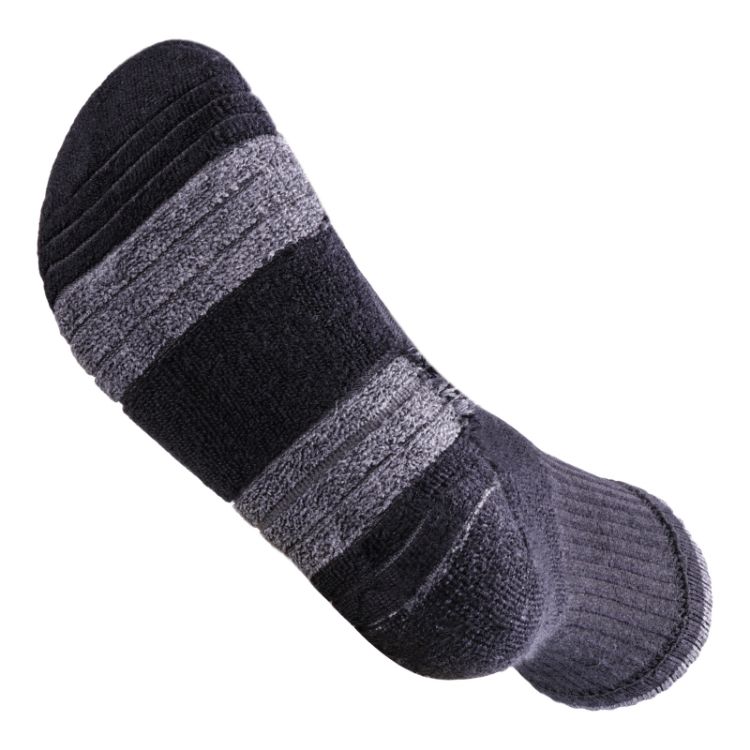
Short answer: for anyone searching boot socks wholesale, MOQ starts at 50 pairs per design, sampling takes 3-7 days and bulk production takes 5-25 days. People who look this up are usually building a resale or distribution programme, not buying for personal use, so below I have kept it to the parameters, the cost structure and the calendar rather than product adjectives.
The single most useful thing you can do before contacting a factory is write down reinforcement zones, leg height and abrasion target. Almost every delay traces back to that being left vague.
On this page:
- What the price per pair is actually made of
- Which yarn blend actually performs
- Minimum order: what actually sets the number
- Timeline, stage by stage
If that is not the wording you used, these are the common alternatives: custom boot socks; custom work socks; boot socks manufacturer.
What the price per pair is actually made of
Prices go stale; structure does not. This is the split to negotiate against.
- Yarn, 35 to 50 percent of the total. The dominant line. Wool 20-40% / acrylic / nylon – Abrasion resistance, cushioning and moisture handling.; Cotton / polyester / elastane – Everyday workwear that washes and dries fast.; High-tenacity nylon reinforcement yarn – Used in the heel and toe zones.
- Knitting and labour, 20 to 30 percent. Set by gauge and structural complexity.
- Artwork and setup, 5 to 15 percent. Programming, screens, digitising – a fixed cost, which is exactly why small orders carry a higher unit price.
- Finishing, pairing and packing, 8 to 12 percent. Washing, boarding, pairing, tags, cartons.
- QC, overhead and margin, the remainder.
Value work socks out as cost per wear: paying 20% more for a sock that lasts twice as long is the cheaper decision.
A useful rule: discounts come from amortising setup cost, not from secretly cheaper yarn. Ask which line moved. The commercial route is explained on bulk custom socks.
Nearly every sourcing dispute traces back to a spec that was never written down. Put these on your enquiry sheet and most of the risk disappears.
| Spec | What to write | Why it matters |
|---|---|---|
| Reinforcement zones | Double-layer or terry at heel and toe. | The main variable in work sock lifespan. |
| Leg height | Mid-calf or over-the-calf to clear the boot collar. | Must be matched to the work boot. |
| Abrasion target | Martindale cycles and a real wear test. | Workwear buyers always ask for this. |
Two more that buyers forget: the needle count and the toe closure. 84N-96N coarse gauges serve terry and heavy socks, 108N-120N is the workhorse for everyday styles, 144N-168N carries fine jacquard and athletic structure, and 200N tops the range for dress socks and very fine jacquard. There are three toe closures: standard overlock, the cheapest and the one that leaves a seam ridge; Rosso linking, which is substantially flat; and hand-linked seamless, the most comfortable and the most expensive per pair. Related reading: Sockmader.
Which yarn blend actually performs
| Blend | What it gives you |
|---|---|
| Wool 20-40% / acrylic / nylon | Abrasion resistance, cushioning and moisture handling. |
| Cotton / polyester / elastane | Everyday workwear that washes and dries fast. |
| High-tenacity nylon reinforcement yarn | Used in the heel and toe zones. |
Beyond the blend, three things decide the outcome more than the fibre name does:
- Staple quality. Combed cotton sheds short fibres, which is why it pills noticeably less than carded.
- Elastane share. Below about 3% the cuff will not recover; above 8% the sock feels tight and costs more.
- Reinforcement yarn. Nylon in the heel and toe is the cheapest durability you can buy.
Blend choice is a positioning decision, not a technical one. Decide what the wearer should feel on day one and after thirty washes, then work backwards to the fibre mix. Cross-category comparison: sock sizing guide.
Minimum order: what actually sets the number
MOQ is not a policy number a factory invents. It is the point at which machine set-up, yarn minimums and finishing labour stop losing money, and that point moves with construction.
| What changes | How MOQ moves |
|---|---|
| Number of colours in one design | each extra colourway is a separate knitting run |
| Whether yarn comes from stock or is dyed | custom dyeing carries a mill minimum per shade |
| Technique | jacquard and complex structures need longer machine programming |
| Size range | each size block is knitted and paired separately |
| Packing | retail-ready packing has its own minimum per carton |
A first order close to the minimum is a legitimate way to test quality and communication before committing volume – most programmes start there. Terms and sampling rules are set out on bulk custom socks.
Timeline, stage by stage
| Stage | Duration | What happens |
|---|---|---|
| Enquiry and quotation | 1 to 3 days | spec sheet confirmed, yarn availability checked |
| Sampling | 3 to 7 days | programming, trial knitting, finishing, sample shipped |
| Sample revision | 2 to 4 days per round | each change restarts part of the loop |
| Bulk production | 5 to 25 days | knitting, closing, washing, boarding, inspection |
| Packing and export | 3 to 7 days | pairing, packing, cartons, documentation |
| Shipping | 3 to 45 days | A full sea container takes roughly 30-40 days to the US West Coast and 35-45 days to major European ports. Air freight takes 5-8 days but usually costs four to six times the sea rate per unit, and courier shipments for small trial orders arrive in 3-5 days. |
The biggest avoidable delay is a vague sample brief. Every clarification round costs three to five days. Process detail is documented under OEM sock manufacturing.
FAQ
How long is sampling?
3-7 days, plus 3-5 days if abrasion testing is included.
Why do work socks need reinforcement?
The forefoot and heel carry almost all the wear. Double-layer or terry reinforcement can more than double the service life.
Can they be worn with steel-toe boots?
Yes, provided the leg clears the boot collar and the thickness leaves room inside the boot.
What is the fastest way to get an accurate quote?
Send a specification sheet — yarn composition, needle count, size set, construction, artwork route, quantity and packing. A quote built from that is usually within a few percent of final; a quote built from a photo is not.
Where to go from here
The short version: fix the specification, then the quantity, then the date. Everything else is negotiable; those three are not. If you want the full route, start at boot socks wholesale and keep Sockmader open while you write your spec sheet.