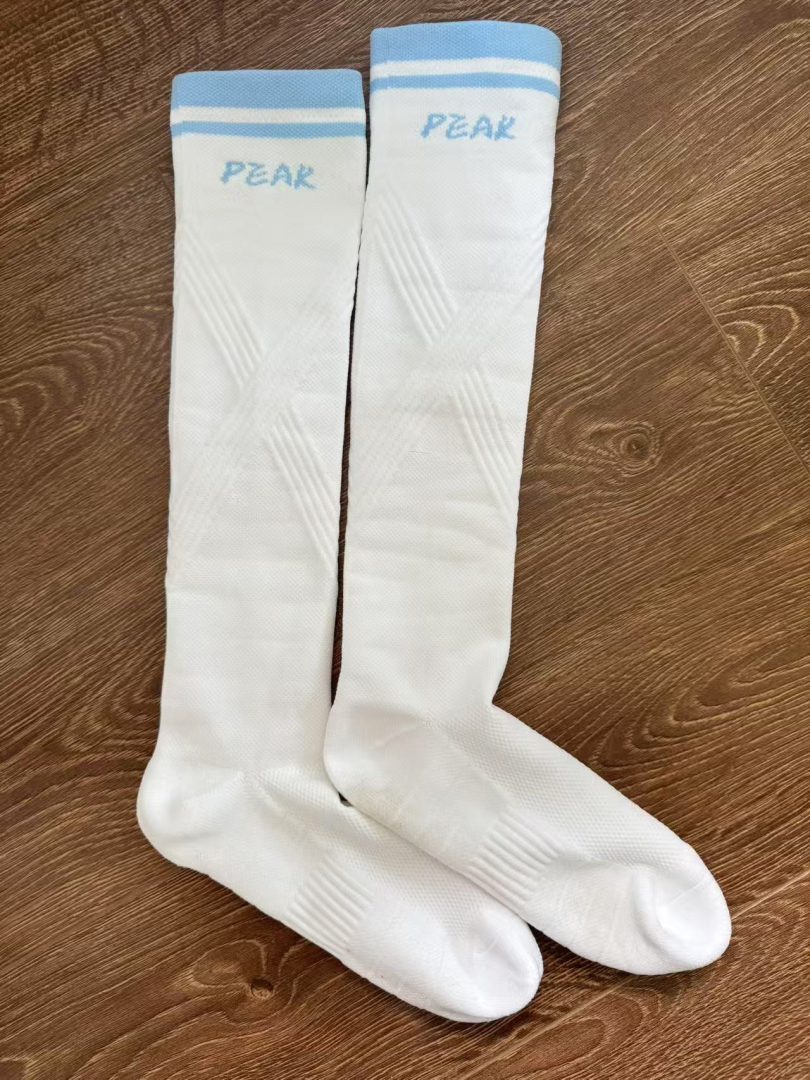
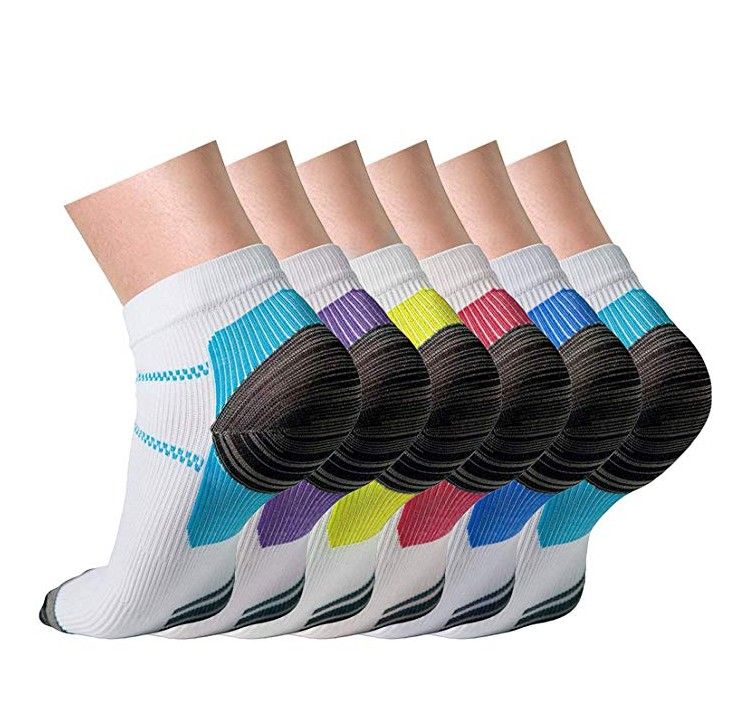
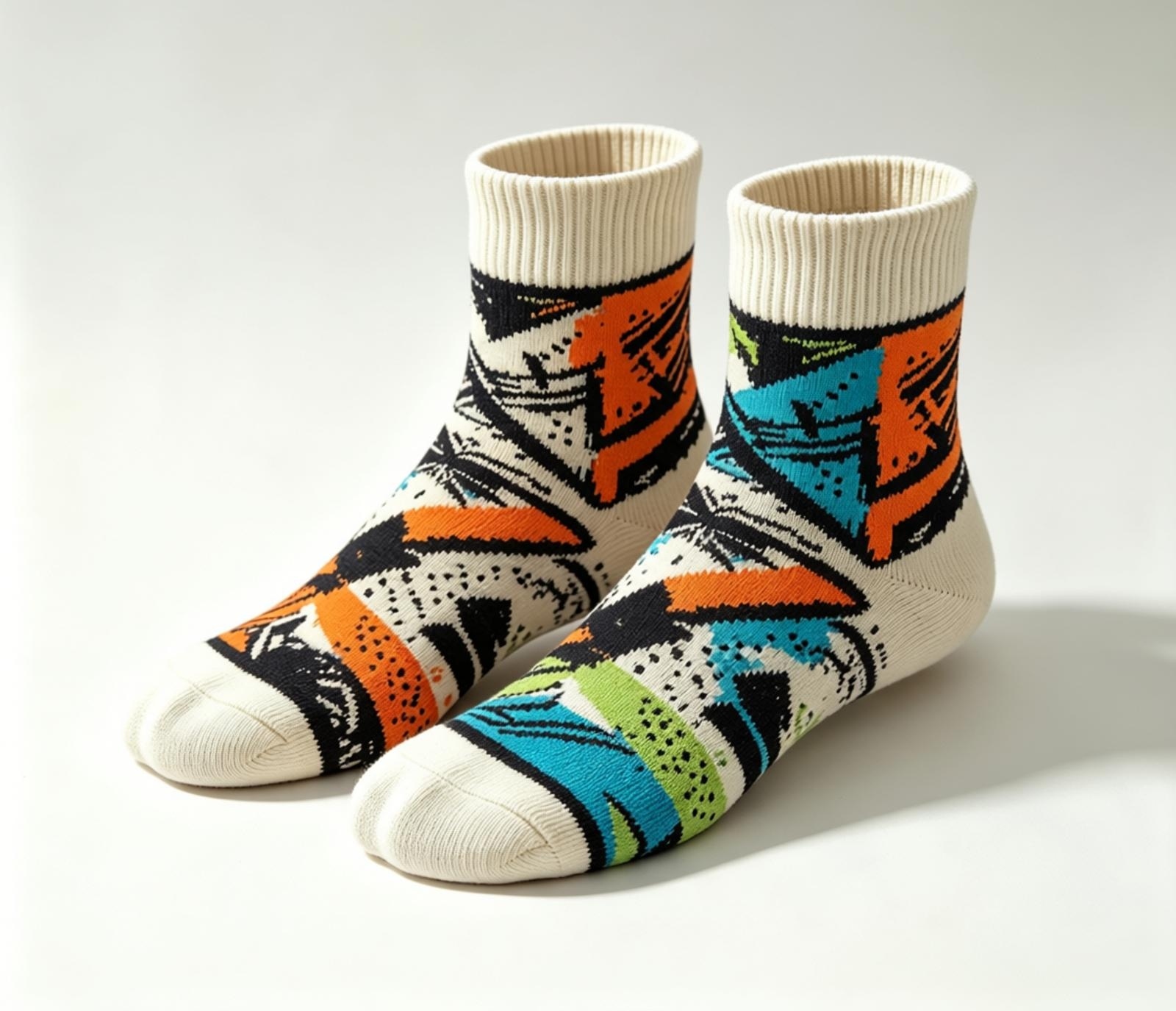
Compression socks bought for the right reasons deliver four things buyers can actually verify: graduated pressure that is highest at the ankle and reduces up the leg, a knit that recovers after washing, a size range that puts real legs inside the stated pressure band, and enough durability that the pressure survives repeated laundering. Everything marketed beyond that is either subjective comfort or claims a manufacturer should not be making for you.
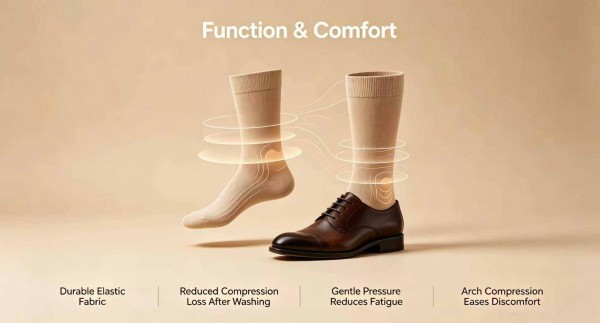
For buyers sourcing rather than wearing, the practical question is narrower: what do I put in the spec so the socks actually perform to their stated figures? This guide covers the benefit mechanisms that matter, how each translates into a testable spec line, and where legitimate programmes over-promise.
The four real benefits, and what each depends on
| Benefit buyers ask for | What produces it | What to specify |
|---|---|---|
| Graduated pressure profile | Higher mmHg at ankle, decreasing up the calf | Target mmHg at ankle, band by size |
| Recovery after washing | Elastane content and knit structure | Blend ratio, wash-cycle test method |
| Comfortable all-day wear | Fineness of gauge, flat toe seam | Gauge, toe closing method |
| Durability over the season | Yarn quality, reinforced high-wear zones | Reinforcement map, abrasion test standard |
1. Graduated compression is a number, not a feeling
“Compression” without a figure tells you nothing. What matters is the pressure at the ankle expressed in mmHg and how that pressure decreases toward the calf or knee. A spec that merely says “graduated compression” can be met by almost anything; a spec that names the ankle figure and the tolerance can be verified against test results.
Two things routinely destroy the profile in production:
- Sizing that is too coarse. A single size covering too wide a calf circumference cannot hold everyone inside the pressure band. The number of sizes is a compression decision, not a costing decision.
- Elastane that is too low to recover. The first wear can measure correctly; wash twenty times and the profile slackens. Spec coverage depends on the blend holding up, which is why the sock fabrics choice and the elastane percentage belong in the same conversation.
2. Recovery over wash cycles separates real compression from cheap knit
The failure mode is specific and measurable: pressure drops after repeated laundering because the elastic component has degraded or the knit has lost memory. If your programme promises a pressure figure across a wearing season, the test method belongs in the specification – how many cycles, at what temperature, and what the retained pressure must be afterwards.
This is also where agreement on an inspection standard matters. Sampling checks on a bulk order should confirm that the production knitting matches the approved sample in structure and recovery, not merely in colour.
3. Comfort benefits are about construction
Wearers notice disproportionately what sits against the foot:
- Toe seam construction – linked versus seamless closing changes perceived comfort more than most other choices
- Gauge selection – a finer gauge gives a smoother face and less bulk inside a shoe
- Cuff construction – too tight a grip leaves marks; too loose and the sock migrates
None of these change the pressure profile. All of them change whether the socks get worn, which is what determines whether any benefit reaches anyone.
4. Where the honest line sits
Compression products sit next to medical claims, and reputable manufacturers draw that line carefully. As a brand, you should not state – and we will not write for you – that a sock treats, prevents or cures a condition. What can be stated is what the product *is*: graduated pressure within a stated band, constructed to a stated blend, tested to a stated method.
If you intend to sell into a market where these are regulated articles, registration requirements differ by territory and should be confirmed before you order rather than after. A buyer who knows their target market’s rules early avoids the expensive outcome: a perfectly made sock that cannot legally be described the way the packaging says.
Spec checklist before you request a sample
Write these down and every factory quotes comparable work:
1. Ankle pressure target with unit and acceptable tolerance
2. Number of sizes and the calf-circumference range each covers
3. Blend, including elastane percentage
4. Gauge and whether fine detail is needed
5. Toe closing method and cuff construction
6. Test method for retained pressure after laundering, with pass criteria
7. Labelling requirements for your target market
Sampling takes 3-7 days and production follows approval in 5-25 days, with MOQ from 50 pairs per style. Those are independent of whether the style is simple or graduated – the variable is approval time, not the schedule structure.
Start from the compression socks benefits reference page, or bring the full brief to us as a custom sock manufacturer enquiry. Buyers arriving with finished artwork and a pressure spec go down the OEM sock manufacturing route; those still resolving wear properties usually begin with construction work similar to our custom sports socks, where the same yarns and gauges apply without the pressure-spec constraint.
FAQ
What mmHg should I specify?
That depends on the use you intend and the market you sell into. The point for sourcing is that it must be written down with a tolerance – otherwise “compression” cannot be verified or produced consistently.
How many sizes do I need?
Enough that each size puts real legs inside the stated pressure band. Fewer sizes means either customers outside the band or returns.
Does pressure fade after washing?
It can. Specify elastane content and require a retained-pressure test after a defined number of cycles so it can be checked rather than assumed.
Can you write medical claims on our packaging?
No. We describe what the product is and what it tests to. Claims about treatment or prevention belong to your regulatory review, not to us.
Is 50 pairs enough to develop this properly?
It clears production, and it is enough to validate fit and pressure before committing to a larger run – which is how most programmes should begin.
—
*Parameter note: MOQ, sampling and production windows reflect Sockmader’s own figures. Confirm any certification or test-reference against current valid documents before publication.*