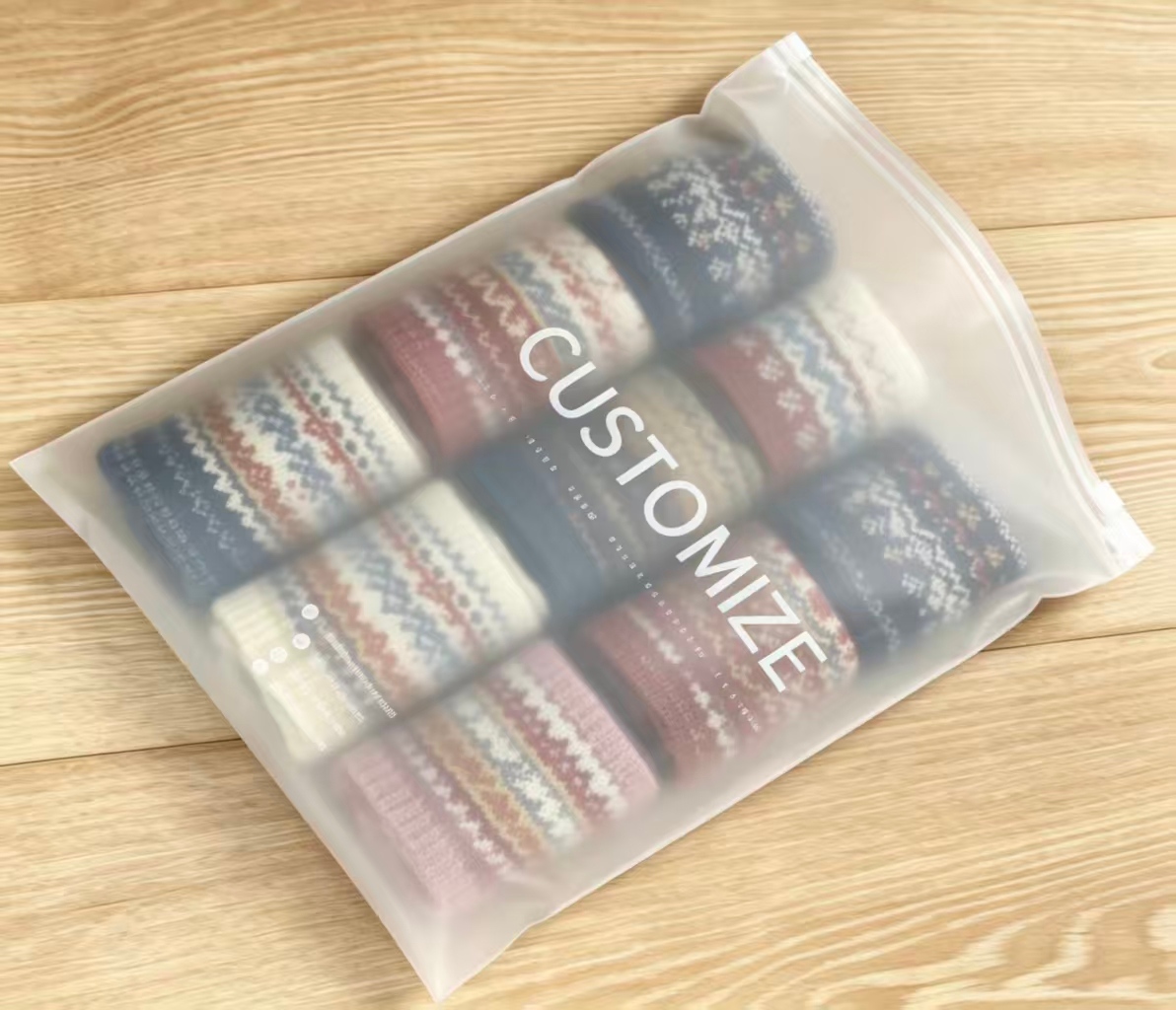
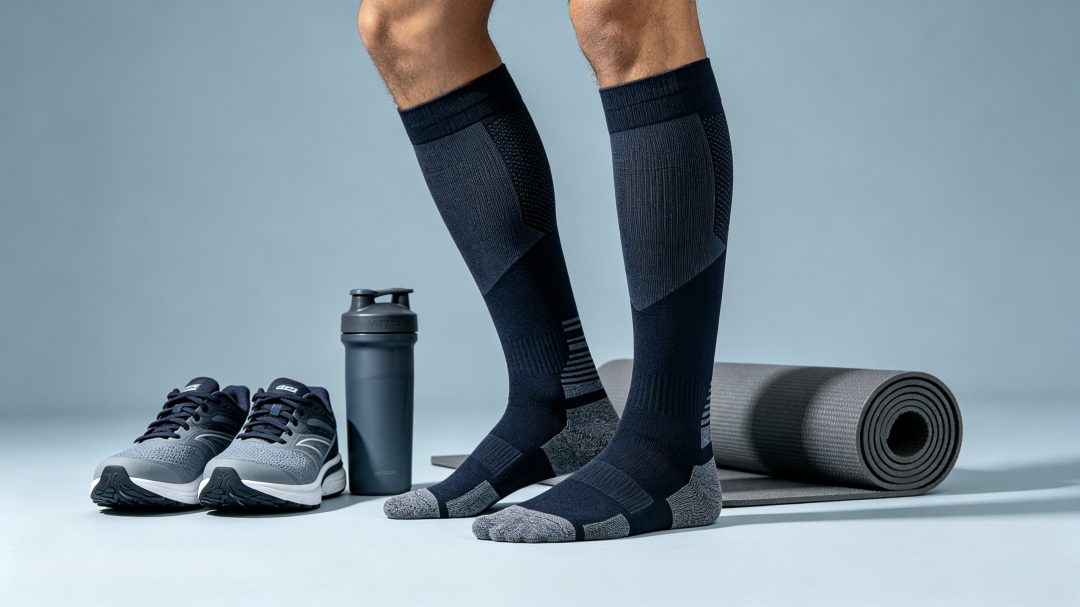
From the outside, a compression sock and a regular sock can look almost identical — both are knit tubes for feet. The differences live in the engineering: in how they’re constructed, what they’re made of, how they’re sized, and what they’re designed to do. Confusing the two leads to wasted money and disappointed customers, so here is the complete comparison.

Both options are available through compression sock manufacturing, and we can sample each one for side-by-side testing.
Purpose: Function vs Coverage
A regular sock’s job is coverage and basic comfort: cushion the foot, manage sweat, protect against shoe friction. A compression sock’s job is physiological: apply graduated pressure — strongest at the ankle, decreasing toward the knee — to support circulation in the legs. One is clothing; the other is a functional garment. Everything else follows from this distinction.
Construction: Graduated Pressure vs Uniform Knit
Regular socks knit with uniform tension: same stretch at the ankle as the calf. Compression socks knit with computer-controlled zoned tension: denser, tighter stitching at the ankle that progressively loosens up the leg. This graduated profile is programmed into the knitting machine and verified by pressure testing (measured in mmHg). A “tight sock” without graduated construction delivers uniform squeeze, which is not compression therapy — it’s just tight.
Materials: Elastane-Loaded vs Comfort-Led
Regular socks use comfort-driven blends: cotton-rich for everyday feel, wool for warmth, light synthetics for sport — usually 1–5% elastane. Compression socks are elastane systems: typically 70–80% nylon with 20–30% spandex, using double-covered elastane yarns that maintain recovery through months of wear and washing. That material load is why real compression socks feel distinctly firmer and snap back when stretched.
Sizing: Circumference vs Shoe Size
Regular socks size primarily by shoe length. Compression socks size primarily by ankle and calf circumference — because pressure depends on how far the fabric must stretch around the limb, not how long the foot is. If a “compression sock” chart only lists shoe sizes, the product behind it was probably not engineered as true graduated compression.
Price: The Engineering Premium
Regular socks wholesale from under a dollar to a few dollars. Quality compression socks run several times that — the premium pays for elastane-rich yarns, slower precision knitting, pressure testing per production lot, and circumference-based size grading across more sizes. The price gap is the cost of verified function.
Who Should Wear Which
Regular socks serve everyone for daily comfort and style. Compression socks serve people whose legs benefit from circulatory support: travelers on long flights, professionals who stand or sit for extended periods, athletes focused on recovery, pregnant women managing swelling, and those with diagnosed circulation conditions (at medical-grade pressure, under medical guidance). Note the overlap: compression socks still do everything a regular sock does — coverage, comfort, style — with the pressure function added.
Can You Tell Them Apart at a Glance?
Sometimes, but don’t trust appearance. Reliable tests: stretch test — a compression sock resists stretching and snaps back firmly; feel test — noticeably firmer texture from elastane load; and documentation test — real compression products state an mmHg rating. Fashion brands sometimes style regular socks to look “compression-like,” so the mmHg claim is the only trustworthy signal.
If that is settled, the next question is usually answered in How Are Compression Socks Made?.
FAQ
Q: Are tight regular socks the same as compression socks?
A: No — without graduated pressure construction and circumference-based sizing, tight socks deliver uniform squeeze with none of the circulatory benefit.
Q: Can compression socks replace regular socks daily?
A: Yes — they provide all the comfort and coverage functions of regular socks, plus pressure support. Many wearers use them exclusively.
Q: Do I need a prescription for compression socks?
A: Not for wellness grades (15–20 mmHg); therapeutic grades (20–40 mmHg) with medical claims may require registration or medical guidance depending on your market.
CONCLUSION
The difference between compression and regular socks is engineering, not appearance: graduated zoned knitting, elastane-loaded construction, circumference-based sizing and verified pressure. Buyers who check those four things — and the mmHg rating — never confuse a fashion tight sock with the real product again.
To move from plan to order, send artwork, size range and quantity through the Sockmader custom sock factory.
When you are ready to source, the Sockmader custom compression socks team can quote sampling, MOQ and lead times for your quantity.