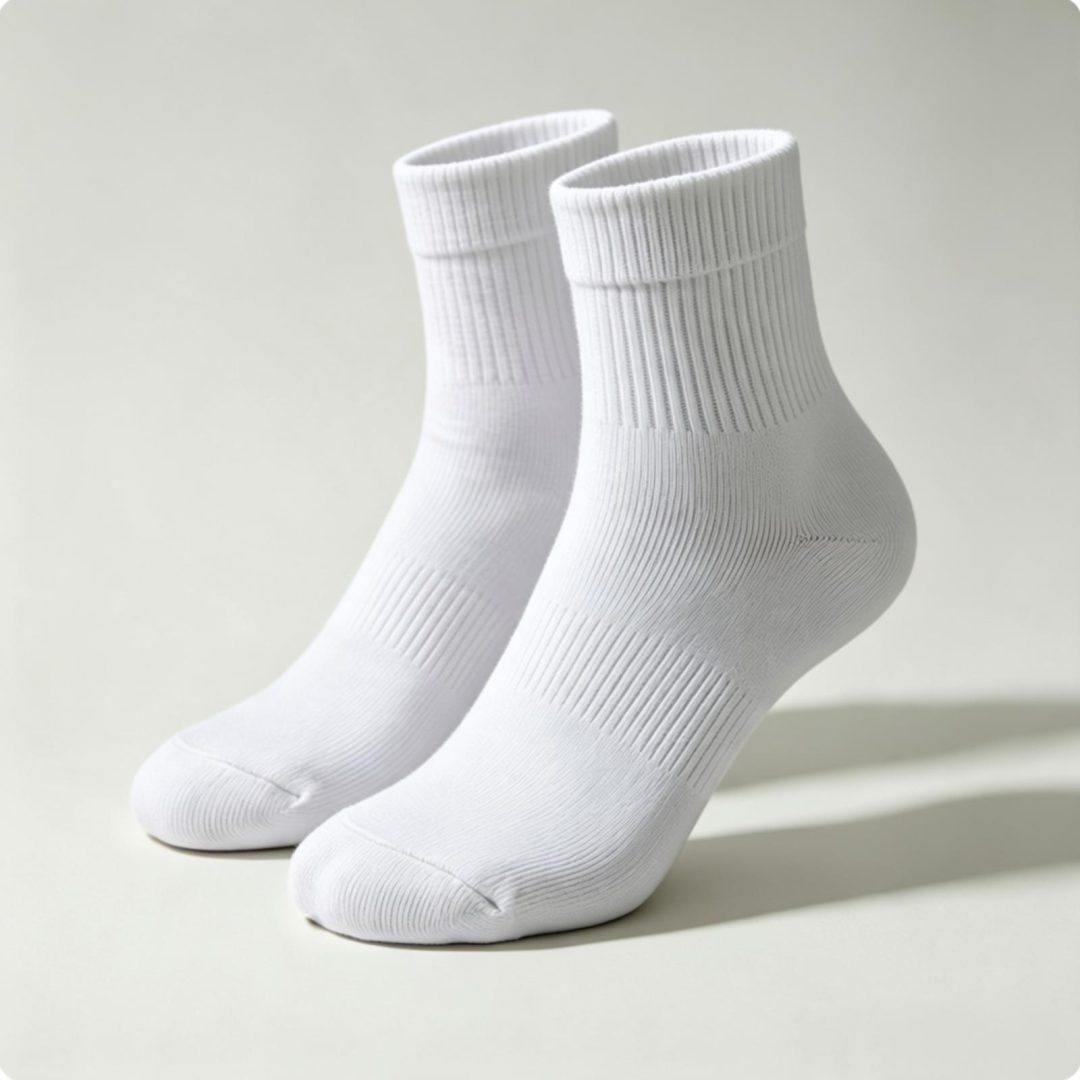
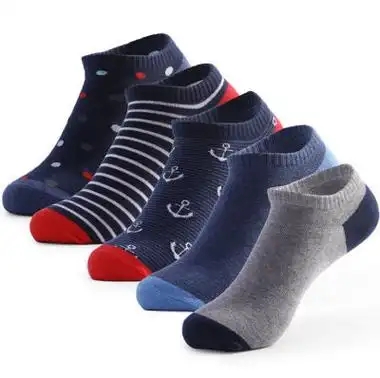
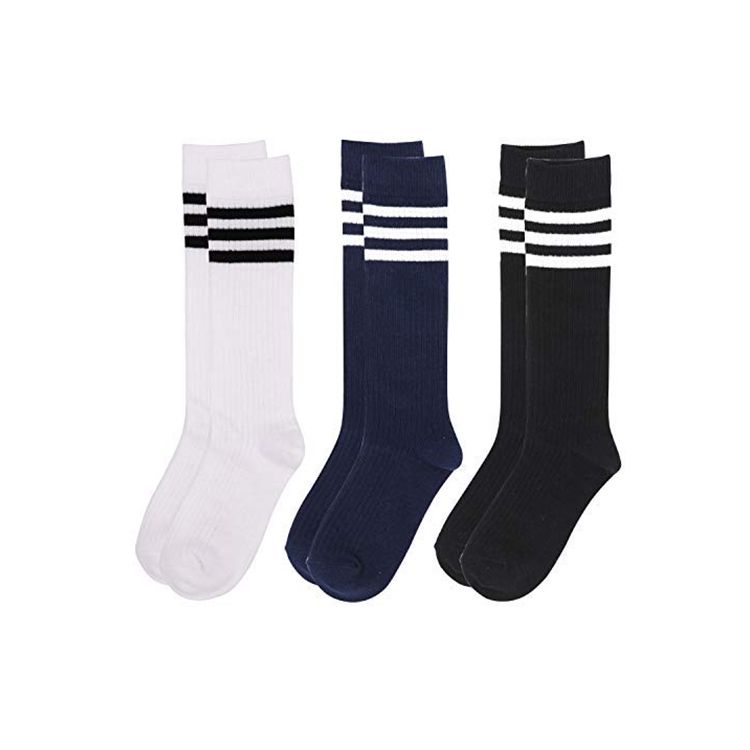
Most buyers select a custom cotton socks manufacturer on unit price and spend the next two seasons dealing with the consequences. Before you compare quotes it is worth knowing which parts of the process actually run in-house, because knitting, finishing and packing are frequently split across sites. Begin with custom cotton socks manufacturer and ask that first.
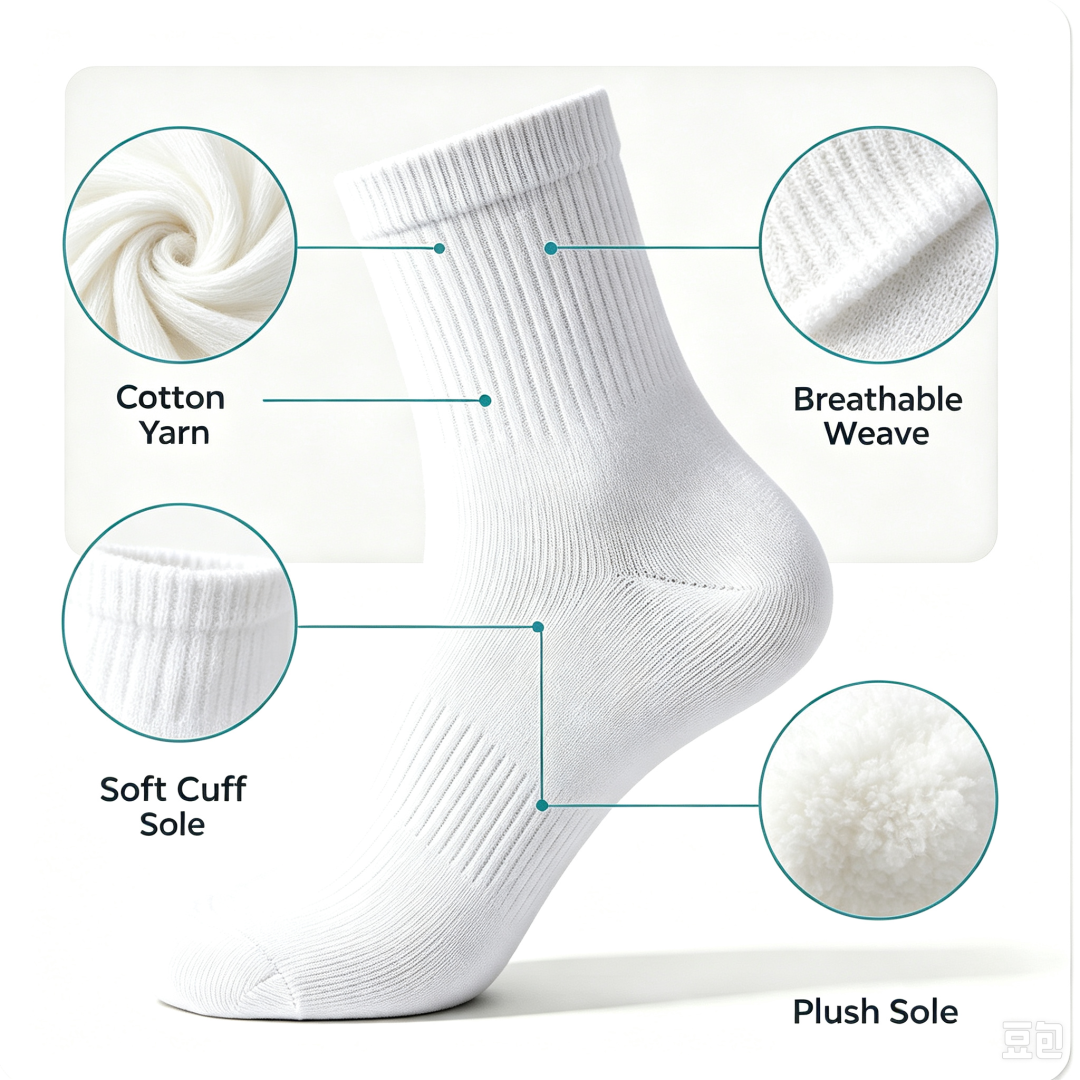
In plain terms: a custom cotton socks manufacturer will usually quote against a minimum of 300 pairs per color, take 3-7 days on samples and 5-25 days on production. Searches like this usually come from buyers who are shortlisting production partners rather than shopping for a single pair, which is why this page goes straight to numbers rather than marketing copy.
Ask three things first: cotton type, nylon share and shrinkage. Suppliers who answer all three without coming back for clarification are usually the ones worth shortlisting.
On this page:
- Minimum per color, and why the number is what it is
- What the calendar really looks like
- How cotton socks are made, step by step
- QC: the checks to ask for before the shipment leaves
Buyers also arrive here searching: wholesale cotton socks; cotton socks manufacturer; custom cotton socks. They are the same question asked from different angles.
Minimum per color, and why the number is what it is
Buyers often treat MOQ as a negotiating position. It is not: it is arithmetic done by the production planner. Three costs have to be covered before the first pair is worth knitting.
- Machine programming and set-up. Fixed per design, regardless of how many pairs follow.
- Yarn minimum. A dyelot has a floor, which is why custom shades raise the entry point.
- Changeover labour. Every swap of yarn, needle setting or programme costs machine hours.
The standard minimum is 300 pairs per color. What shapes the order is not the design but the way it is split: each colourway is its own production run, and each size block is knitted and paired separately.
If you are unsure about size split, ask how the 300 pairs are distributed across sizes within one colourway; that is the number that actually constrains the order. Terms and sampling rules are set out on OEM sock manufacturing.
What the calendar really looks like
Working backwards is easier than forwards. Start from the date goods must be available to sell.
- T minus 4 to 6 weeks: goods on the water. A full sea container takes roughly 30-40 days to the US West Coast and 35-45 days to major European ports. Air freight takes 5-8 days but usually costs four to six times the sea rate per unit, and courier shipments for small trial orders arrive in 3-5 days.
- T minus 2 to 3 weeks: packed and exported. Three to seven days for pairing, cartons, documentation and customs.
- T minus 3 to 5 weeks: bulk production. Five to twenty-five days depending on quantity and construction.
- T minus 3 to 4 weeks: sampling. Three to seven days per round, and most programmes need two rounds, not one.
- T minus 4 to 5 weeks: enquiry. One to three days to quote once the specification is complete.
Plan backwards from the date goods must be on sale, not forwards from the day you send the enquiry. Process detail is documented under sock resources.
How cotton socks are made, step by step
Understanding the production sequence tells you where delays and defects come from.
1. Yarn preparation. Cones are inspected and, if the programme needs it, dyed to a confirmed shade. Custom dyeing adds 7–14 days and carries a mill minimum.
2. Knitting. Socks are knitted as tubes on circular sock machines. 84N-96N coarse gauges serve terry and heavy socks, 108N-120N is the workhorse for everyday styles, 144N-168N carries fine jacquard and athletic structure, and 200N tops the range for dress socks and very fine jacquard.
3. Toe closing. There are three toe closures: standard overlock, the cheapest and the one that leaves a seam ridge; Rosso linking, which is substantially flat; and hand-linked seamless, the most comfortable and the most expensive per pair.
4. Washing and boarding. Washing removes knitting oils and sets dimensions; boarding (heat-setting on forms) gives the final shape and smoothness.
5. Inspection and pairing. Each pair is checked for defects, matched by size and shade, and paired.
6. Packing. Hang tags, polybags, inner boxes and cartons per the packing specification.
The bottleneck for cotton socks is rarely knitting capacity; it is finishing and packing, which is where most schedule slips actually happen. Full process notes: sock resources.
QC: the checks to ask for before the shipment leaves
AQL 2.5 is the common default for apparel, and many European and US buyers additionally require zero tolerance for critical defects. AQL 4.0 suits promotional goods, and AQL 1.0 is used for high-value or medical channels. Then the product-specific checks:
| Check | Method |
|---|---|
| Fibre composition | Third-party fibre content test. |
| Shrinkage | AATCC 135. |
| Pilling grade | Pilling box test. |
| Colour fastness | To washing and to rubbing. |
For the first order, add a pre-production sample and an in-line check. Two checkpoints cost very little compared with finding a defect at final inspection. Process and test references: sock resources.
FAQ
Is 100% cotton better?
It wears worse. Without nylon and elastane a sock has neither durability nor recovery, which is why 80/17/3 is the standard ratio.
What certification does organic cotton need?
GOTS certification plus a transaction certificate for each batch. Only the TC proves that particular batch was organic.
What is the minimum order?
300 pairs per color; organic yarn depends on the mill minimum, so ask for it separately.
What is the fastest way to get an accurate quote?
Send a specification sheet — yarn composition, needle count, size set, construction, artwork route, quantity and packing. A quote built from that is usually within a few percent of final; a quote built from a photo is not.
Related reading across the range: custom sports socks.
Where to go from here
If you take one thing from this: the cheapest quote is usually the one with the loosest spec. Write the spec first and the quotes become comparable. custom cotton socks manufacturer is the place to begin; custom socks covers the commercial terms.