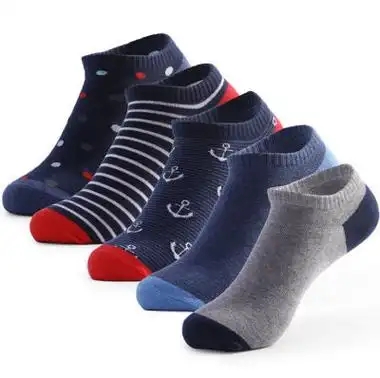
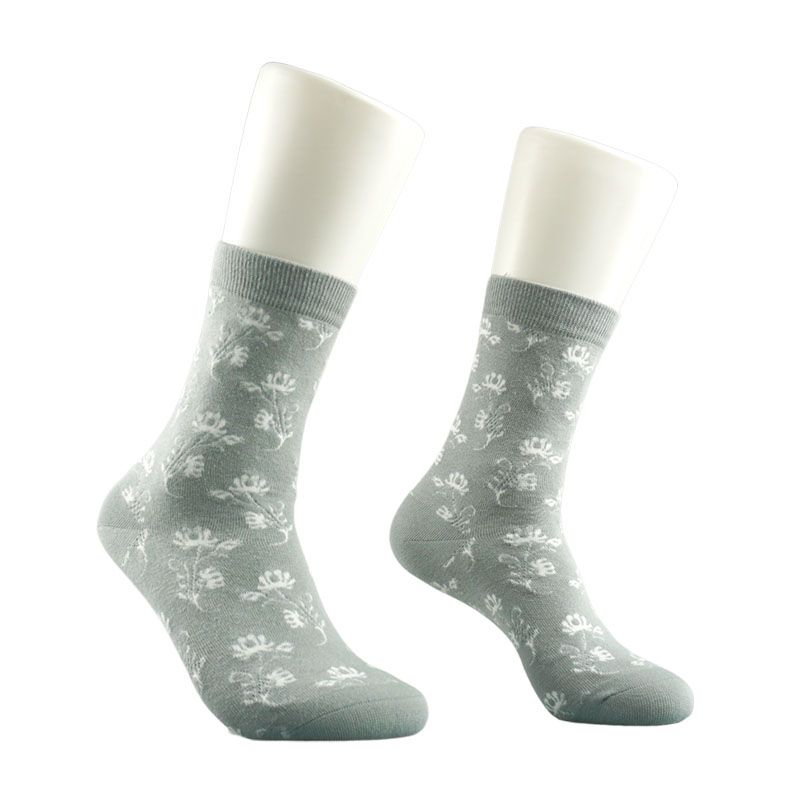
Most buyers select a custom socks manufacturer on unit price and spend the next two seasons dealing with the consequences. Before you compare quotes it is worth knowing which parts of the process actually run in-house, because knitting, finishing and packing are frequently split across sites. Begin with custom socks manufacturer and ask that first.
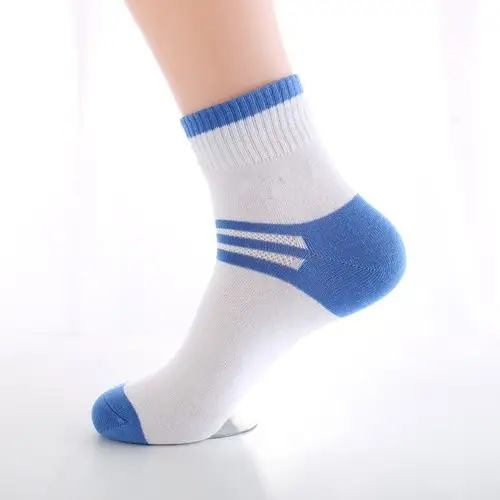
In plain terms: a custom socks manufacturer will usually quote against a 50-pair minimum per design, take 3-7 days on samples and 5-25 days on production. Searches like this usually come from buyers who are shortlisting production partners rather than shopping for a single pair, which is why this page goes straight to numbers rather than marketing copy.
Ask three things first: yarn ratio, gauge and technique. Suppliers who answer all three without coming back for clarification are usually the ones worth shortlisting.
On this page:
- Minimum per design, and why the number is what it is
- What the calendar really looks like
- How custom socks are made, step by step
- QC: the checks to ask for before the shipment leaves
Buyers also arrive here searching: custom socks; socks manufacturer; socks manufacturers. They are the same question asked from different angles.
Minimum per design, and why the number is what it is
Buyers often treat MOQ as a negotiating position. It is not: it is arithmetic done by the production planner. Three costs have to be covered before the first pair is worth knitting.
- Machine programming and set-up. Fixed per design, regardless of how many pairs follow.
- Yarn minimum. A dyelot has a floor, which is why custom shades raise the entry point.
- Changeover labour. Every swap of yarn, needle setting or programme costs machine hours.
The standard minimum is 50 pairs per design, which suits a trial order or a first drop. What raises it is not the design but the way it is split: five colourways of one design are five set-ups, and each size block is knitted and paired on its own.
If you are unsure about size split, ask what the minimum is per size rather than per design; it is the number that actually constrains the order. Terms and sampling rules are set out on OEM sock manufacturing.
What the calendar really looks like
Working backwards is easier than forwards. Start from the date goods must be available to sell.
- T minus 4 to 6 weeks: goods on the water. A full sea container takes roughly 30-40 days to the US West Coast and 35-45 days to major European ports. Air freight takes 5-8 days but usually costs four to six times the sea rate per unit, and courier shipments for small trial orders arrive in 3-5 days.
- T minus 2 to 3 weeks: packed and exported. Three to seven days for pairing, cartons, documentation and customs.
- T minus 3 to 5 weeks: bulk production. Five to twenty-five days depending on quantity and construction.
- T minus 3 to 4 weeks: sampling. Three to seven days per round, and most programmes need two rounds, not one.
- T minus 4 to 5 weeks: enquiry. One to three days to quote once the specification is complete.
Plan backwards from the date goods must be on sale, not forwards from the day you send the enquiry. Process detail is documented under sock material guide.
How custom socks are made, step by step
Understanding the production sequence tells you where delays and defects come from.
1. Yarn preparation. Cones are inspected and, if the programme needs it, dyed to a confirmed shade. Custom dyeing adds 7–14 days and carries a mill minimum.
2. Knitting. Socks are knitted as tubes on circular sock machines. 84N-96N coarse gauges serve terry and heavy socks, 108N-120N is the workhorse for everyday styles, 144N-168N carries fine jacquard and athletic structure, and 200N tops the range for dress socks and very fine jacquard.
3. Toe closing. There are three toe closures: standard overlock, the cheapest and the one that leaves a seam ridge; Rosso linking, which is substantially flat; and hand-linked seamless, the most comfortable and the most expensive per pair.
4. Washing and boarding. Washing removes knitting oils and sets dimensions; boarding (heat-setting on forms) gives the final shape and smoothness.
5. Inspection and pairing. Each pair is checked for defects, matched by size and shade, and paired.
6. Packing. Hang tags, polybags, inner boxes and cartons per the packing specification.
The bottleneck for custom socks is rarely knitting capacity; it is finishing and packing, which is where most schedule slips actually happen. Full process notes: sock material guide.
QC: the checks to ask for before the shipment leaves
AQL 2.5 is the common default for apparel, and many European and US buyers additionally require zero tolerance for critical defects. AQL 4.0 suits promotional goods, and AQL 1.0 is used for high-value or medical channels. Then the product-specific checks:
| Check | Method |
|---|---|
| Spec check | Item by item. |
| Sealed sample comparison | Against the approval sample. |
| AQL inspection | At the agreed level. |
| Third-party inspection | Recommended for large orders. |
For the first order, add a pre-production sample and an in-line check. Two checkpoints cost very little compared with finding a defect at final inspection. Process and test references: sock material guide.
Where this decision actually sits in the buying process
Most programmes move through the same four gates, and each one has its own failure mode.
| Gate | The decision | What usually goes wrong |
|---|---|---|
| Concept | Is custom socks right for the range at all | Buyers commit before checking whether the channel wants it |
| Specification | Writing down what is actually being made | Vague briefs turn into repeated sample rounds |
| Supplier | Choosing who makes it | Comparison without a written spec is meaningless |
| Commitment | Quantities, dates, payment | Freight and lead time discover the date has already passed |
Work out which gate you are actually at before asking for anything else. Most wasted conversations happen because a buyer asks a commitment-stage question while still at the specification gate. Commercial terms start from OEM sock manufacturing.
The numbers to put in your enquiry
Copy this block into your first email. It is the difference between a real quote and a placeholder.
| Line | Your value | Why the factory needs it |
|---|---|---|
| Yarn composition | e.g. Combed cotton 80% / nylon 17% / elastane 3% | Sets the largest single cost line |
| Gauge | 84N-200N | Determines knitting time and machine availability |
| Sizes needed | foot length in cm plus quantities | Sizing drives grading and waste |
| Artwork route | jacquard, print or embroidery | Each route carries a different setup minimum |
| Quantity per design | including per colour | Sets where you land on the price ladder |
| Target in-stock date | a real calendar date | Lets the factory quote honestly or decline |
Two lines are most often left blank, and they are the ones that cause the most trouble: the per-colour quantity and the real in-stock date. Without the first, MOQ is quoted per design and your order may not qualify; without the second, nobody can tell you the truth about capacity. Reference route: custom socks manufacturer.
FAQ
What is the wholesale minimum?
Normally 50 pairs per design, with stepped pricing by quantity.
How long is sampling?
3-7 days.
How long is bulk production?
5-25 days depending on quantity and technique.
What is the fastest way to get an accurate quote?
Send a specification sheet — yarn composition, needle count, size set, construction, artwork route, quantity and packing. A quote built from that is usually within a few percent of final; a quote built from a photo is not.
Related reading across the range: custom crew socks.
Where to go from here
If you take one thing from this: the cheapest quote is usually the one with the loosest spec. Write the spec first and the quotes become comparable. custom socks manufacturer is the place to begin; socks wholesale covers the commercial terms.