If you are sourcing grip socks benefits, the most common mistake is asking for a price before there is a specification. A quote built without yarn composition, gauge and a size set is a guess, and guesses turn into disputes several weeks later. What follows covers the specification, the cost structure, the minimum per color and the calendar. The product route starts at grip socks benefits.
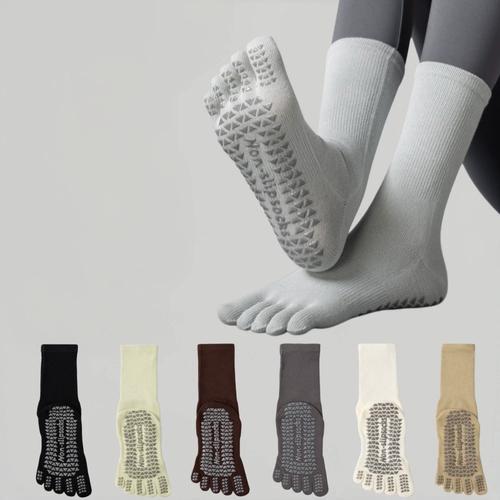
Three specifications decide both the outcome and the price: range architecture, brand assets and reorder discipline. Get those on your enquiry sheet and quotes become comparable.
What this covers:
- What a sock brand actually means in an order
- How a sock brand are made, step by step
- Who buys a sock brand, and what each one actually needs
Related terms in the same decision: compression socks benefits; how are socks made; sock knitting machine.
What a sock brand actually means in an order
The term gets used loosely, which is why two suppliers can quote the same phrase and ship different products. In purchasing terms it breaks down into four decisions: the construction, the material, the finishing and the packing. Each one has a measurable output, and each one has a cost.
- Construction — Pick one gauge family and stay with it across the first range so the line looks coherent
- Material — Combed cotton / nylon / elastane; A signature fibre later; A defined hero blend
- Finishing — washing, boarding and heat-setting lock in dimensions and handfeel.
- Packing — pairing, folding, tagging and carton count, usually the last thing specified and the first thing disputed.
The useful habit is to make the supplier restate your spec in their own words before quoting. Misunderstandings surface immediately and cost nothing to fix at that stage. See custom socks and sock material guide.
How a sock brand are made, step by step
Understanding the production sequence tells you where delays and defects come from.
1. Yarn preparation. Cones are inspected and, if the programme needs it, dyed to a confirmed shade. Custom dyeing adds 7–14 days and carries a mill minimum.
2. Knitting. Socks are knitted as tubes on circular sock machines. 84N-96N coarse gauges serve terry and heavy socks, 108N-120N is the workhorse for everyday styles, 144N-168N carries fine jacquard and athletic structure, and 200N tops the range for dress socks and very fine jacquard.
3. Toe closing. There are three toe closures: standard overlock, the cheapest and the one that leaves a seam ridge; Rosso linking, which is substantially flat; and hand-linked seamless, the most comfortable and the most expensive per pair.
4. Washing and boarding. Washing removes knitting oils and sets dimensions; boarding (heat-setting on forms) gives the final shape and smoothness.
5. Inspection and pairing. Each pair is checked for defects, matched by size and shade, and paired.
6. Packing. Hang tags, polybags, inner boxes and cartons per the packing specification.
The bottleneck for a sock brand is rarely knitting capacity; it is finishing and packing, which is where most schedule slips actually happen. Full process notes: OEM sock manufacturing.
Nearly every sourcing dispute traces back to a spec that was never written down. Put these on your enquiry sheet and most of the risk disappears.
| Spec | What to write | Why it matters |
|---|---|---|
| Brand assets | Logo lock-up, packaging, care labels. | Where most of the brand investment goes. |
| Reorder discipline | Restock winners before inventing new designs. | The usual scaling mistake. |
| Range architecture | One hero product plus two or three supporting styles. | Coherence beats choice early on. |
Also pin down the packing method (pairing, folding, hang tag, polybag, carton count) — it is the last step and the one that most often gets assumed rather than specified. Related reading: custom socks.
Who buys a sock brand, and what each one actually needs
| Buyer type | What they push on |
|---|---|
| Creators extending an audience into product | First physical product. |
| Retailers building own-brand | How own-brand differs from resale. |
| Designers launching a label | Minimum coherent range. |
When you write your enquiry, say which of these you are. It changes what the factory proposes, and it is the fastest way to get a quote you can actually use. Compare adjacent categories here: sock material guide.
FAQ
Where should the money go?
Into packaging and into consistency. Those two shape how the brand is perceived far more than the sock itself.
Can I start small and scale?
That is the normal path. Validate with a small order on stock yarn, then move to custom once volume supports it.
What makes a sock brand defensible?
A clear point of view, reliable fit across reorders, and packaging people recognise.
What is the fastest way to get an accurate quote?
Send a specification sheet — yarn composition, needle count, size set, construction, artwork route, quantity and packing. A quote built from that is usually within a few percent of final; a quote built from a photo is not.
Buyers comparing this usually open socks wholesale next.
Where to go from here
If you take one thing from this: the cheapest quote is usually the one with the loosest spec. Write the spec first and the quotes become comparable. grip socks benefits is the place to begin; custom socks covers the commercial terms.