In a printed sock, the yarn is a substrate — something for the ink to sit on. In a jacquard sock, the yarn *is* the design. That makes material selection a design decision rather than a comfort decision alone, and it is the step most brands rush.
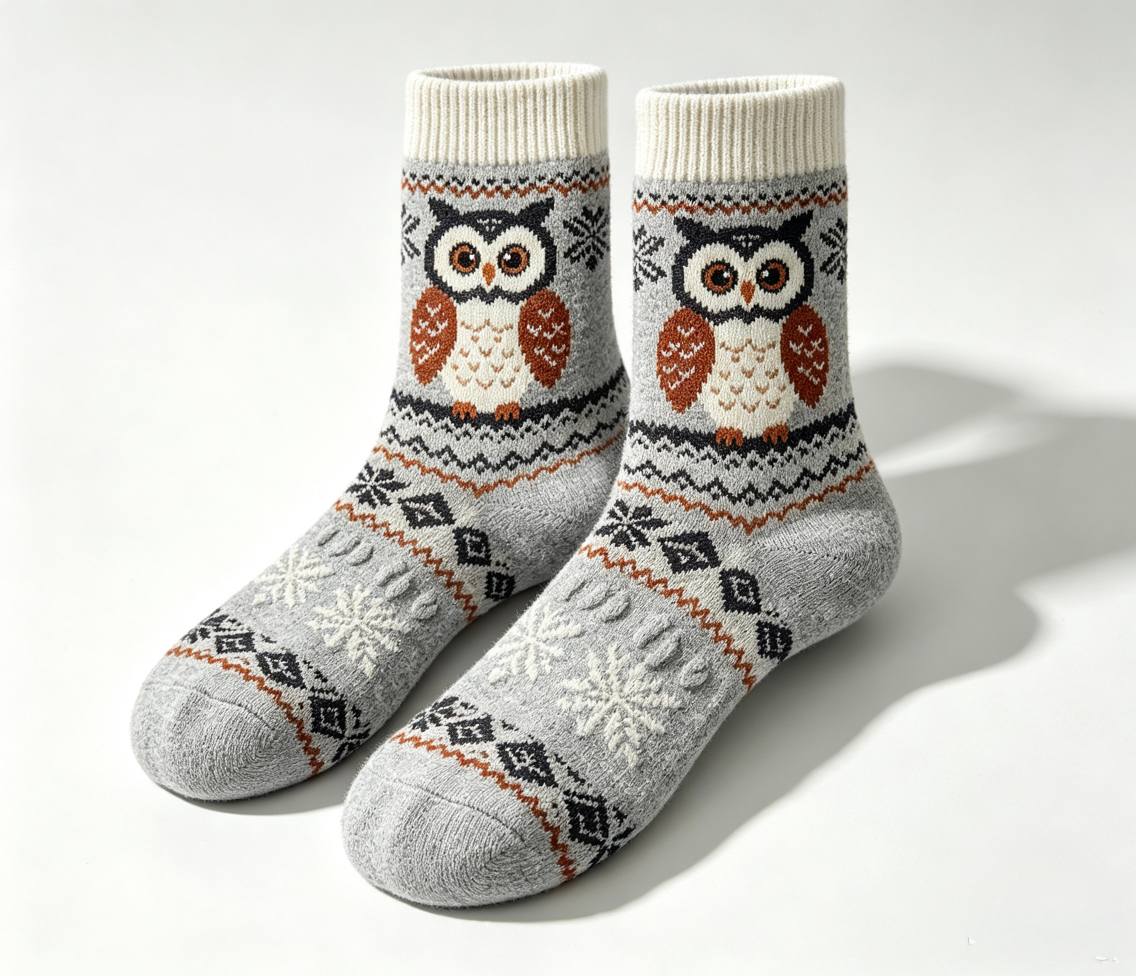
This guide covers the yarns we stock for patterned work and what each one does to the way a motif reads.
Each yarn below is stocked for custom knitted pattern socks, with blend ratios adjustable to your target cost.
H2 Combed Cotton — The Default
Combed cotton is the workhorse for jacquard. Short fibres have been removed, so the surface is smooth, the stitch definition is clean, and colours read true. It takes dye evenly, which matters enormously when two colours sit next to each other in the same course.
Standard construction is a combed cotton body with a small percentage of polyamide for strength and elastane for recovery. For patterned socks we hold polyamide slightly higher than on a plain sock, because floats need abrasion resistance of their own.
H2 Mercerised Cotton for Definition
Mercerisation swells the fibre, adds lustre and improves dye uptake. On a jacquard dress sock the effect is noticeable: sharper motif edges and a deeper, more saturated colour.
It costs more and it is unnecessary on a casual sock, but for a premium gift box or a corporate programme where the pattern is the whole point, it is the single most effective upgrade available.
H2 Merino Wool for Winter Programmes
Merino brings warmth, odour resistance and a softer, slightly matte surface. Colour reads a touch less saturated than on cotton, which suits heritage and outdoor patterns well.
The engineering caveat is wear. Wool is not as abrasion resistant as a synthetic, so any merino jacquard intended for real use needs a reinforced heel and toe, and ideally a nylon plating yarn behind the pattern to protect the floats.
H2 Bamboo Viscose for Hand Feel
Bamboo viscose knits smooth and drapes well, with a cool hand that customers describe as silky. It is a popular choice for gift and loungewear sock ranges.
Its weakness is dimensional stability under repeated washing, and it is weaker when wet. We blend it with cotton and polyamide rather than running it alone, and we recommend a slightly tighter stitch setting to compensate.
H2 Recycled Polyester and Recycled Cotton
Recycled polyester gives excellent colour yield, strong abrasion resistance and a clean, consistent stitch — technically the easiest recycled fibre to knit in jacquard. It is the usual choice when a brand needs a recycled content claim without compromising pattern quality.
Recycled cotton has shorter staple, produces slightly more fly and gives a heathered, less precise colour. It suits texture-led designs where a slightly irregular surface is a feature rather than a defect.
H2 The Reinforcement You Should Never Skip
Whichever body yarn you choose, the heel and toe should carry a filament polyamide or a nylon-reinforced blend. Patterned socks fail at the heel first, not in the pattern, and a sock with a hole in the heel is a returned sock no matter how good the motif looks.
H2 Matching Yarn Count to Gauge
A coarse yarn forced onto a fine-gauge machine produces a stiff, boardy fabric that will not recover. A fine yarn on a coarse machine produces a loose, saggy leg. Yarn count and needle count must be specified together, and a competent factory will tell you if the combination in your tech pack will not knit.
How to Design Jacquard Socks picks up where this article leaves off.
FAQ
Q: Which yarn gives the sharpest pattern? A: Mercerised combed cotton, followed by standard combed cotton. Both hold a clean stitch edge; wool and recycled cotton soften it.
Q: Does elastane affect the pattern? A: Indirectly, yes. Elastane improves recovery so the sock returns to shape, which keeps the pattern from distorting on the leg during wear.
Q: Can I mix yarn types in one pattern? A: Yes, and it can be effective — a wool ground with a viscose motif, for example. It does require a tension test before bulk, because the two yarns shrink differently in finishing.
CONCLUSION
Choose the body yarn for comfort and price, choose the finish for pattern definition, and never compromise on heel and toe reinforcement. The pattern is what sells the sock; the reinforcement is what stops it coming back.
To move from plan to order, send artwork, size range and quantity through Sockmader’s custom jacquard socks team.