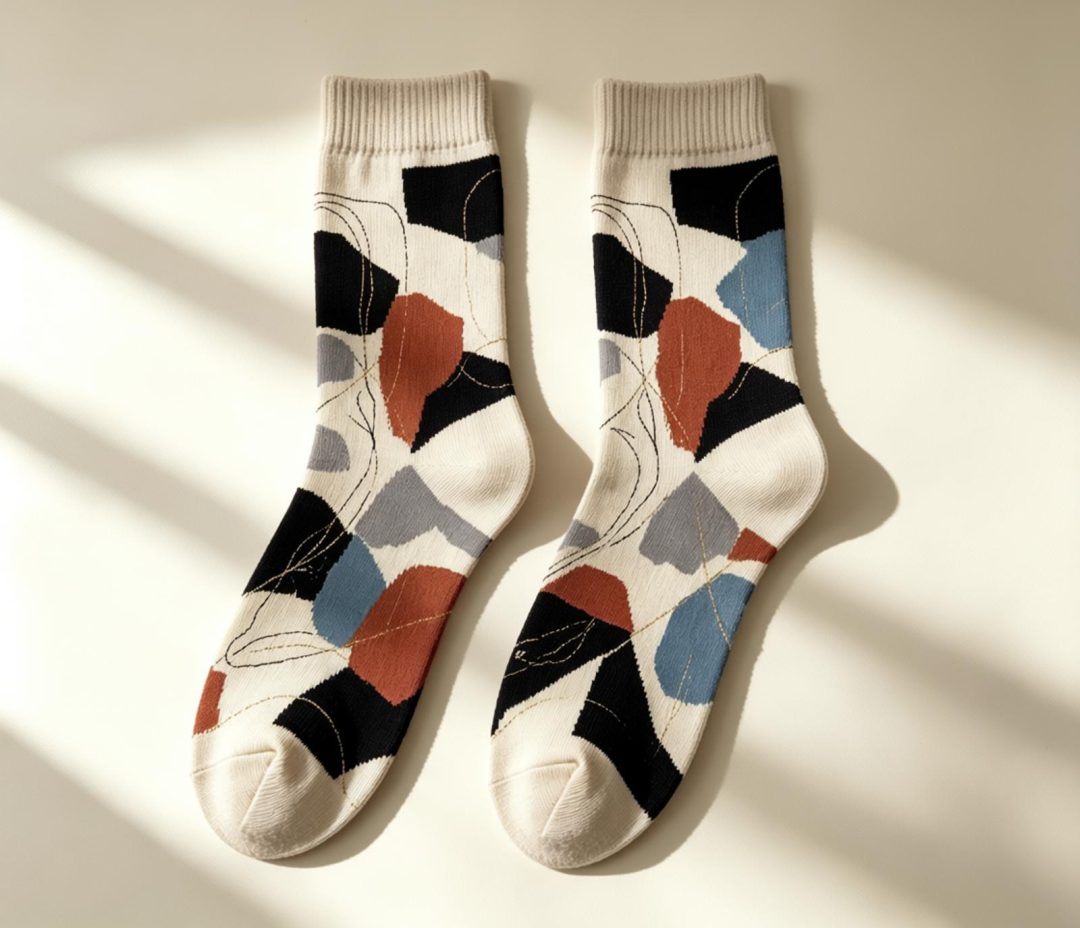
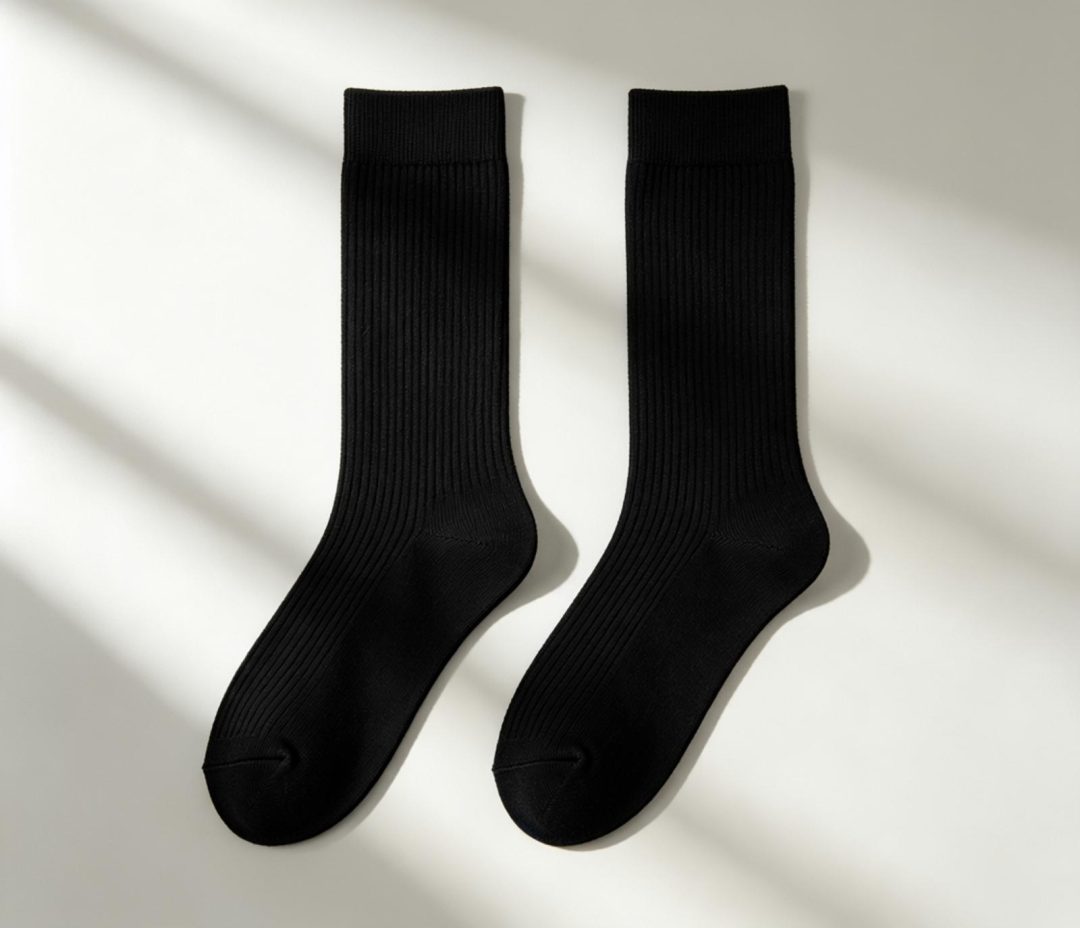
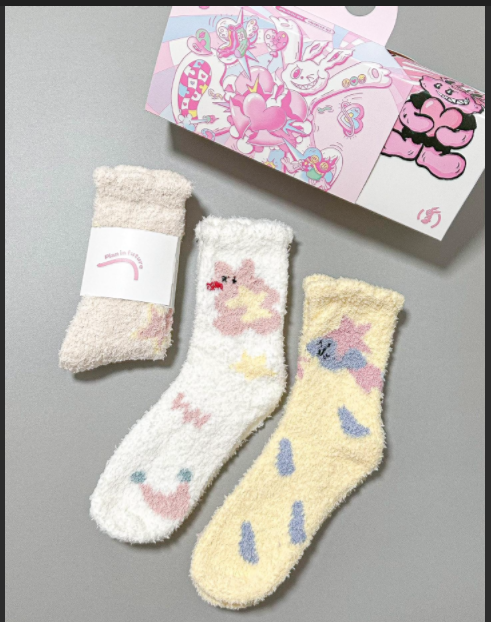
The quality of a printed sock is decided before any ink is applied. The blank determines how much colour the fabric will accept, how it feels after printing, and how long the image survives washing. The ink determines the colour gamut and the durability. Get the blank right and print quality follows; get it wrong and no amount of artwork resolution will save the result. This is the short list of specifications that actually matter.
Each yarn below is stocked for custom printed socks, with blend ratios adjustable to your target cost.
The Blank: Polyester Content Polyester content is the most important number on the spec sheet. Below about 65 per cent polyester, colour yield drops noticeably and wash fastness suffers. Above 90 per cent, colour is excellent but the sock loses the soft, natural hand feel many customers expect. The common working range is 85 to 95 per cent polyester with 5 to 12 per cent elastane or spandex for fit, and occasionally a small cotton or nylon addition for comfort.
Elastane and Fit Elastane gives a printed sock its shape recovery, and it also matters during printing: the sock has to stretch taut over the printing form without distorting the artwork. Around 5 to 8 per cent elastane is typical. Too much and the fabric fights the form and registration suffers; too little and the sock bags at the ankle. The elastane also affects heat-setting temperatures, which must be controlled so the fibre is not damaged during fixation.
Blank Colour White and very light heather are the standard substrates, because both print and sublimation inks are translucent to some degree. Sublimation cannot print white at all, so any white in the design has to come from the blank showing through. Digital direct printing can lay a white underbase on some systems, which allows darker blanks, but at additional cost. If a design depends on white areas, specify the method accordingly.
Knit Structure and Surface A smooth, tight jersey or fine-rib surface prints more sharply than an open or textured knit, because the ink sits on a continuous plane rather than sinking into texture. Terry-loop and heavily ribbed socks print poorly — the loops break up the image and produce a mottled result. If the design matters, choose a smooth-knit blank even if the wearer would prefer cushioning.
Ink Types Disperse dye sublimation bonds into polyester and gives the best durability and softest hand, with a wide gamut but no white. Pigment inks sit on the surface with a binder, work on a wider range of fabrics, and can print white with an underbase, at slightly more hand feel. Reactive inks bond chemically to cellulosic fibre and are used for cotton-rich blanks, with good wash fastness but a narrower colour range on blends.
Fixation and Wash Testing Disperse dye is fixed with heat, typically 180 to 200°C; pigment with a slightly lower cure. Correct fixation is what makes the difference between a print that lasts and one that bleeds on first wash. Always request wash-test results to a recognised standard — colour fastness to washing and to rubbing are the two that matter — and specify the standard on the purchase order.
We go deeper on How to Design Printed Socks in a separate guide.
FAQ
Q: Can I print on cotton socks? A: Yes with reactive or pigment inks, but colour yield and durability are both lower than on polyester.
Q: Why is white missing from my sublimated design? A: Sublimation dye is translucent and cannot print white. White areas must be the blank itself.
Q: Does printing change how the sock feels? A: Slightly. Sublimation adds almost nothing; pigment adds a little, more with heavy coverage.
Q: How should I test a new blank? A: Print a full-colour test tile, wash it ten times, and compare against an unwashed reference.
CONCLUSION
Printed sock quality starts with the blank: 85 to 95 per cent polyester, 5 to 8 per cent elastane, a smooth knit and a light colour. Then match the ink to the fibre and the design — sublimation for all-over colour on polyester, pigment where white or a broader fabric range is needed. Specify wash-test standards on the order and the print will hold its colour.
To move from plan to order, send artwork, size range and quantity through Sockmader.
When you are ready to source, the Sockmader custom printed socks team can quote sampling, MOQ and lead times for your quantity.