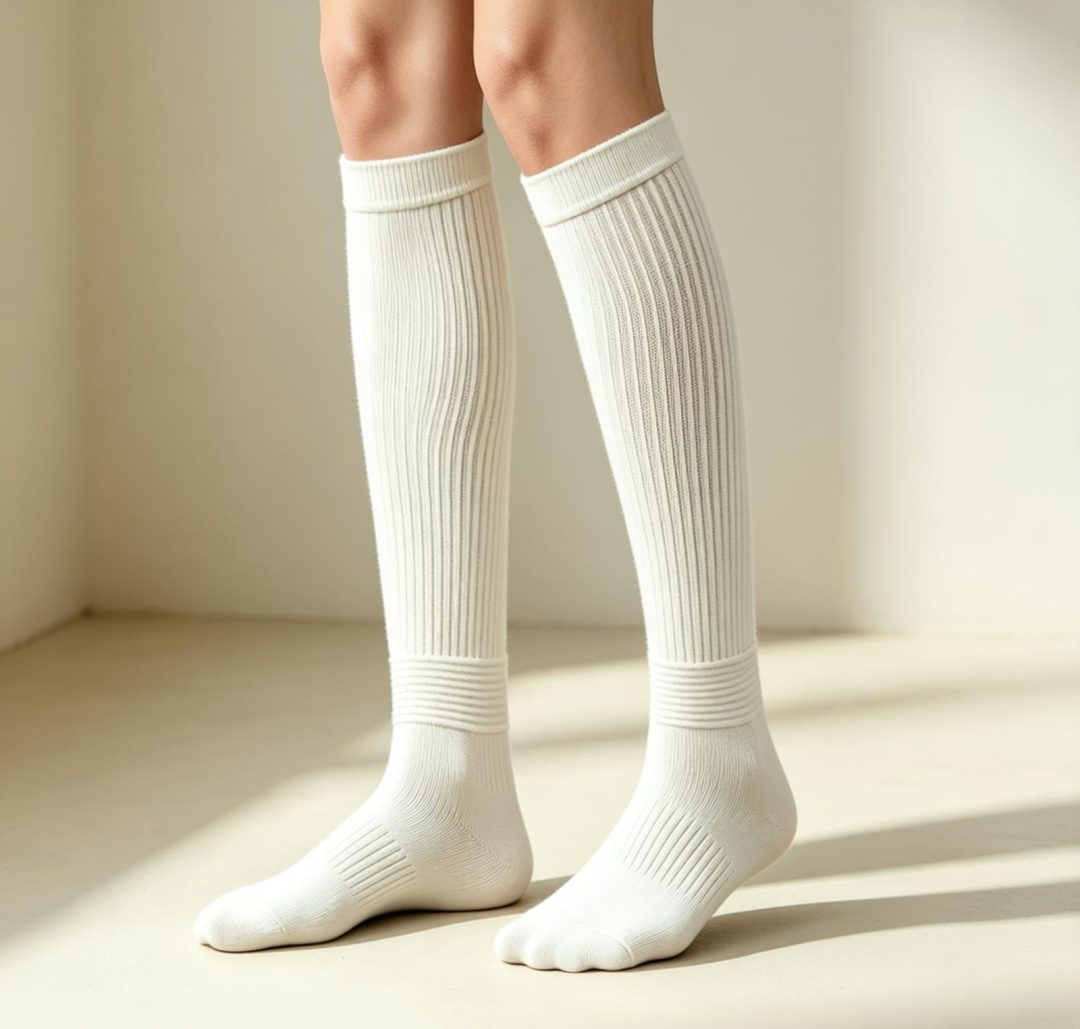
No-show socks are the invisible members of the sock family — they cover your foot but hide inside a low shoe so it looks like you are barefoot. This explainer defines them plainly and shows how they stay on without a tall cuff, for anyone sourcing them for the first time or explaining the category to a buyer who thinks “low cut” is one product. The confusion between no-show, low-cut and ankle is the most common reason a low-cut line underperforms, so the distinctions below are worth getting right before a single pair is ordered.
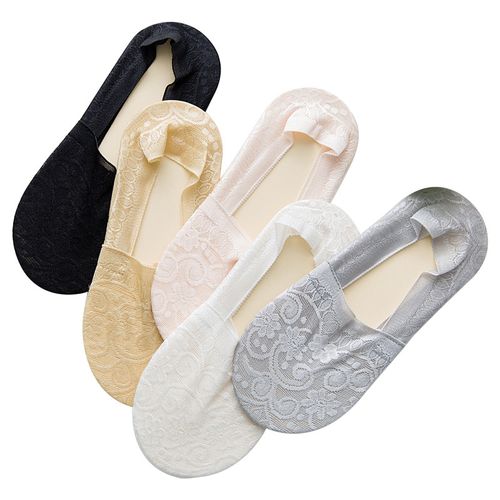
The yarn, gauge and MOQ options for this style are listed on the custom no-show socks page.
What “No-Show” Means A no-show sock rises to just below the ankle bone, so when worn in a loafer, sneaker or boat shoe, only the foot shows — the sock disappears. Compare: – Ankle: covers the ankle bone (visible above the shoe). – Low-cut: at the bone (barely visible). – No-show: below the bone (invisible). The three are often shelved together, but only the no-show truly vanishes, and that vanishing act is the whole point for the buyer choosing it.
How They Stay On With no cuff to hold them, no-shows use a silicone strip inside the heel that grips the skin. That strip — not elastic alone — is what keeps them from sliding into the shoe. Quality no-shows always have it; a “no-show” without a heel strip is just a short ankle sock that will migrate the moment you walk. We treat the strip as the product, and the knit as the carrier, because the strip is what delivers the promise of “stays up and stays hidden.”
Who Wears Them Anyone wanting barefoot style with hygiene and comfort: loafer and boat-shoe wearers, summer sneaker users, and people who dislike visible socks with low shoes. They are a warm-weather and dress-casual staple, and they bridge the gap between going barefoot (unhygienic in shared spaces) and wearing a visible sock (off-style for the look). For brands, that positioning — invisible but present — is the selling story.
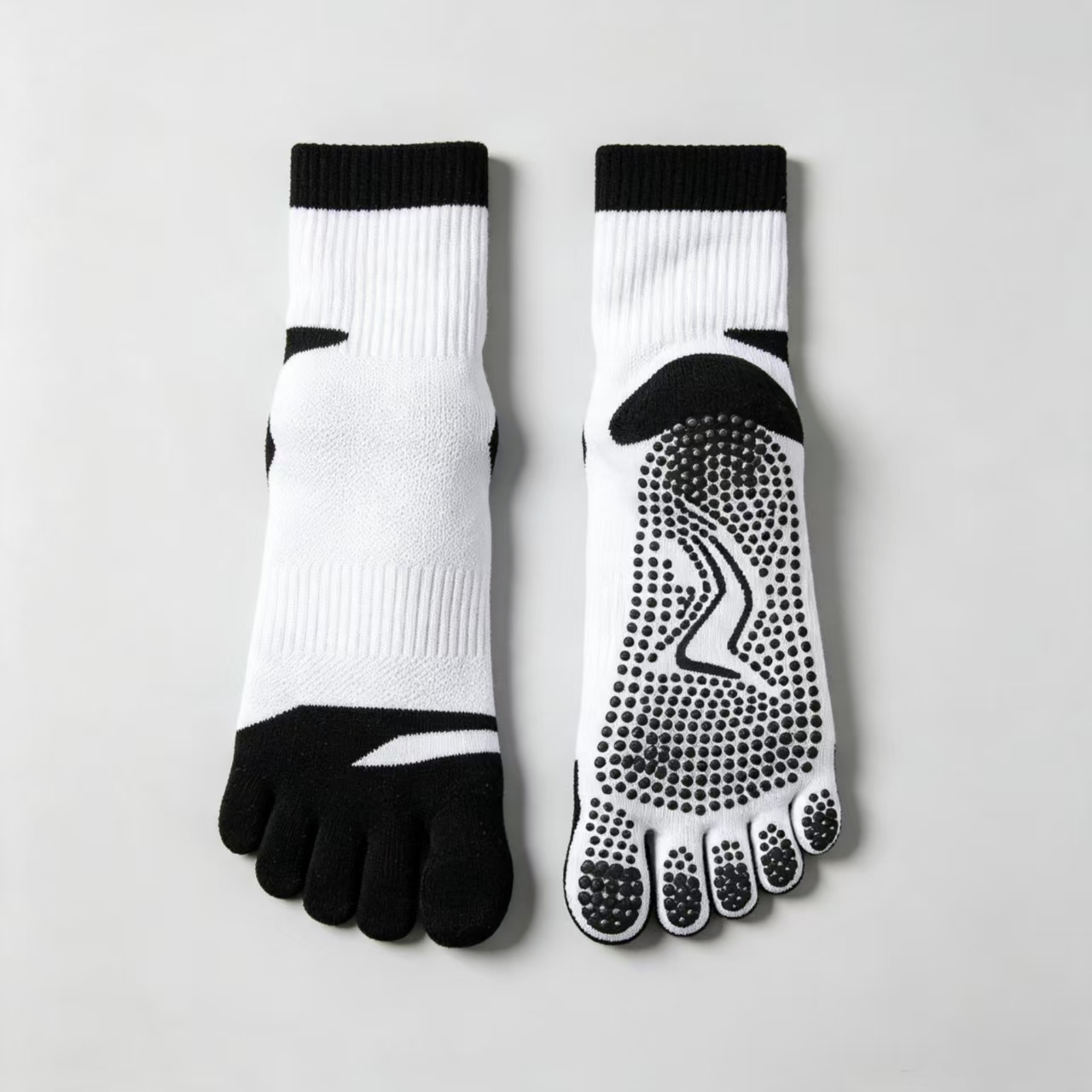
Styles and Construction No-shows come in knit-rib or bonded-cuff versions, with or without a ball-of-foot grip for athletic use. The construction choice drives both comfort and the manufacturing path, so it should be made before the purchase order, not left to the factory. A clear style brief keeps sampling short and the result consistent, and it lets the buyer explain the difference to the end customer instead of letting them discover a flaw in wear.
- Care and Lifespan No-shows are easy to care for but unforgiving of softener. Wash cold, skip fabric conditioner, and tumble-dry low or line-dry. Softener coats the heel silicone and is the leading cause of a no-show that “suddenly stopped staying up” after a few weeks. A quality pair with a proper strip lasts as long as any ankle sock; the failure mode is almost always laundry, not the product. We print the care note on the pack so the end buyer protects the grip they paid for without having to be told.
We go deeper on Ankle vs No-Show vs Low-Cut in a separate guide.
FAQ
Q: Do no-shows really stay up? A: With a proper silicone heel grip, yes; without it, they slip — so the grip is the first thing to check.
Q: No-show or ankle for sneakers? A: Ankle for a visible casual look; no-show for hidden, barefoot style. Match to the shoe and the outfit.
Q: Safe for skin? A: Yes — skin-safe silicone, same grade as grip socks, applied as a thin flexible strip.
CONCLUSION
No-show socks are low-cut socks held by a heel grip, not a cuff — invisible in low shoes with the comfort of a sock. Match the length to the shoe and confirm the grip, and they stay put, which is the only definition of a no-show that actually works.
Ready to price this out? Start with a sample from Sockmader, or send your artwork and target quantity for a quote.
If you are planning your own line, our custom no-show socks program covers sampling, MOQ and lead times in one place.