There is no single best material for a cotton sock, because cotton alone does not make a good sock. It has no elasticity, poor abrasion resistance and slow drying. What makes a cotton sock work is what it is blended with, and how the fibre itself was prepared. The answer to “best material” is therefore a formulation rather than a fibre, and the formulation that performs best is well established: combed long-staple cotton, blended with polyamide for strength and elastane for shape.
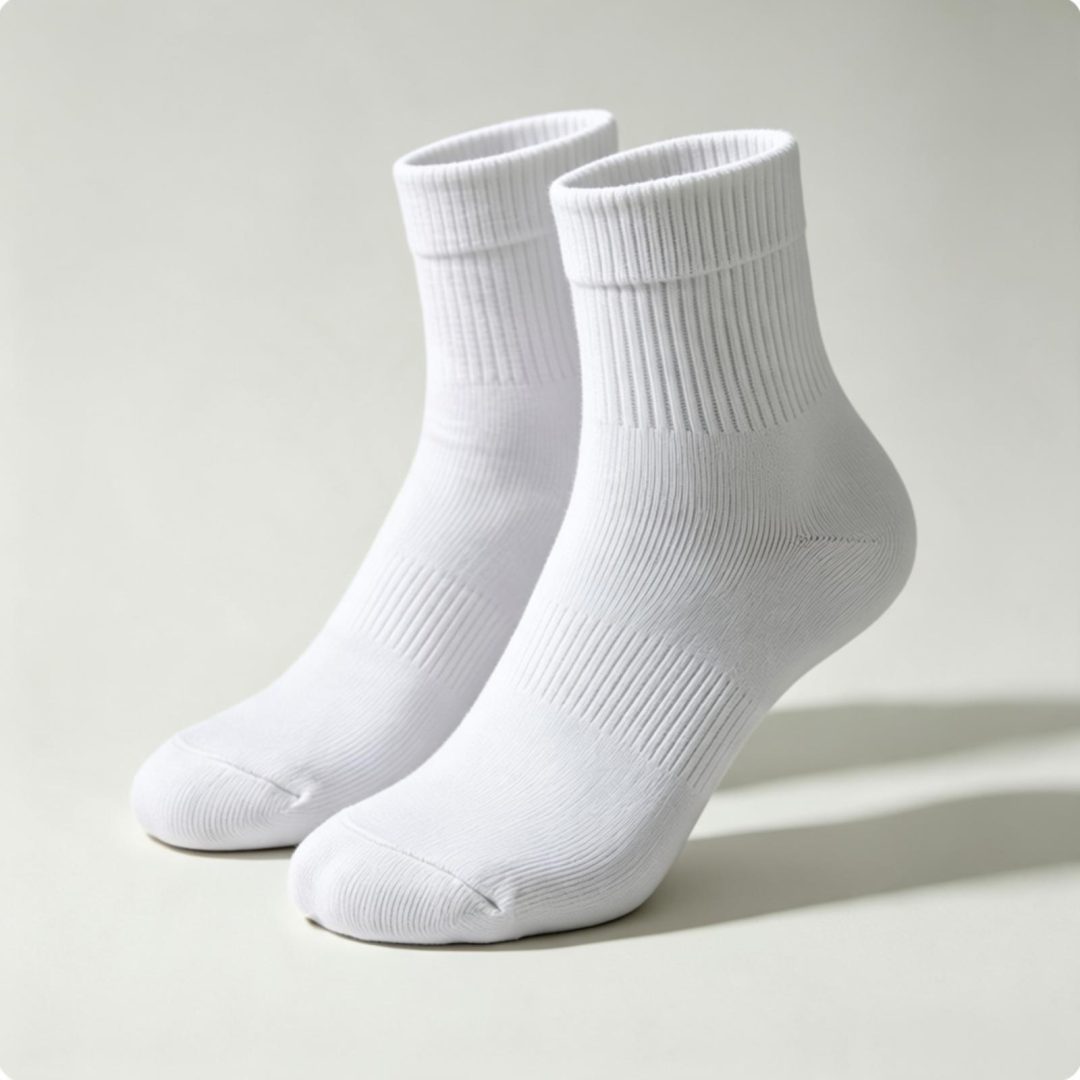
Each yarn below is stocked for custom cotton sock range, with blend ratios adjustable to your target cost.
Combed vs Carded Carded cotton is cleaned and aligned; combed cotton goes through an additional process that removes short fibres and leaves only the long, parallel ones. The result is a smoother, stronger, less pill-prone yarn. The yield loss makes it more expensive, and the difference is immediately visible after washing. For anything above commodity grade, combed is the correct choice. A sock labelled simply “cotton” is almost always carded.
Long-Staple Varieties Within cotton, longer staple means stronger and smoother yarn. Pima, Supima and Egyptian cotton are the long-staple varieties most often cited, and they deliver measurably better abrasion resistance and hand feel. Whether the premium is justified depends on the price point: for a luxury or gifting line, yes; for a commodity multipack, a good combed cotton will outperform a marketing claim about variety.
Organic and Conventional Organic cotton is grown without synthetic pesticides or fertilisers and, when GOTS-certified, is tracked through processing. Its physical performance is essentially the same as conventional cotton of equivalent staple — the difference is environmental and ethical, not mechanical. Buy organic for the story and the compliance, not because it wears better. Insist on certification documentation, because an uncertified organic claim is unverifiable and increasingly risky to publish.
Mercerised Cotton Mercerisation treats the yarn with caustic soda under tension, swelling the fibre. The result is increased lustre, improved dye uptake and greater strength. It is the standard treatment for quality cotton dress socks and it gives a distinctly smoother, slightly formal appearance. It adds cost and is unnecessary for a casual or athletic sock where lustre is not wanted.
The Synthetic Partners Polyamide (nylon) provides abrasion resistance and is the reason a modern cotton sock lasts longer than a pure cotton one. Polyester wicks moisture better and dries faster, which is why it appears in sports blends. Elastane provides shape retention — without it, a cotton sock sags within an hour. A typical high-performing formulation is 80 per cent combed cotton, 17 per cent polyamide and 3 per cent elastane.
Formulations by Use Case Everyday casual: 80/17/3 cotton-polyamide-elastane, combed, plain or light terry. Sports and active: higher polyester share, mesh zones, and a wicking finish. Dress: mercerised cotton with nylon reinforcement at heel and toe, fine gauge. Winter and children’s: cotton-rich terry with a higher synthetic share for durability. Each of these is a legitimate answer to “best material” for its purpose.
Organic Cotton Socks Benefits picks up where this article leaves off.
FAQ
Q: Is 100 per cent cotton ever the right answer? A: Rarely. Without elastane the sock loses shape, and without polyamide the heel wears through quickly.
Q: Does higher cotton content mean better quality? A: No — it usually means a sock that feels good initially and performs worse over time.
Q: Is organic cotton softer? A: Not inherently. Softness comes from staple length and combing, not from how the cotton was grown.
Q: What should I look for on the label? A: A stated blend with percentages, and the word “combed.” Those two tell you more than any other claim.
CONCLUSION
The best material for a cotton sock is a blend built around combed long-staple cotton: add polyamide for abrasion resistance, elastane for shape, and choose mercerisation only when lustre is wanted. Organic cotton is a sourcing decision rather than a performance one, and carded cotton is a cost decision with visible consequences. Specify the formulation and the sock will perform.
To move from plan to order, send artwork, size range and quantity through Sockmader’s custom cotton socks team.