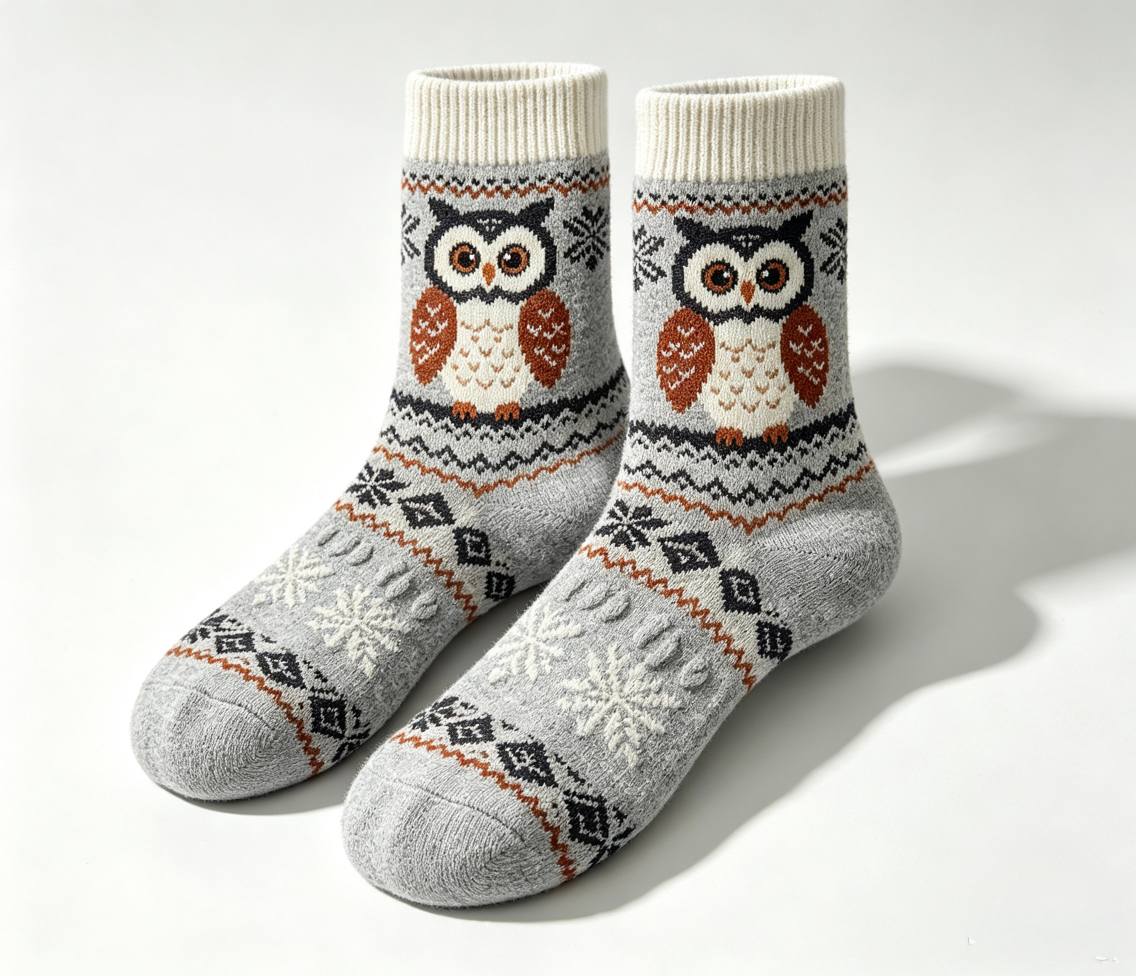
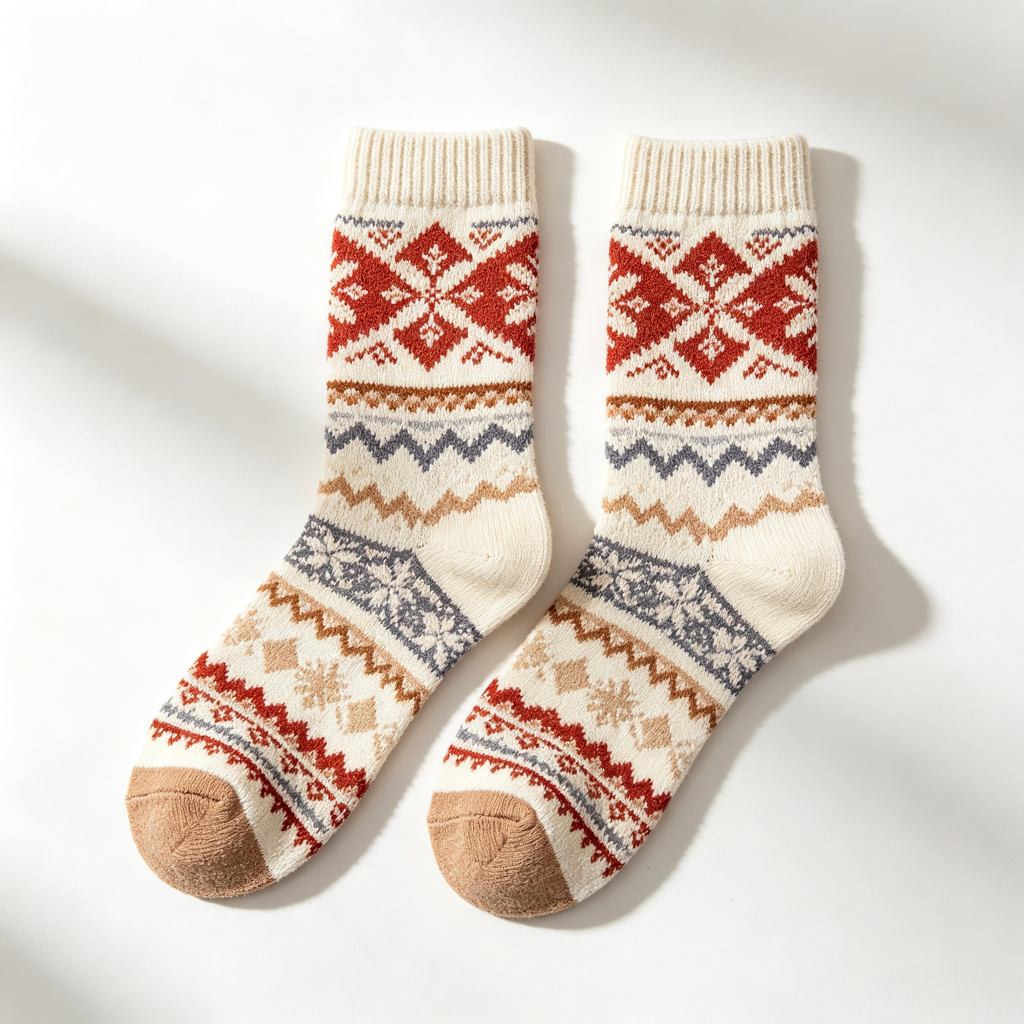
Ask a buyer why they chose jacquard over print and the answer is usually about durability. That is correct, but it is only half the story. The more interesting advantages show up in the wear test, in the returns data, and in the price a retailer can hold on the shelf.
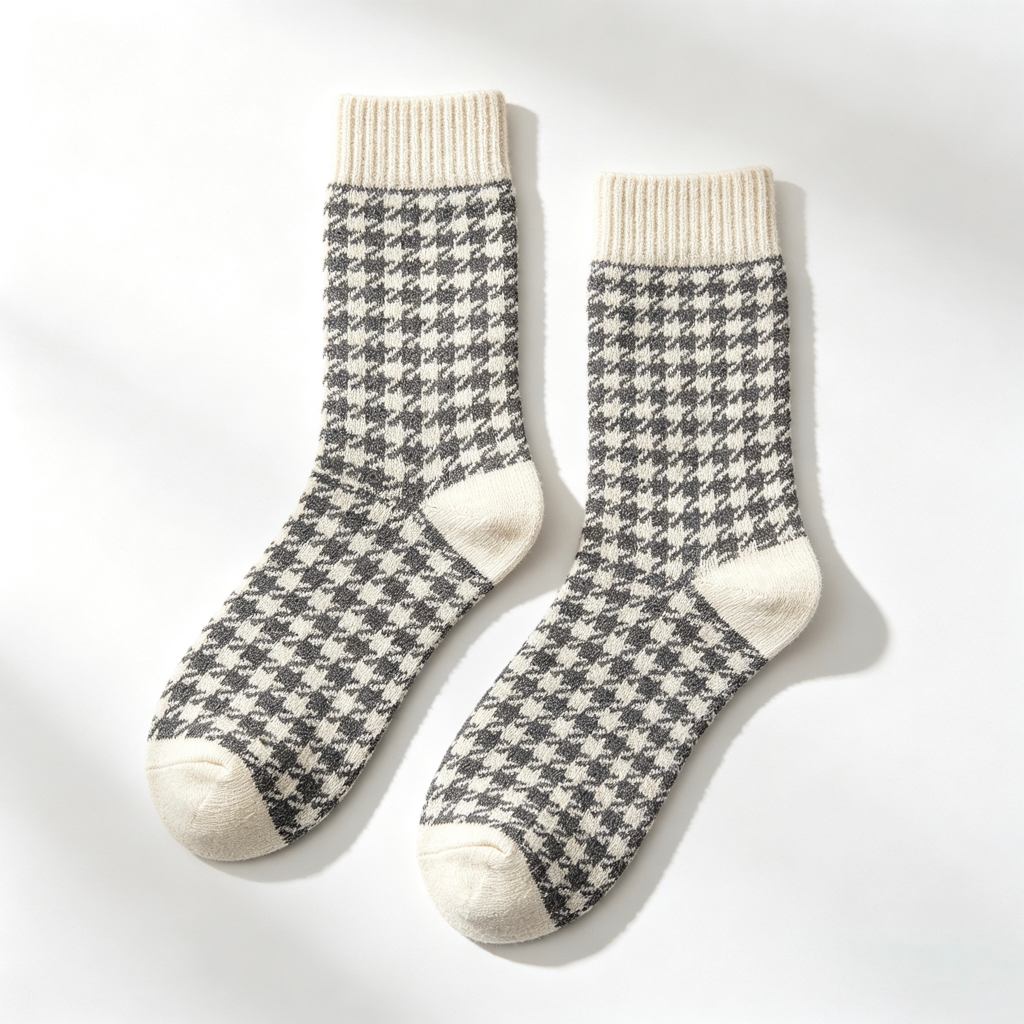
Here are the benefits that actually matter when you are specifying a range, in the order they tend to affect your margin.
You get these same benefits through custom jacquard socks, with yarn and construction tuned to your target price point.
H2 The Pattern Cannot Rub Off
A printed design sits on the surface of the fabric. Under abrasion — inside a boot, against a heel counter, on a yoga mat — the ink layer eventually cracks, crazes and flakes. A jacquard pattern has no surface layer to lose, because the pattern *is* the arrangement of the yarns.
For categories with high abrasion, this is decisive. Work socks, hiking socks, children’s socks and grip socks all see the kind of friction that kills a print in a season. Knitting the pattern in removes the failure mode entirely.
H2 Breathability and Moisture Handling
Print inks and transfer films are, by nature, less permeable than the knit underneath. Cover a large area of a sock with a print and you have effectively laminated that section.
Jacquard keeps the whole sock as fabric. Air moves through it, moisture moves through it, and the foot behaves the same whether it is over a patterned or a plain section. On a summer crew sock or a sports sock, where sweat management is a stated product benefit, this is a functional difference rather than a cosmetic one.
H2 Both Sides Look Finished
Turn a printed sock inside out and you see pale, unprinted fabric. Turn a jacquard sock inside out and you see the pattern in reverse colour, fully formed.
This matters more than it sounds. Customers inspect socks from the inside when they check the toe seam, and a visible white back is a quiet signal of a cheaper product. It also matters for folded cuffs, where the reverse of the fabric is on show.
H2 Texture You Can Feel
Because the pattern is made of yarn, it has physical presence. A jacquard motif has slight relief, and the fabric has the hand of a knit rather than the slightly stiff hand of a printed panel.
Retail buyers respond to this immediately in a showroom, and it is one of the reasons jacquard socks hold a higher price point online. Shoppers cannot touch the product through a screen, but they can read reviews about feel, and “thick, proper knit” appears far more often in jacquard listings than in printed ones.
H2 Design Longevity for Programmes and Uniforms
Uniform and team programmes run for years. A school, a dance company or a corporate gift buyer expects the replacement order in year three to match the original.
Printed colourways drift with ink batches and fabric lots. A knitted pattern specified by yarn reference and stitch map is repeatable almost indefinitely, provided the yarn is still spun. For any buyer with a reorder cycle, this reproducibility is worth more than the small unit-cost saving of print.
H2 The Honest Trade-Offs
Jacquard is not universally better, and pretending otherwise leads to bad orders. Colour count is limited, gradients are impossible, photographic detail is out of reach, and there is a setup cost that makes very small runs uneconomical.
If your design needs six colours or a photographic image, print is the right answer. If it needs three colours, crisp edges and a ten-year lifespan, jacquard wins on every measure that a customer notices after the third wash.
We go deeper on What Are Jacquard Socks? in a separate guide.
FAQ
Q: Do jacquard socks fade? A: The yarn can fade slightly over many washes, but the pattern does not disappear — it fades uniformly with the fabric rather than peeling away.
Q: Are jacquard socks thicker than plain socks? A: Marginally, in patterned areas, because floats add yarn on the reverse. On a well-engineered design the difference is not perceptible on the foot.
Q: Is jacquard suitable for children’s socks? A: Yes, and it is often preferred, because there is no ink layer to irritate skin and no print to crack under playground wear.
CONCLUSION
The case for jacquard rests on permanence, breathability and perceived quality — three things customers notice long after the novelty of a colourway has worn off. Where the design brief allows a limited palette, it is the construction that keeps its value.
To move from plan to order, send artwork, size range and quantity through Sockmader.
When you are ready to source, the Sockmader custom jacquard socks team can quote sampling, MOQ and lead times for your quantity.