If you are sourcing wholesale athletic socks, the most common mistake is asking for a price before there is a specification. A quote built without yarn composition, gauge and a size set is a guess, and guesses turn into disputes several weeks later. What follows covers the specification, the cost structure, the minimum per color and the calendar. The product route starts at wholesale athletic socks.
In plain terms: if you are buying wholesale athletic socks, plan on 300 pairs per color, 3-7 days for samples and 5-25 days for a bulk run. Searches like this usually come from buyers who are usually building a resale or distribution programme, not buying for personal use, which is why this page goes straight to numbers rather than marketing copy.
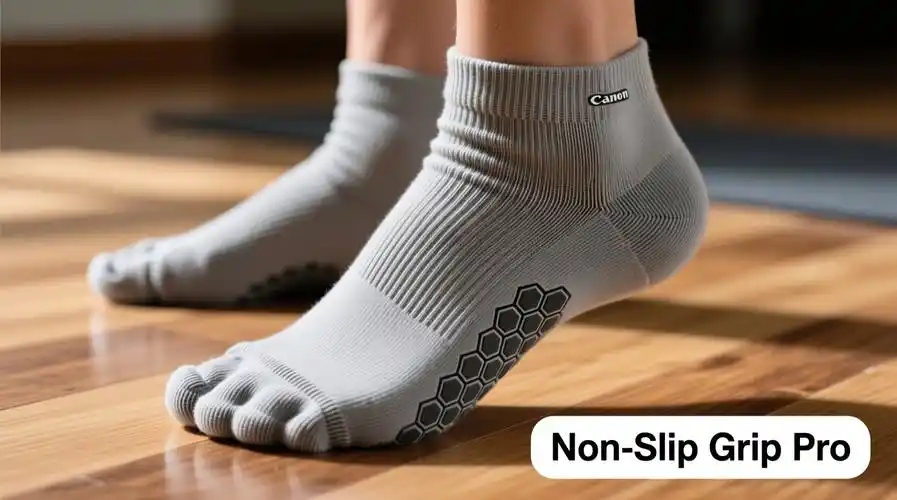
Three specifications decide both the outcome and the price: zoned cushioning, arch support band and ventilation mesh. Get those on your enquiry sheet and quotes become comparable.
On this page:
- Minimum per color, and why the number is what it is
- What the calendar really looks like
- How sports socks are made, step by step
- QC: the checks to ask for before the shipment leaves
Buyers also arrive here searching: custom sports socks; custom athletic socks; custom gym socks. They are the same question asked from different angles.
Minimum per color, and why the number is what it is
Buyers often treat MOQ as a negotiating position. It is not: it is arithmetic done by the production planner. Three costs have to be covered before the first pair is worth knitting.
- Machine programming and set-up. Fixed per design, regardless of how many pairs follow.
- Yarn minimum. A dyelot has a floor, which is why custom shades raise the entry point.
- Changeover labour. Every swap of yarn, needle setting or programme costs machine hours.
The standard minimum is 300 pairs per color. What shapes the order is not the design but the way it is split: each colourway is its own production run, and each size block is knitted and paired separately.
If you are unsure about size split, ask how the 300 pairs are distributed across sizes within one colourway; that is the number that actually constrains the order. Terms and sampling rules are set out on wholesale sock program.
What the calendar really looks like
Working backwards is easier than forwards. Start from the date goods must be available to sell.
- T minus 4 to 6 weeks: goods on the water. A full sea container takes roughly 30-40 days to the US West Coast and 35-45 days to major European ports. Air freight takes 5-8 days but usually costs four to six times the sea rate per unit, and courier shipments for small trial orders arrive in 3-5 days.
- T minus 2 to 3 weeks: packed and exported. Three to seven days for pairing, cartons, documentation and customs.
- T minus 3 to 5 weeks: bulk production. Five to twenty-five days depending on quantity and construction.
- T minus 3 to 4 weeks: sampling. Three to seven days per round, and most programmes need two rounds, not one.
- T minus 4 to 5 weeks: enquiry. One to three days to quote once the specification is complete.
Plan backwards from the date goods must be on sale, not forwards from the day you send the enquiry. Process detail is documented under sock packaging options.
How sports socks are made, step by step
Understanding the production sequence tells you where delays and defects come from.
1. Yarn preparation. Cones are inspected and, if the programme needs it, dyed to a confirmed shade. Custom dyeing adds 7–14 days and carries a mill minimum.
2. Knitting. Socks are knitted as tubes on circular sock machines. 84N-96N coarse gauges serve terry and heavy socks, 108N-120N is the workhorse for everyday styles, 144N-168N carries fine jacquard and athletic structure, and 200N tops the range for dress socks and very fine jacquard.
3. Toe closing. There are three toe closures: standard overlock, the cheapest and the one that leaves a seam ridge; Rosso linking, which is substantially flat; and hand-linked seamless, the most comfortable and the most expensive per pair.
4. Washing and boarding. Washing removes knitting oils and sets dimensions; boarding (heat-setting on forms) gives the final shape and smoothness.
5. Inspection and pairing. Each pair is checked for defects, matched by size and shade, and paired.
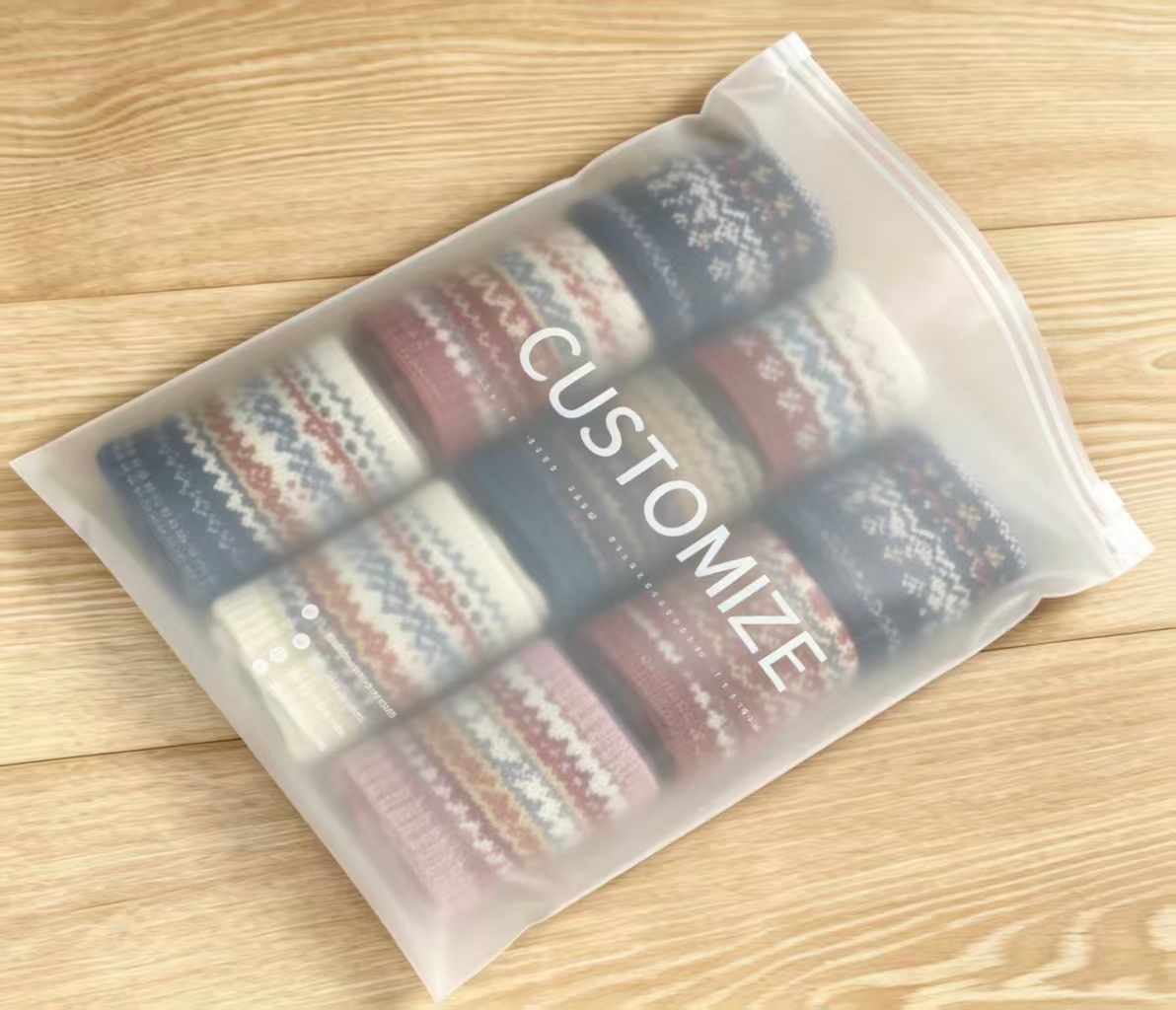
6. Packing. Hang tags, polybags, inner boxes and cartons per the packing specification.
The bottleneck for sports socks is rarely knitting capacity; it is finishing and packing, which is where most schedule slips actually happen. Full process notes: sock packaging options.
QC: the checks to ask for before the shipment leaves
AQL 2.5 is the common default for apparel, and many European and US buyers additionally require zero tolerance for critical defects. AQL 4.0 suits promotional goods, and AQL 1.0 is used for high-value or medical channels. Then the product-specific checks:
| Check | Method |
|---|---|
| Recovery test | Measure how far the sock returns after stretching. |
| Abrasion | Martindale or wear test for pilling and holes. |
| Left and right pairing | Required wherever an L/R pattern exists. |
| Colour fastness | Check for bleeding where dark meets light panels. |
For the first order, add a pre-production sample and an in-line check. Two checkpoints cost very little compared with finding a defect at final inspection. Process and test references: sock packaging options.
FAQ
Which yarn should sports socks use?
High-intensity styles want nylon or polyester with elastane; cotton suits low-intensity everyday training.
Do we need separate left and right socks?
Where there is zoned structure or arch support, yes. The cost increase is small and the fit difference is obvious.
How long until delivery?
Sampling 3-7 days, bulk 5-25 days, depending on structure and the number of colourways.
What is the fastest way to get an accurate quote?
Send a specification sheet — yarn composition, needle count, size set, construction, artwork route, quantity and packing. A quote built from that is usually within a few percent of final; a quote built from a photo is not.
Related reading across the range: sock material guide.
Where to go from here
If you take one thing from this: the cheapest quote is usually the one with the loosest spec. Write the spec first and the quotes become comparable. wholesale athletic socks is the place to begin; Sockmader covers the commercial terms.