Diabetic socks are the most purpose-driven product in mainstream hosiery. Their entire design exists to protect feet with reduced sensation and compromised circulation: no pressure points, no moisture traps, no abrasive seams. Every construction choice in the factory traces back to that mission — which makes the manufacturing process fundamentally different from fashion socks, even when the machines look the same. For brands serving the health and wellness market, here is how these socks are actually made.
You will see every step below in compression sock manufacturing, where sampling runs before bulk production and MOQ starts at 50 pairs per design.
The Non-Binding Cuff: The Defining Feature
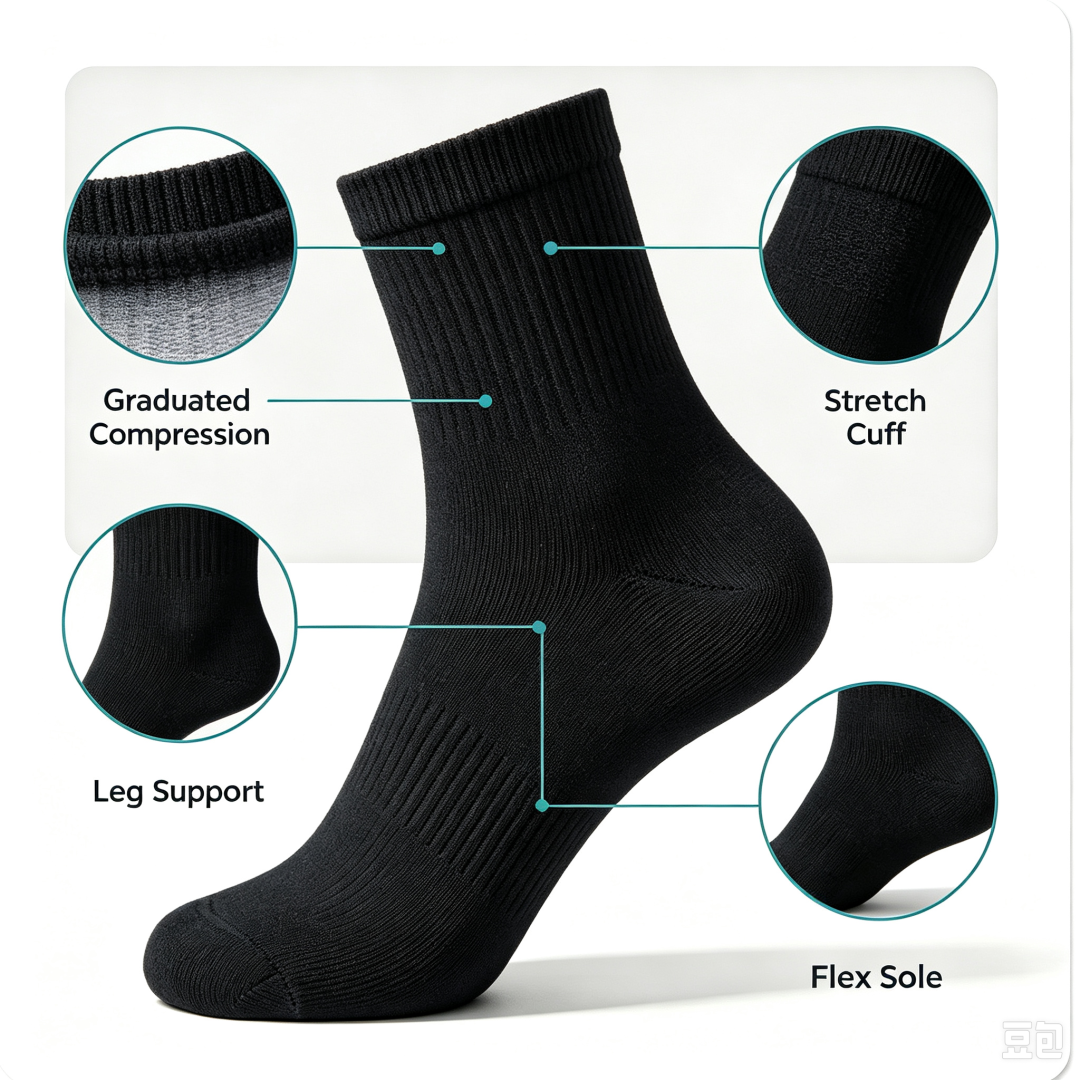
The first engineering decision is the cuff. Diabetic socks use loose-knit, low-elastane (or elastane-free) cuffs that hold the sock up through rib construction and yarn friction rather than squeeze. The target is simple to state and hard to achieve: stay up through a full day of walking while leaving no indentation on the skin. Cuff pressure is checked on production samples, and quality programs physically inspect for marking — a sock that leaves a ring was not made correctly.
Seamless or Hand-Linked Toe Closing
The toe is the second critical zone. Standard sock seams create a ridge that a healthy foot ignores but a neuropathic foot may not feel damaging itself against — diabetic socks therefore use seamless (hand-linked or rosso) closing that produces an almost perfectly flat interior. Factories with true diabetic lines run dedicated toe-closing operations and inspect flatness on every size. This is the feature that separates real therapeutic products from ordinary loose socks with health marketing.
Fiber Selection: Dry, Smooth, Antimicrobial
Moisture management is a medical requirement, not a comfort bonus: damp skin softens and breaks down, and diabetic feet heal slowly. The dominant construction is moisture-wicking acrylic, polyester, or blends with mercerized cotton, often with antimicrobial treatment to control odor and bacteria. Pure loose-weave cotton, despite its healthy image, is avoided by serious manufacturers because it holds moisture — one of the most common misconceptions brands should understand when designing a range.
White Is a Clinical Feature
Many diabetic socks are white or light-colored by design, not fashion: light colors make blood or discharge from a wound visible to a caregiver inspecting feet daily. While colored and patterned diabetic socks exist for lifestyle appeal, clinical and pharmacy channels still expect white-dominant ranges, and smart brands maintain both.
Extra Padding Where Feet Need It
Padding is engineered into the sole and sometimes the heel using low-density terry that cushions without compression. The knitting program integrates this zones — cushion underfoot, flat weave on top, breathable mesh panels along the instep for ventilation. All of it must be accomplished without bulk that would crowd therapeutic footwear, so patterns are tuned to the extra-depth shoes many customers wear.
Quality Control and Compliance
Diabetic sock QC checks: seam flatness, cuff pressure, moisture-wicking performance, antimicrobial durability after washing, and size conformity. Materials should carry OEKO-TEX certification, and if the product is marketed with medical claims, regional medical-device rules apply (FDA registration in the US, MDR in the EU) — most wellness brands position the product as comfort/health-conscious hosiery to stay in the non-regulated tier while still delivering the construction benefits.
If that is settled, the next question is usually answered in 12 Compression Socks Design Ideas That Actually Sell.
FAQ
Q: What makes a sock “diabetic” rather than just loose?
A: Three engineered features: non-binding cuff, seamless toe, and moisture-wicking fibers — ordinary loose socks typically have none of them.
Q: Can diabetic socks have fun colors and patterns?
A: Yes — the construction features matter, not the color. Lifestyle-oriented diabetic lines with patterns sell well in general retail.
Q: Do diabetic socks need medical device approval?
A: Only if sold with explicit medical claims. Comfort-positioned products with the same construction are sold without registration in most markets.
CONCLUSION
Diabetic socks are an engineering promise: protect feet that cannot protect themselves. For brands, credibility in this category comes from construction transparency — show the seamless toe, explain the non-binding cuff, and let the product’s purpose sell it. An aging global population guarantees demand; only factories that genuinely master the construction will keep it.
When you are ready to produce, the Sockmader custom sock factory covers sampling, MOQ and lead times in one place.
Start your next order with custom compression socks from Sockmader — send artwork, size range and target quantity for a quote.