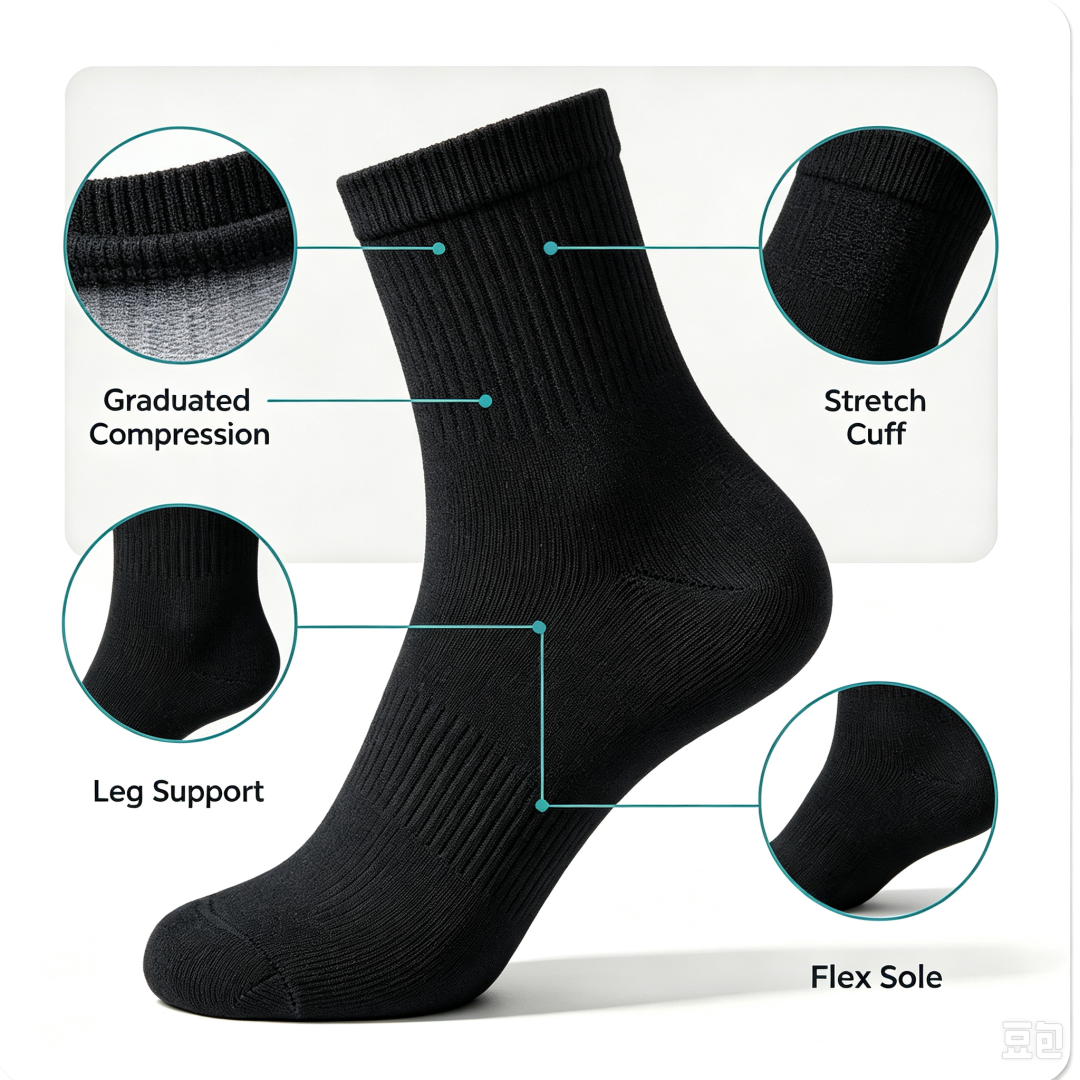
Ask what compression socks are made of and most people say “tight elastic.” The reality is more interesting: material selection is where compression socks are differentiated, priced, and matched to their end use. The same 20 mmHg pressure profile feels completely different — and performs completely differently — depending on the fiber blend carrying it. This guide compares the materials that matter and explains how professionals choose between them.
Each yarn below is stocked for custom compression sock range, with blend ratios adjustable to your target cost.
The Core Structure: Nylon and Spandex
Nearly every compression sock is built on a two-fiber engine. Nylon (polyamide) provides the structure: a smooth, strong, lightweight matrix that determines durability and hand feel. Spandex (elastane) provides the recovery: the power to squeeze and — critically — to keep squeezing after hours of wear and repeated washing. The standard blend runs 70–80% nylon to 20–30% spandex. More elastane means higher compression and a heavier feel; more nylon means sheerer, smoother, more durable socks. This single ratio is the most important line in any compression sock tech pack.
Covered Elastane: The Hidden Quality Variable
Raw spandex is never knitted directly — it is wrapped (“covered”) with nylon or polyester filament in single or double covering. Double-covered elastane is more expensive but produces smoother fabric, better recovery, and dramatically better consistency over wash cycles. Cheap compression socks often use single-covered or air-covered yarns, which is why they feel lumpy, lose pressure quickly, and run after a few wears. If you are comparing quotes that look identical, the covering method is usually the difference.
Merino Wool Blends: Premium Comfort for Cold-Weather Markets
Merino-spandex blends (typically 50–65% merino) deliver temperature regulation, natural odor resistance, and a soft hand that nylon cannot match. Merino compression socks command premium pricing in outdoor, ski, hiking, and travel segments. The trade-offs: merino is more expensive, harder to knit at high pressure levels, and slower to dry. For brands targeting cold-climate or outdoor niches, however, merino is the material that justifies a $25+ price point.
Polyester and Recycled Blends: Performance and Sustainability
Moisture-wicking polyester blends dominate the sports recovery segment — they move sweat, dry fast, and hold vivid sublimation-friendly prints for team and branded programs. Recycled polyester (GRS-certified) now performs on par with virgin fiber and powers the fastest-growing positioning in the category: sustainable compression. For brands whose customers care about materials ethics, rPET with OEKO-TEX certification is a listing prerequisite at several major retailers.
Specialty Fibers: Real Benefits and Clever Marketing
You will encounter copper-infused, charcoal-infused, and aloe-coated yarns in this category. Treat these honestly: they are marketing-friendly surface treatments on top of the nylon-spandex engine, not transformative technologies. Copper and charcoal ions are real (and testable), but the pressure profile, fit, and base fiber quality still determine 90% of the product experience. Lead with material quality first; use specialty fibers to sharpen a story, never to replace fundamentals.
Matching Material to Market
The practical selection matrix: wellness/travel (nylon-spandex, smooth and sheer), medical/occupational (high-nylon durability blends, opaque), sports recovery (polyester-spandex wicking blends), outdoor/cold weather (merino blends), eco-positioned lines (rPET-spandex). Pressure level, size range and market compliance then layer on top of this fiber decision.
How Are Diabetic Socks Made? picks up where this article leaves off.
FAQ
Q: What is the best overall material for compression socks?
A: A double-covered nylon-spandex blend around 75/25 is the industry’s most versatile, proven formula — durable, smooth, and stable across wash cycles.
Q: Do merino compression socks work as well as nylon ones?
A: Yes for pressure, with trade-offs in drying speed and cost. Merino excels in temperature comfort; nylon excels in durability and sheerness.
Q: How can I verify the material blend a supplier claims?
A: Require fiber-content test reports (burn/chemical analysis) per lot, and confirm stated percentages appear on product labels, where they are legally required in most markets.
CONCLUSION
Material choice is strategy choice in compression socks: nylon-spandex for the mass market, polyester blends for sport, merino for premium outdoor, rPET for sustainability positioning. Whatever direction you choose, demand double-covered elastane and written fiber percentages — because in this category, the blend inside the sock is the product your customer is actually buying.
Ready to price this out? Start with a sample from Sockmader’s custom compression socks team, or send your artwork and target quantity for a quote.