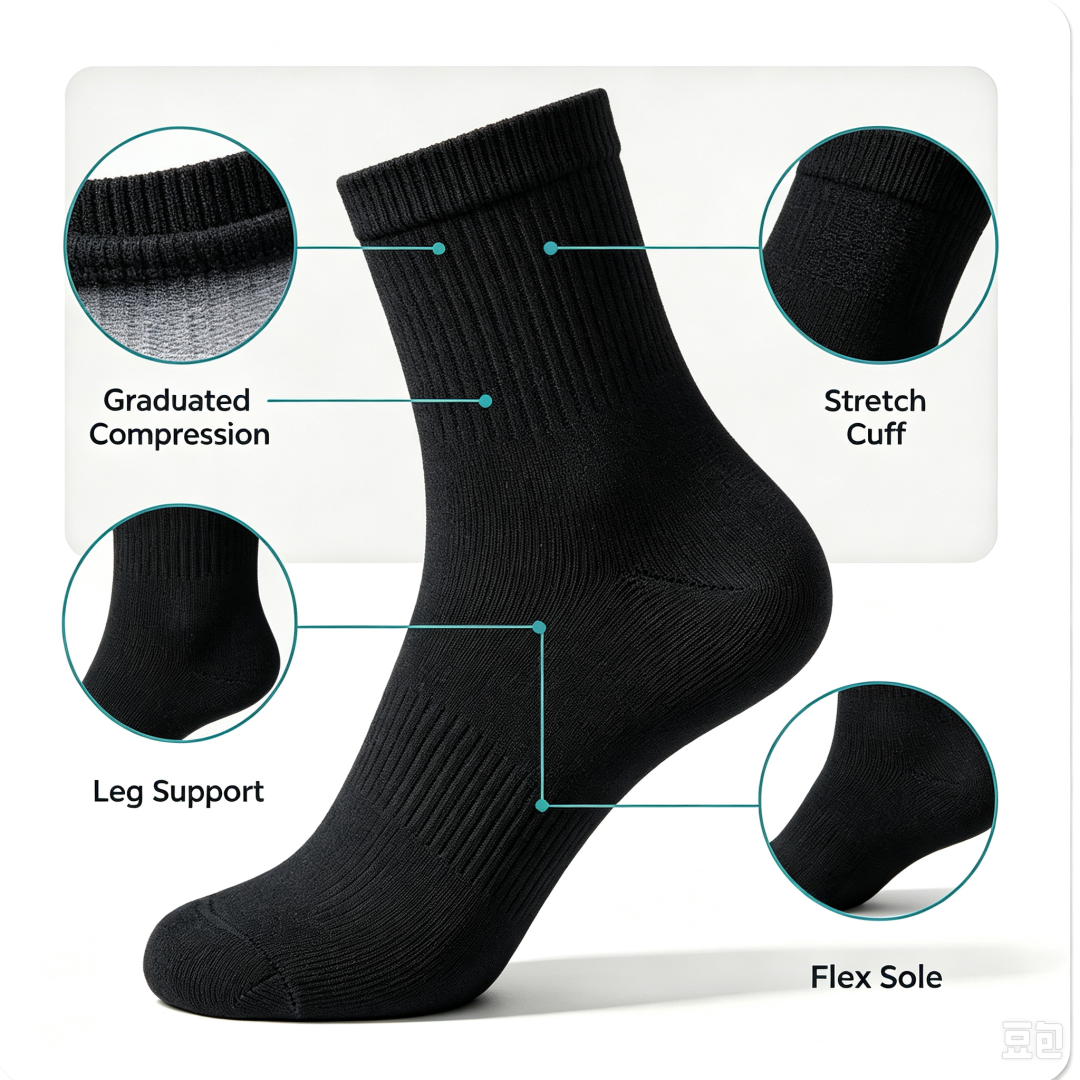
Designing a compression sock is a balancing act between two masters: the visual brand and the pressure profile. Unlike a fashion sock, where design freedom is nearly unlimited, every design element in a compression sock interacts with the engineering that makes the product work. Get the balance right and you have a product that looks like lifestyle and performs like therapy; get it wrong and you have either a beautiful sock that doesn’t compress or a medical device nobody wants to wear. Here is how professional brands navigate the process.
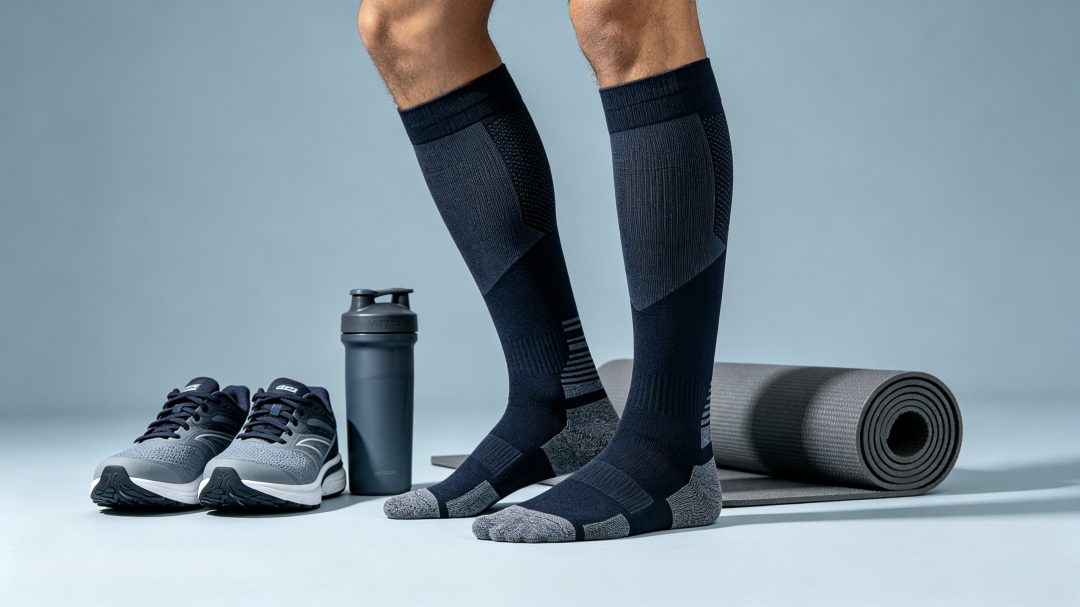
Every idea below can be produced through wholesale compression socks, including jacquard, printing and retail-ready packaging.
Start With the Pressure Architecture
Design begins with structure, not graphics. Decide the pressure class (15–20 mmHg wellness is the commercial default), the length (knee-high dominates, but thigh-high, anklet and sleeve formats serve specific niches), and the construction zones — cushioned sole or flat, open-toe or closed, mesh venting panels or solid knit. These architectural decisions define what canvas you actually have for visual design.
Choose Your Decoration Technology
Visual design in compression socks follows three routes. Knit-in jacquard patterns integrate motifs into the fabric — the premium, wash-proof option, though very complex designs are limited by needle resolution. Printed designs (typically heat-transfer) allow photographic detail and gradients; they work best on lighter compression where fabric stretch is moderate. And knit structure itself becomes design: ribbed panels, mesh windows, contrast welt cuffs and color-blocked zones create visual identity with zero print durability risk. Most successful ranges combine structure-led design with selective pattern placement.
Design for the Stretch
The most common amateur mistake: designing graphics that look perfect flat and distorted on a leg. Compression fabric stretches 30–50% when worn, elongating motifs and shifting colors. Experienced sock designers preview artwork at stretched scale, keep critical elements (logos, text) in zones of moderate stretch, and use vertical motifs that stretch gracefully. Always request a stretched sample photo or wear mockup before approving designs.
Color Strategy and Skin Tones
Compression sock colorways split into two families: performance colors (black, navy, bold athletic shades) and skin tones (nude ranges from fair to deep, which are perennially underserved and drive strong loyalty when done right). A practical launch palette: two neutral skin tones, black, navy, and one signature brand colorway. Check colorfastness requirements especially for deep shades on light grounds, where bleed ruins the design after washing.
The Tech Pack: Where Design Becomes Manufacturable
Your design is executed from a tech pack — the document that specifies everything: pressure class and length, exact fiber blend percentages, size run with stretched dimensions, color Pantone references, decoration method per design element, label and packaging artwork, and compliance marks. The difference between brands that scale smoothly and brands that suffer sampling chaos is almost always tech pack discipline. A capable factory will review it, flag manufacturability issues, and return engineering adjustments before knitting the first sample.
Design Choices That Move Cost
Budget-conscious design decisions: fewer colors per jacquard design (each color adds yarn feeds and complexity), symmetrical motifs (simpler knitting), structural design (ribs, mesh, color-blocking) instead of multi-color jacquard, and consistent cuff/heel/toe construction across a range (shared knitting programs). These choices can move unit cost meaningfully without visible cheapness.
We handle the adjacent decision in 12 Compression Socks Design Ideas That Actually Sell.
FAQ
Q: Can any graphic be put on a compression sock? A: Not exactly — knit resolution limits fine detail, and stretch distorts designs. Simplified, bold motifs and structurally-led design work best; photographic art suits printed lighter-compression styles. Q: How many colors can a compression sock design use? A: Jacquard knitting typically handles 3–5 colors per row comfortably; more colors increase cost and can stiffen the fabric. Q: Should design or engineering lead the process? A: Architecture leads, design refines. Fix pressure class, length and construction first, then design within that canvas.
CONCLUSION
Great compression sock design is collaboration: your brand identity, expressed within the physics of pressure. Start from the pressure architecture, design for stretch, keep a disciplined tech pack, and choose a factory that reviews designs for manufacturability — that process turns a concept sketch into a product that performs as good as it looks.
Ready to price this out? Start with a sample from Sockmader’s custom sock manufacturing team, or send your artwork and target quantity for a quote.
If you are planning your own line, our custom compression socks program covers sampling, MOQ and lead times in one place.