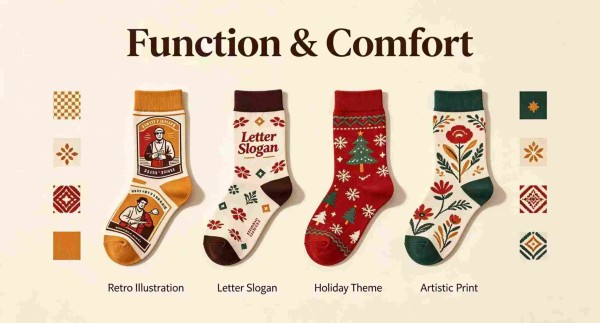
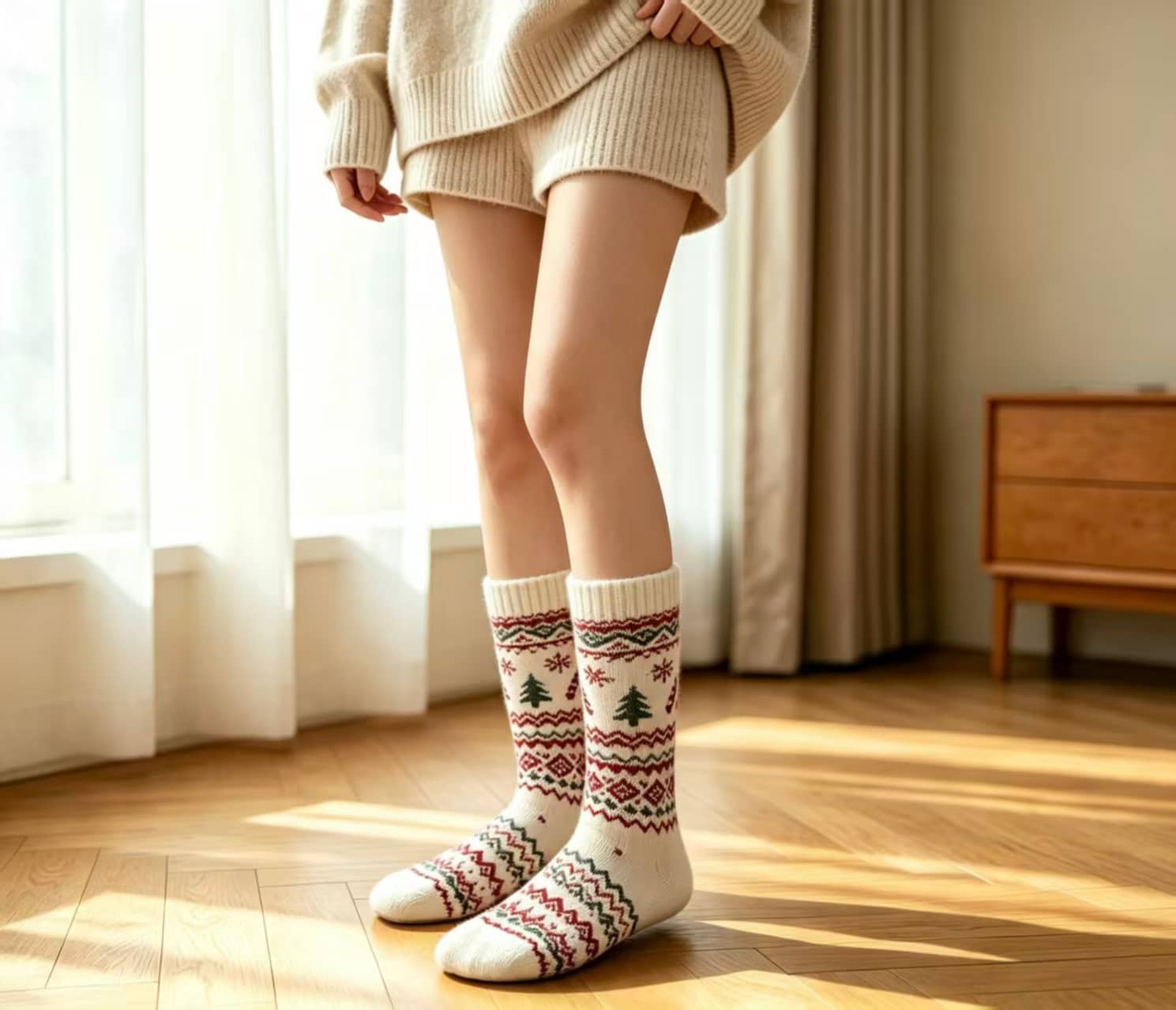
Christmas socks are a seasonal bulk business with one hard constraint: they must land before mid-November or they miss the season entirely. Sourcing them is therefore as much about timeline and supplier reliability as it is about design. This guide covers how to vet suppliers and place holiday sock orders that actually arrive on shelf, because a beautiful Christmas sock that reaches the warehouse in December is not a product — it is inventory you will be discounting in January and storing for eleven months.
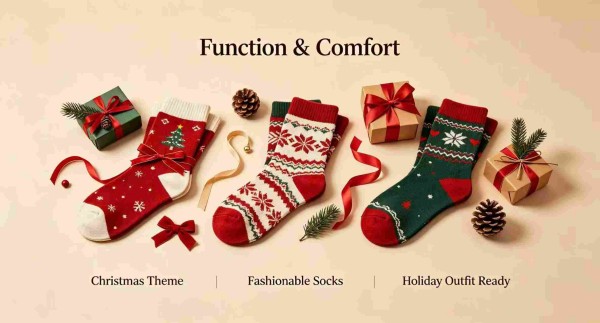
Factory audits, certifications, MOQ and lead times for this category are documented on the Christmas sock manufacturing page.
The Lead-Time Reality Custom Christmas socks need knitting, boarding, customization (knit jacquard or print) and shipping — typically 35–55 days from art approval, plus ocean or air transit. A mid-November shelf means ordering by early September at the latest, and that assumes nothing goes wrong. Suppliers who say they “can do it faster” usually cut corners or miss the date. Build the calendar backward from your on-sale date and add a buffer, because the single most common failure in this category is not quality — it is a container that lands three weeks late.
Supplier Vetting Checklist Ask for evidence, not reassurance: – Proven holiday capacity — last year’s volume, not a generic factory tour. – Customization method: knit jacquard (durable, higher MOQ) versus sublimation print (fast, lower MOQ, less durable). – A shade-lock process for red and green, which drift more than any other colorway. – A written on-time delivery rate for Q3 shipments specifically. – Sample turnaround of ≤7 days before bulk. A supplier who cannot answer these quickly is telling you something useful about how the order will go.
MOQ and Customization Knit-jacquard Christmas socks: MOQ ~100 pairs per design. Printed: MOQ ~100 pairs per design, but less hard-wearing for repeated wear and washing. For a hero holiday design you intend to repeat next year, knit — the pattern will not fade and the jacquard setup is a one-time cost. For a fast promotional drop or a test design, print. Confirm which method the supplier actually runs in house, because a factory that subcontracts printing adds both time and risk to an already tight calendar.
Quality Gates Require a shade check on red and green (±0.5 DE), a wash test for bleed — critical for red — and a linked toe. A red sock that bleeds in the first wash is a return, a bad review in peak season and, if it bleeds onto other garments in a gift pack, a complaint that reaches the brand rather than the factory. We run the bleed test as standard on every red and green lot and hold the result on file with the shade reference.
Packaging and Gifting Christmas socks are bought as gifts more than any other sock category, so packaging carries real weight here. Confirm gift-ready options — kraft sleeve, hangtag, ribbon, multipack — early, because packaging adds 5–10 days to lead time and is the most common cause of a last-minute schedule slip. Design the pack as part of the product brief, not as an afterthought once the socks are already knitted and waiting.
Risk Management Split the order across two suppliers only if both are proven — a single late supplier is the classic holiday failure, and an unproven second supplier simply doubles the risk. Hold 10–15% safety stock for mid-season reorders, which must ship by air to make the window. Set the reorder trigger before the season starts, because by the time you know you need more, ocean freight is no longer an option and air freight will erase the margin.
If that is settled, the next question is usually answered in How Are Christmas Socks Made?.
FAQ
Q: When is too late to order Christmas socks?
A: After early September for custom; later only via air freight at a premium that usually kills the margin.
Q: Knit or print for holiday socks?
A: Knit for a hero, durable, repeatable design; print for a fast promo with a lower MOQ.
Q: How to avoid red bleed?
A: Specify a wash-tested dye and put a bleed check in the PO — red is the highest-risk color in the range.
CONCLUSION
Source Christmas socks by working backward from the shelf date, vetting real holiday capacity and locking red and green shade and bleed tests. Timeline discipline — not design — is what separates a sold-out season from a warehouse of late socks, and it is decided in September, not in November.
To move from plan to order, send artwork, size range and quantity through the Sockmader custom sock factory.
When you are ready to source, the Sockmader custom christmas socks team can quote sampling, MOQ and lead times for your quantity.