Football socks are equipment, not accessories. They must survive 90 minutes of sprinting, sliding and stud pressure, hold shin guards in place, stay up without strangling the calf, and carry full team identity — colors, stripes, numbers. That combination of durability engineering and visual precision makes them one of the most technical products in sports hosiery. Here is how they are made.
You will see every step below in wholesale sports socks, where sampling runs before bulk production and MOQ starts at 50 pairs per design.
The Over-the-Calf Architecture
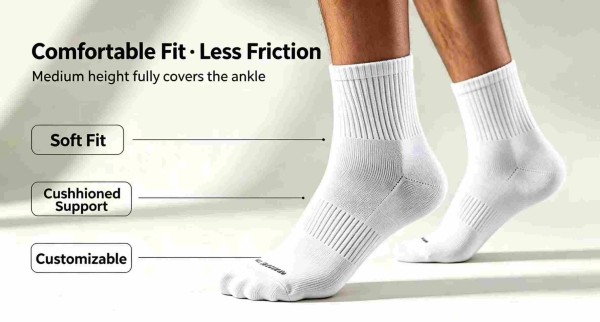
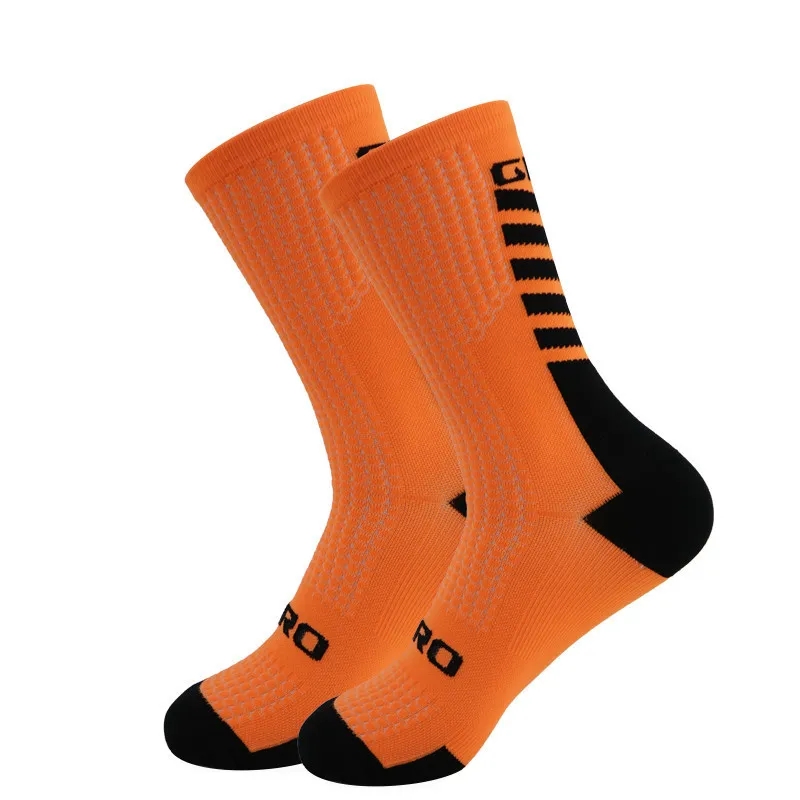
Football socks are knitted as long over-the-calf tubes with three engineered zones. The leg section is ribbed or mesh-knit for stretch and breathability with enough elastic recovery to stay up through constant movement. The foot section — especially the sole — is knitted in cushioned terry for impact absorption and comfort inside boots. And the fold-over cuff sits below the knee, gripping without restrictive pressure. Pattern engineering across these zones is the core technical skill of a football sock factory.
Durability Where Studs Strike
The defining performance demand is hole resistance. Heel and toe zones are reinforced with high-tenacity nylon or poly-core yarns in dense stitch structures, because these are where boot friction and stud pressure destroy ordinary socks. Factories producing for serious clubs test abrasion resistance and seam strength beyond normal hosiery standards — a sock that holes in three matches does not get reordered by a team.
Grip Technology for Slipping Boots
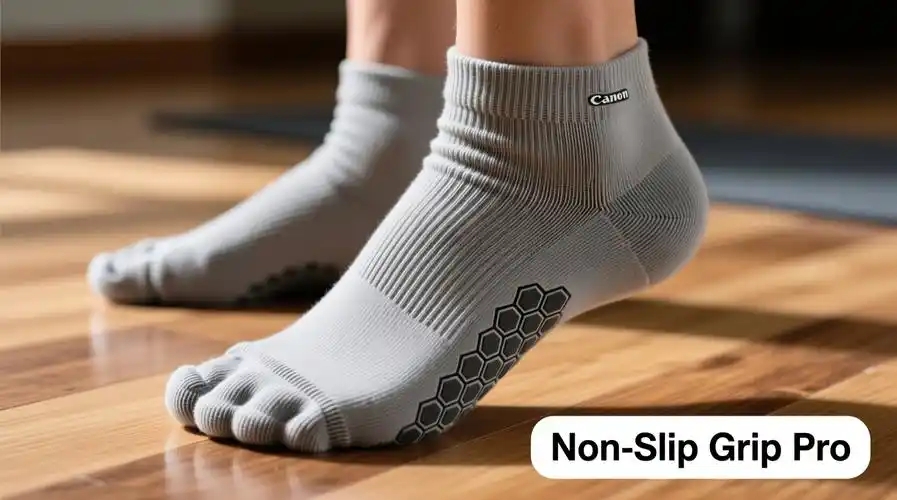
Modern performance football socks often integrate grip: silicone or rubberized grip dots or lines on the inside of the sock against the shin guard (holding it in place) or on the foot zone (locking the foot inside the boot for sharper change of direction). Grip application is a post-knitting process requiring precise curing so grips survive washing and match-after-match abrasion. Quality control tests grip adhesion after repeated wash cycles.
Team Identity: Knitting Colors and Numbers
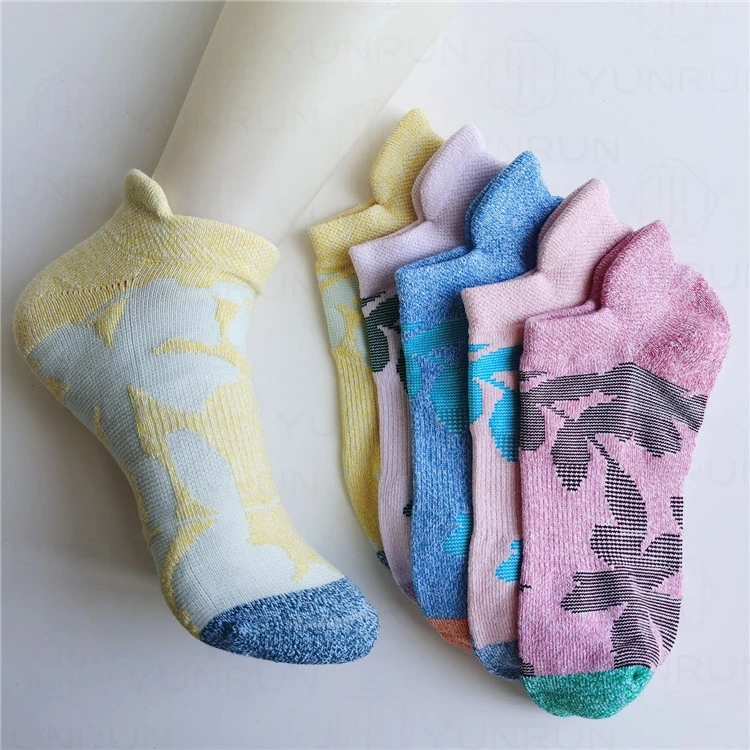
Team customization happens in the knitting program itself: body colors, multi-color stripes and hoop patterns are knitted in jacquard, producing crisp, wash-proof identity. Numbers and player names are added via knit-in labeling, embroidery or printed transfers on the back of the cuff — with number application often done per pair, which is why numbered team orders require careful kitting management at the factory. Sublimated printed designs allow photographic effects on lighter-weight socks favored by some clubs.
Yarn Selection for Performance
Polyamide (nylon) and polyester dominate performance lines for durability, moisture transport and color vibrancy. Cotton-blend versions serve training and youth markets at lower cost. Recycled polyester (GRS) versions are increasingly requested by clubs and brands with sustainability commitments. All performance fibers are selected for moisture-wicking behavior — a soaked football sock is heavier, blisters more, and loses structural recovery.
Finishing, Quality Control, and Team Kitting
After knitting and toe-closing, socks are washed, boarded and sometimes anti-microbial finished. QC checks stripe alignment and pattern matching between pairs (mismatched hoops on a starting eleven is not acceptable), reinforcement integrity, cuff elasticity, and grip adhesion. Team orders are then kitted per player size and number — bagged and labeled by squad — a logistics service that separates experienced teamwear factories from commodity producers.
We handle the adjacent decision in How Are Soccer Socks Made?.
FAQ
Q: Can football socks carry our club crest and player numbers? A: Yes — crests are knitted in, embroidered or transferred; numbers are applied to the cuff per pair and kitted by player size.
Q: Why do premium football socks cost more? A: Reinforced high-tenacity yarns, zoned cushioning, grip technology, per-pair numbering and strict QC all add real production cost.
Q: What MOQ applies to custom team football socks? A: Typical minimums run 300–1,000 pairs per design depending on customization level; numbered squad kits can often be split across sizes.
CONCLUSION
A football sock is a performance system: cushioned where impact lands, reinforced where studs strike, gripping where boots slip, and carrying team identity with knitted precision. Clubs and brands evaluating suppliers should focus on reinforcement quality, grip durability and kitting capability — the three areas where real teamwear factories prove themselves.
When you are ready to produce, Sockmader’s custom sock manufacturing team covers sampling, MOQ and lead times in one place.
Start your next order with custom sports socks from Sockmader — send artwork, size range and target quantity for a quote.