Runners log more miles in a sock than almost any other athlete, and the failure mode is specific: blisters from friction and heat. A running sock is engineered to be as light as possible while still managing moisture and eliminating seams. Unlike ski or work socks, cushioning is minimal — the shoe does the protection. Here is how the lightweight engineering works, and why a running sock that copies a cushy casual sock will cause the exact blisters it was meant to prevent. For a brand entering the running category, the lesson is that less is more: remove weight, remove seams, remove heat.
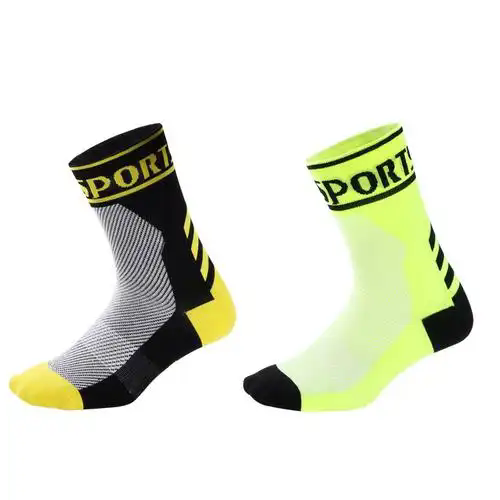
You will see every step below in custom athletic sock range, where sampling runs before bulk production and MOQ starts at 50 pairs per design.
Mesh Ventilation Knitting The top of the foot and the arch get a warp-knit mesh structure — open channels that let heat escape. This is programmed as a separate stitch type in the pattern, not a cut-out. A good running sock has 30–40% of its surface as mesh in warm-weather weights. Winter running weights drop the mesh and add a light terry sole. The mesh also reduces yarn, lowering the per-pair cost — a rare case where performance and economy align. We sample the mesh density because too much weakens the arch and causes sag.
Seamless Toe (Linked Toe) The toe is the highest-friction zone in a running stride. Premium running socks use a fully linked (rosso) toe that leaves no interior ridge. Budget lines use a comfort toe seam that’s flat but present. We only run linked toes for running because the blister data is unambiguous — a single ridge causes repeat complaints on long runs. The linked toe also lets the sock flex naturally at push-off, which matters for forefoot strikers.
Yarn: Synthetic or Merino-Light Most running socks are synthetic (polyester/nylon with polypropylene in the footbed) because synthetics move moisture faster than wool and dry quicker mid-run. “Feet-get-cold” runners prefer a light merino blend (40–50% merino) for temperature buffering. Cotton is again excluded — a wet cotton sock is a blister factory. For brands, we recommend a synthetic base for the core line and a merino-light variant for cold-climate runners who pay a premium.
Arch and Ankle Lock A tighter knit band at the arch and a Y-heel pocket keep the sock from sliding inside the shoe. Sliding = friction = blisters. The cuff uses a low-profile rib that stays up without digging, important for runners who hate sock creep. Some performance lines add a silicone-free internal grip at the arch, but we rely on knit tension to avoid degradation in the wash.
Manufacturing Notes Running socks knit fast on fine-gauge machines (168–200 needles) for a smooth hand. Boarding uses a low-heat form to avoid shine. Pair matching by weight matters less here than in cushiony socks, but toe-seam integrity is 100% inspected on linked-toe lines. Lead time is shorter than for cushioned socks because the knit is simpler.
Basketball Socks Buying Guide picks up where this article leaves off.
FAQ
Q: Cushioned or no-cushion running socks? A: No-cushion for racers and minimalist shoes; light cushion for long slow distance and trail. The shoe’s midsole already cushions, so sock cushion is redundant for most.
Q: Are compression running socks worth it? A: Graduated calf compression can aid recovery and reduce vibration on long runs; it is a fit preference, not a necessity, and adds cost.
Q: How often should running socks be replaced? A: Every 300–500 miles — the mesh loses elasticity and the toe seam degrades before the fabric holes, so watch the toe, not the heel.
CONCLUSION
Running socks win on what they remove: seams, weight and heat. Specify mesh ventilation, a linked toe and a synthetic or light-merino yarn, and the only thing your runners will notice is that their feet stopped complaining — which is exactly the loyalty a running brand wants.
To move from plan to order, send artwork, size range and quantity through Sockmader’s custom sports socks team.