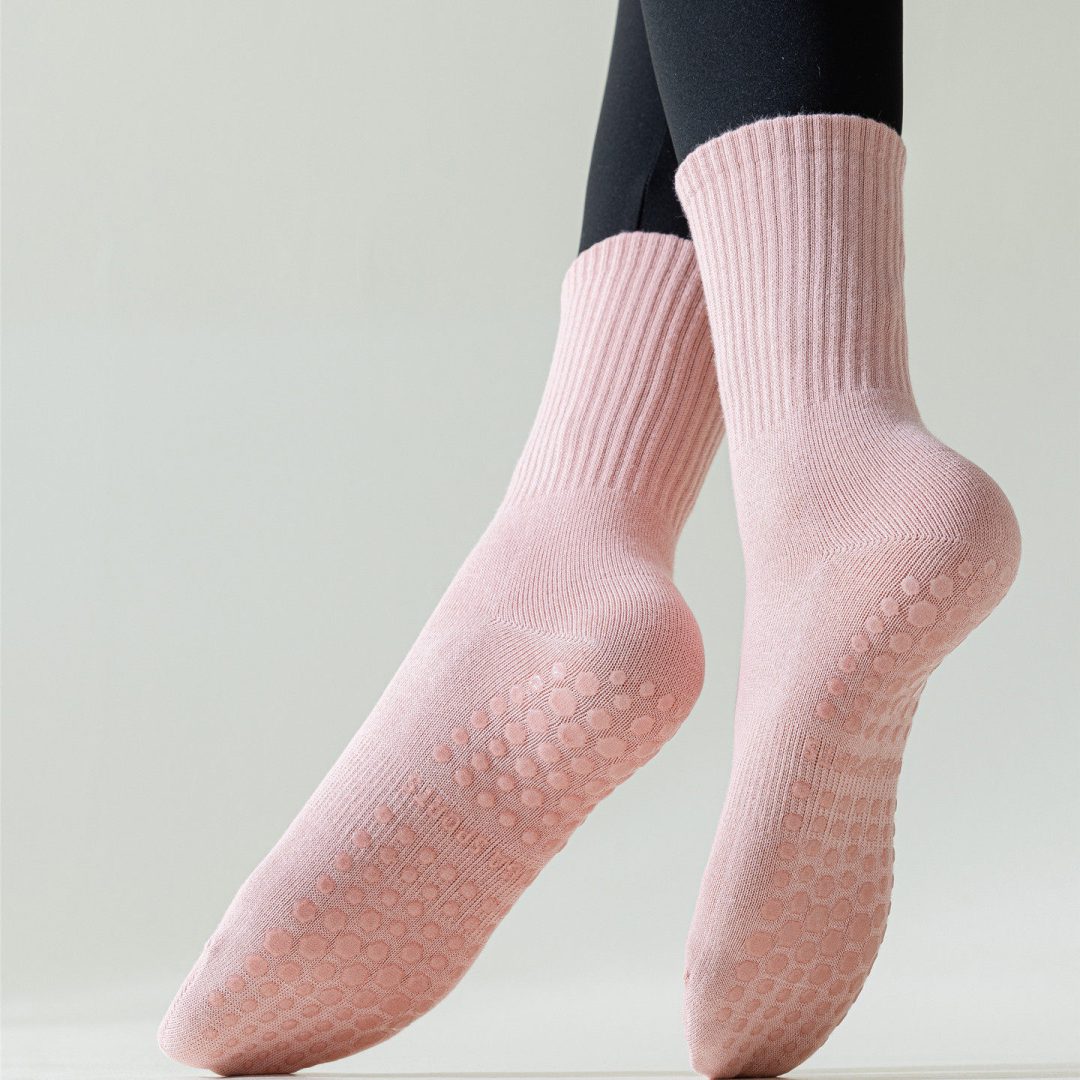
If fuzzy socks are the cozy category, fluffy socks are its maximum-softness wing — thicker, plusher, and engineered almost entirely for the sensation of wearing a cloud. Fluffy and fuzzy are often used interchangeably, but manufacturers treat them as distinct products with different constructions, weights, and price points. Here is how the fluffiest products in hosiery are actually made.
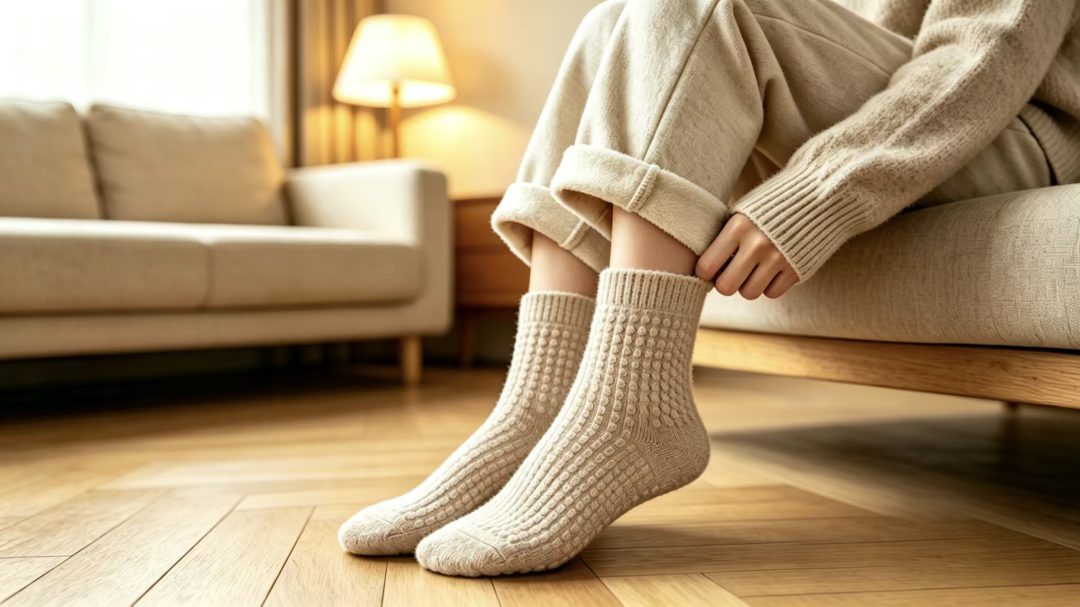
You will see every step below in custom thermal socks, where sampling runs before bulk production and MOQ starts at 100 pairs per design.
Fluffy vs. Fuzzy: The Technical Distinction
Fuzzy socks are typically brushed terry: a standard-weight knit with a raised nap. Fluffy socks go further — they are built for loft itself. The three main constructions: sherpa/fleece-lined socks, where a plush pile layer sits against the skin inside a smooth knit shell; high-loft chenille knits, where the plush yarn is the entire fabric; and ultra-brushed terry at maximum nap depth, pushing terry construction to its limits. Each route trades durability for softness differently, and all three command premium price points over standard fuzzy styles.
Engineering Weight and Loft
Fluffy socks are heavy by sock standards — often 80–150 GSM above comparable fuzzy styles — and that weight is the product. Yarn selection drives it: thick chenille yarns, high-bulk acrylics, and polyester micro-fibers engineered specifically for pile loft. The knitting program maintains fabric integrity despite the bulky yarns: dense enough to hold structure, open enough to preserve squish. Over-dense fluffy socks feel stiff; too open and they pill immediately. The balance is a factory skill developed through finishing trial and error.
The Sherpa Process
For sherpa-lined styles, production is two-layer: the outer shell (usually a smooth or lightly ribbed knit) and the inner plush pile are knitted or bonded together. Quality control focuses on the bond or join integrity — sherpa that separates from the shell after washing is the category’s flagship defect — and on pile uniformity, since patchy sherpa is visible even from outside the sock.
Anti-Pilling: The Fluffy Frontier
Maximum softness and maximum pilling resistance are natural enemies: the loftier the fiber, the more freely it moves and pills. Fluffy production counters this with low-pill fiber grades, yarn twist engineering, anti-pilling finishing treatments, and — most importantly — honest wash testing. A fluffy sock should still look plush after ten washes; one that mats down after three was cheaply made, regardless of how divine it felt in the box. Professional buyers specify a pilling grade of 3.5+ and verify with their own wash cycles.
Sole Reinforcement in a Soft World
The weak point of every plush construction is wear: soft lofty fibers abrade faster than tight smooth knits. Quality fluffy socks quietly reinforce the heel and toe zones with smoother, denser knitting beneath the fluff — invisible to the customer but decisive for lifespan. This hidden engineering is a reliable quality signal when comparing samples.
Gift Assembly and Packaging
Fluffy socks are the ultimate self-care and gifting product, so the factory’s finishing work extends into presentation: paired bundling, ribbon or belly-band wrapping, gift-box formats, and pre-assembled multi-pair sets. The premium positioning also demands premium compliance: OEKO-TEX certification for skin-contact certainty, and accurate fiber labeling, since plush blends vary widely.
We go deeper on How Are Merino Wool Socks Made? in a separate guide.
FAQ
Q: What is the difference between fluffy and fuzzy socks? A: Fuzzy socks are brushed terry knits with a raised nap; fluffy socks use heavier constructions — sherpa linings, high-loft chenille — for substantially thicker, plusher softness.
Q: Do fluffy socks last as long as regular socks? A: Quality pairs do — thanks to hidden reinforced heel/toe zones and anti-pilling treatment. Budget fluffy socks without these features wear out quickly. Q: Are fluffy socks suitable for gifting ranges? A: They are the gifting category’s strongest performer — the tactile experience sells itself, and gift-box formats command the highest margins in cozy hosiery.
CONCLUSION
Fluffy socks are engineering in pursuit of a feeling: high-loft fibers, two-layer sherpa construction, hidden reinforcement and disciplined anti-pilling finishing. Brands that specify these details — and wash-test before committing — deliver the category’s promise: softness that survives, and gift sets that fly off shelves.
When you are ready to produce, Sockmader covers sampling, MOQ and lead times in one place.
Start your next order with custom thermal socks from Sockmader — send artwork, size range and target quantity for a quote.