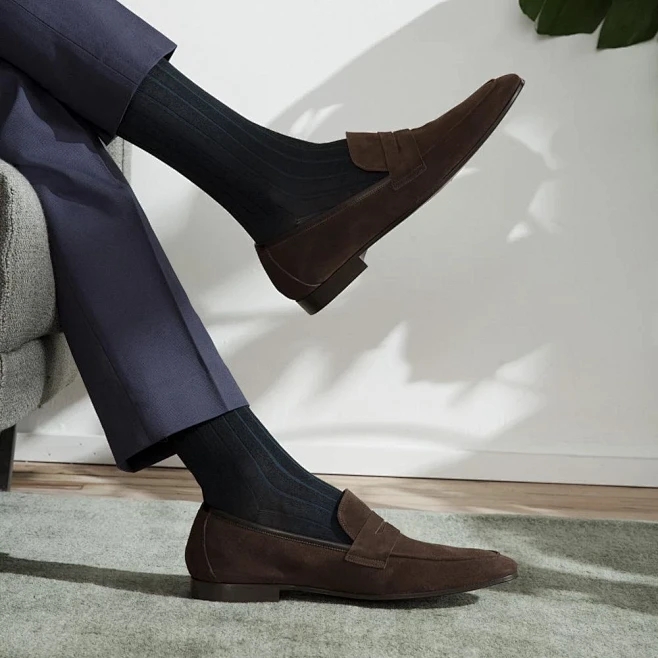
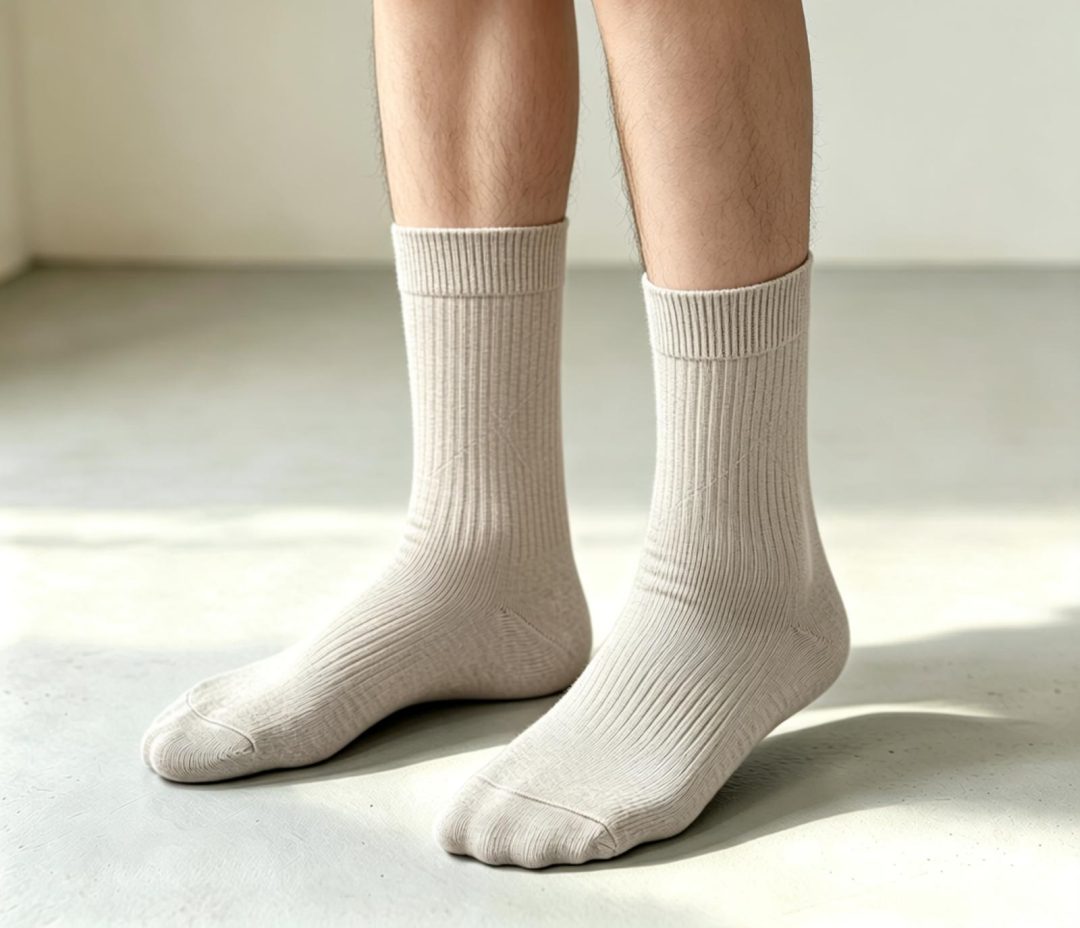
“Why pay more for dress socks?” is a fair question from a procurement lead. The answer is not fashion — it is function that shows up in comfort, hygiene and how long the sock looks good. Here are the concrete benefits of fine yarns and fine gauge, explained so a buyer can justify the premium to finance. The cost gap between a cheap dress sock and a fine one is small per pair, but the difference in wearer experience and brand perception is large — and that is what protects the program’s reputation.
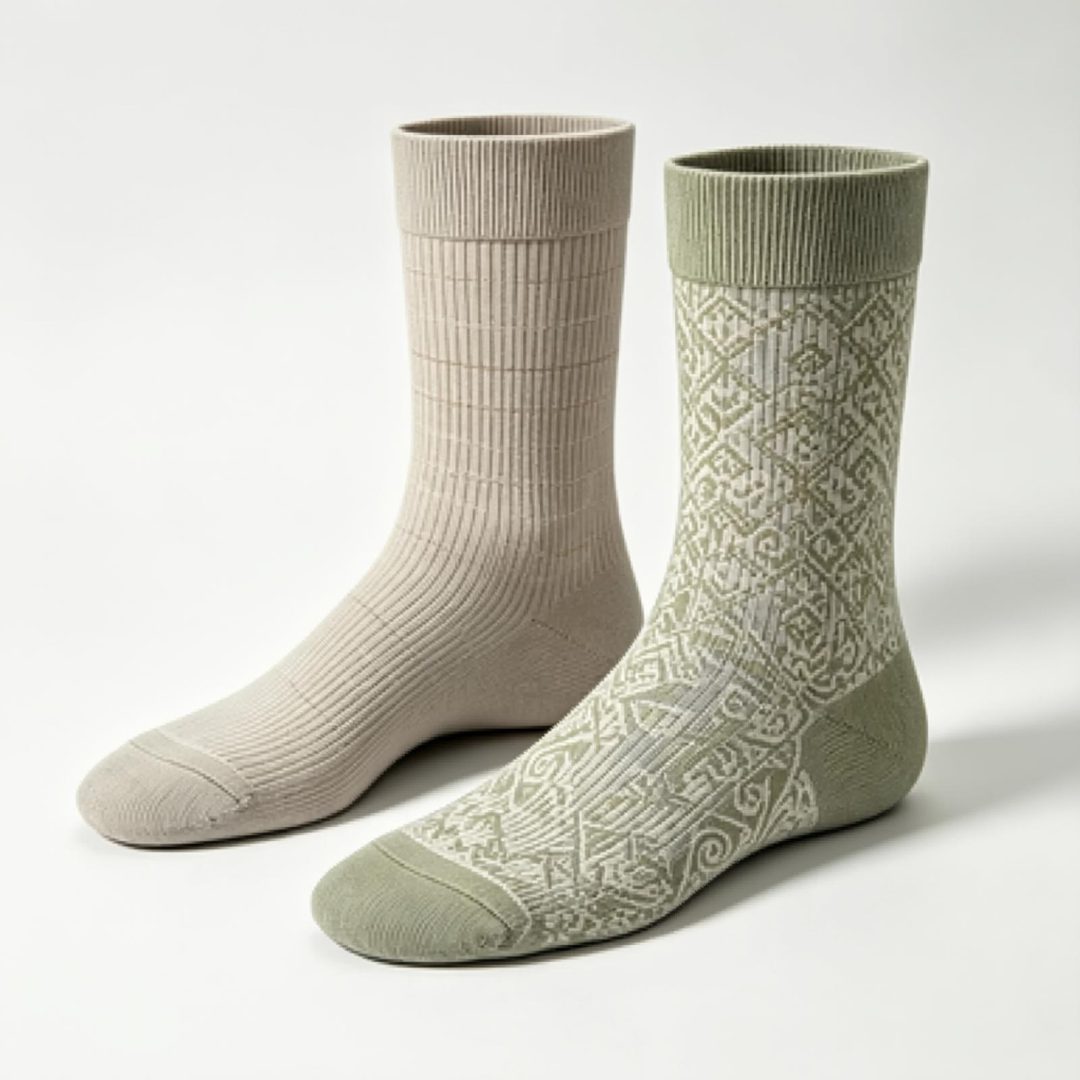
You get these same benefits through wholesale dress socks, with yarn and construction tuned to your target price point.
Breathability Where It Counts A fine-gauge sock has more air per gram than a thick casual sock. Combined with combed cotton or merino, it moves heat and vapor out of a closed leather shoe — the environment most prone to sweat and odor. Thick socks in dress shoes just trap heat and make the wearer conscious of their feet all day. The fine gauge is the mechanism; without it, no fiber choice fixes the stuffiness.
Odor Control Merino dress socks resist odor naturally; combed cotton treated with a silver or charcoal finish does the same. For travel and long office days, this is the benefit wearers notice first — a cheap synthetic sock smells by mid-afternoon. We recommend a merino-light or treated-cotton build for any dress sock meant for all-day or travel wear, where odor is the silent dealbreaker.
The Polish Factor A smooth, sheer sock with no visible texture reads as “premium” next to tailored trousers. A coarse casual sock bunches at the ankle and breaks the line. The gauge is the difference between “matched” and “almost” — and in a client meeting, “almost” is what gets noticed. For corporate gifting, the polish is the entire point of the item.
Durability Per Wear Counter-intuitively, a fine combed-cotton sock often outlasts a cheap thick one because the fiber is stronger and the shade holds. The failure mode of cheap dress socks is fading and pilling, not holes — and fading reads as “old” fast. We see fine dress socks still presentable after a season where cheap ones look tired in a month.
Skin Comfort Long-staple fibers have fewer ends poking the skin, reducing itch. Elastane limited to cuff/arch avoids a tight band that cuts circulation during long sits. For wearers with sensitive skin, combed cotton is the low-itch default. This comfort is invisible until it is missing — then the wearer switches brands.
We handle the adjacent decision in Dress Socks Size Chart & Types.
FAQ
Q: Are merino dress socks worth the premium? A: For travel and odor-sensitive wearers, yes; for everyday office, combed cotton is enough and cheaper.
Q: Do fine socks wear out faster? A: No — combed cotton and proper gauge outlast coarse socks; they fail by fading, not tearing, if shade is locked.
Q: Cotton or synthetic for all-day office wear? A: Combed cotton for comfort; avoid pure polyester, which traps odor and looks shiny.
Cost-Per-Wear: Why the Premium Pays At roughly $3 a pair for a fine dress sock versus $1 for a cheap one, the gap is $2. Worn 50 times a season, that is 4¢ versus 2¢ per wear — negligible — but the fine sock stays presentable all season while the cheap one looks tired in a month and gets replaced. The premium is not the cost; it is insurance against a sock that quietly undermines a $200 outfit. For corporate gifting, the math is clearer still: a presentable sock reflects on the giver every time it is worn, so the few dollars of premium buy ongoing brand presence rather than a one-day impression.
CONCLUSION
Dress sock benefits are quiet but real: cooler feet, less odor, a sharper line and a longer good-looking life. Fine yarn and fine gauge are what deliver them — and they are why the premium exists and why the wearer comes back.
To move from plan to order, send artwork, size range and quantity through Sockmader’s custom sock manufacturing team.
When you are ready to source, the Sockmader custom dress socks team can quote sampling, MOQ and lead times for your quantity.