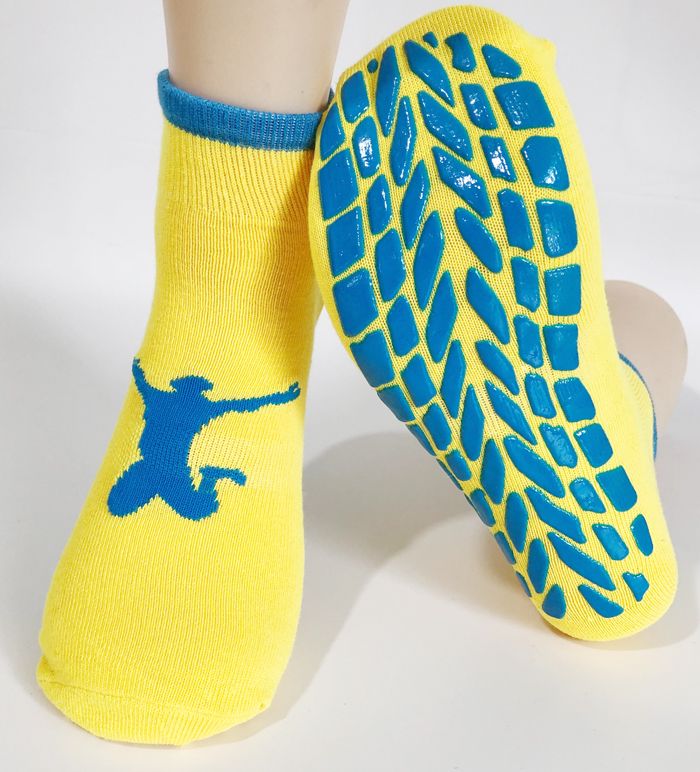
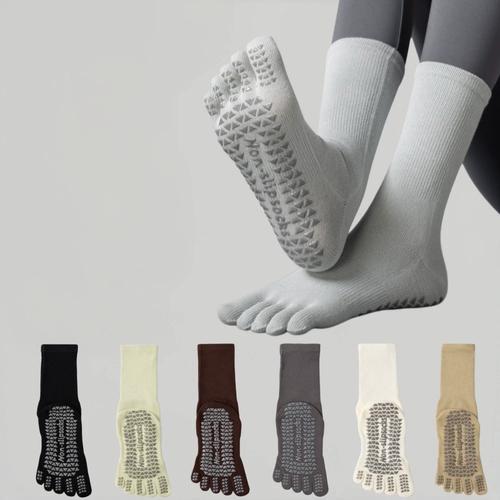
Grip socks — anti-slip socks with traction soles — have quietly become one of hosiery’s fastest-growing categories, powered by pilates and yoga studios, trampoline parks, hospital safety programs, and toddlers learning to walk on hardwood floors. The product looks simple: a sock with dots. But the difference between grips that last two years and grips that peel off in three washes is a genuine manufacturing discipline. Here is how they are made.
You will see every step below in grip sock manufacturing, where sampling runs before bulk production and MOQ starts at 100 pairs per design.
Step 1: Knitting the Base Sock
Grip socks start as a fine-gauge knitted sock, usually combed cotton or cotton-rich blend for studio categories (breathability and barefoot-feel), or polyester blends for institutional laundry programs (durability through industrial washing). The sole zone may be knitted slightly denser to provide an optimal surface for grip adhesion. Cuffs are tuned for gentle hold — pilates and barre wearers move through inversions, so the sock must stay on without pressure marks.
Step 2: The Grip Application Process
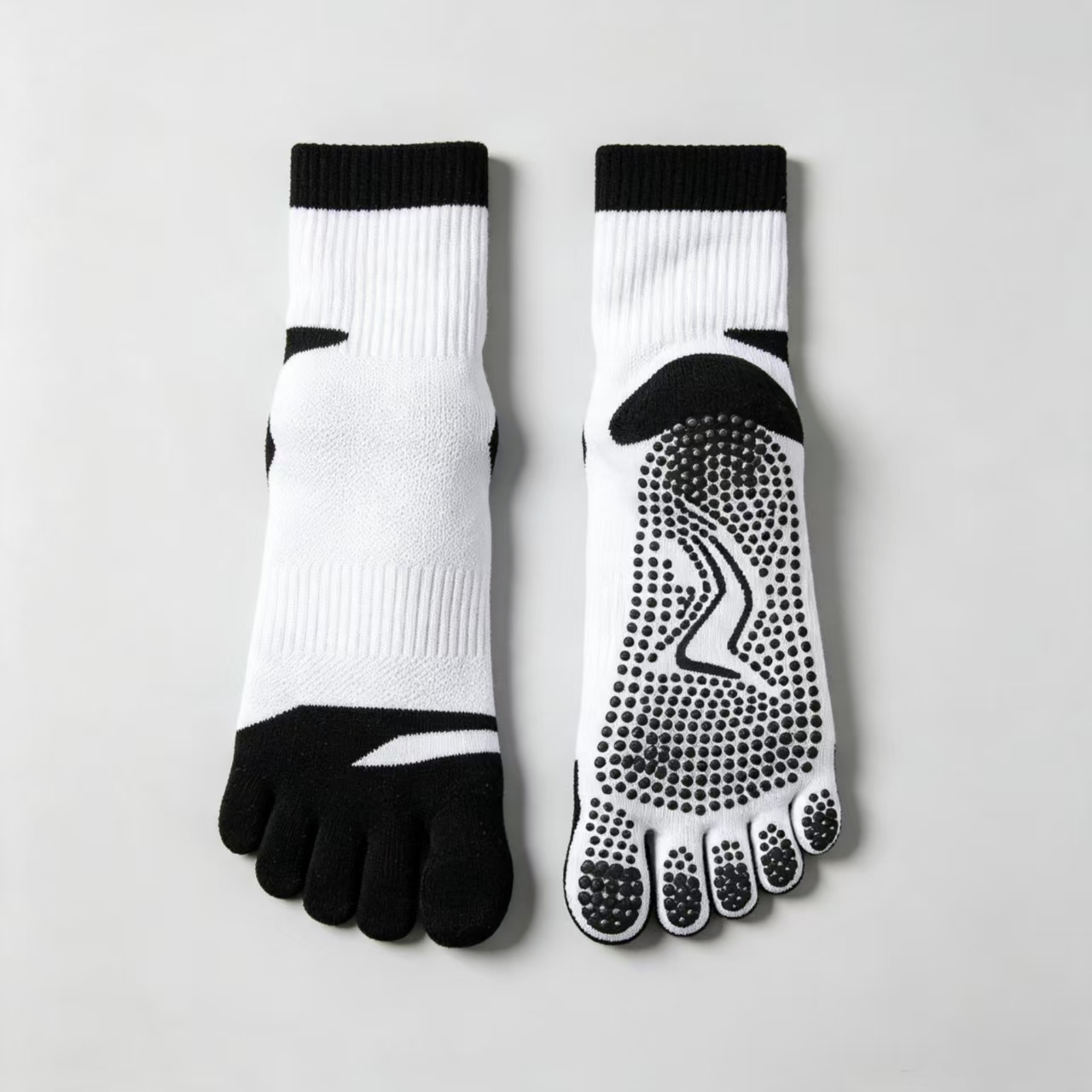
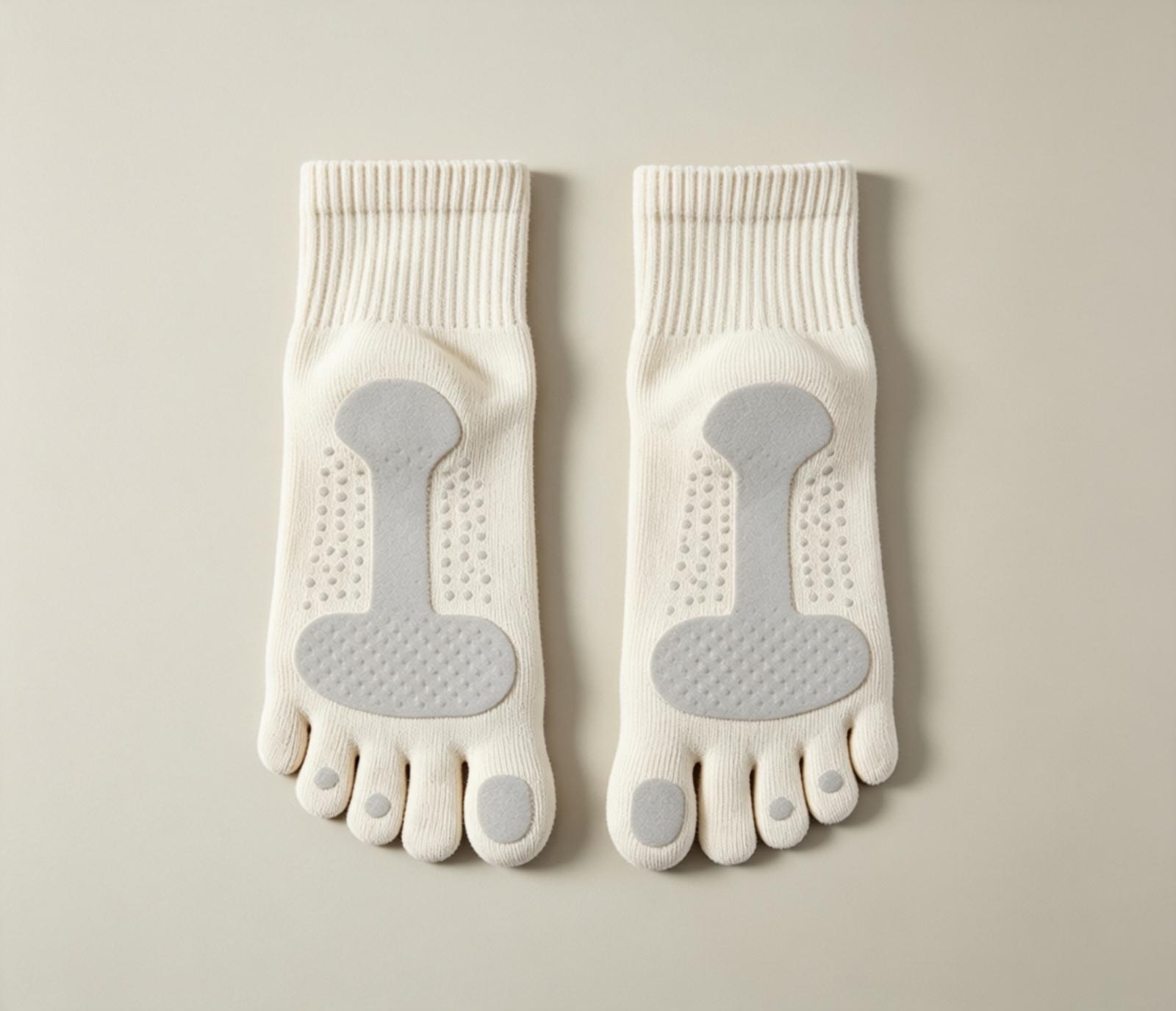
The traction sole is applied after knitting, and there are two main methods. Silicone dot printing — the industry standard — applies liquid silicone through engraved screens or dispensing nozzles onto the sock sole, dot by dot or in patterns (grids, honeycombs, waves, or full-coverage). The sock then passes through a heat tunnel that cures the silicone into a flexible, rubbery solid. Alternatively, pre-formed rubberized pads or TPR sheets are bonded to the sole for heavier-duty institutional styles. Silicone is preferred for skin-contact categories because it is inert, washable, and maintains tack when slightly damp — exactly the condition of a barefoot studio floor.
Step 3: Curing — Where Quality Is Won or Lost
Curing temperature and time determine grip life. Under-cured silicone feels fine new but delaminates after a handful of washes; properly cured grips bond into the knit and survive hundreds of laundering cycles. This invisible-to-the-eye difference is why buyers should always wash-test grip samples (20+ cycles for commercial judgment) rather than judging by touch in the showroom.
Step 4: Pattern Engineering
Grip layout is functional design, not decoration. Studio-grade socks cover the full sole including the toe area, because pilates and yoga movements load every part of the foot. Dots are sized and spaced to balance traction and flexibility — too much silicone and the sole cannot flex naturally; too little and wet floors get dangerous. Hospital and elderly-care programs favor high-coverage patterns with documented slip-resistance testing.
Step 5: Quality Control and Testing
Serious grip sock factories test: adhesion after repeated washing (the core test), slip resistance on standardized surfaces, dot pattern completeness, and skin-safety certification of the silicone compound (OEKO-TEX scope should include the grip material, not just the fabric). For institutional buyers — hospitals, trampoline parks with laundry programs — documented wash durability at 60+ cycles is the practical purchase criterion.
Step 6: Branding and Packaging
Grip socks are a studio-brand product: logos are printed on the cuff or woven into the top of the foot, and packaging is retail-ready header cards or studio-branded polybags. Custom dot colors (matching brand palettes) and custom grip patterns (logo-shaped dots) are available customization levels that premium programs use for differentiation.
If that is settled, the next question is usually answered in Grip Socks Size Chart.
FAQ
Q: Why do grip sock dots peel off after washing?
A: Under-cured or low-grade silicone application. Properly cured grips should survive 100+ machine washes — always wash-test samples before bulk orders.
Q: Are grip socks safe for toddlers and elderly care?
A: Yes — they are widely used in both; specify certified skin-safe silicone and high-coverage sole patterns for these safety-critical uses.
Q: Can grips be any shape or color? A: Standard shapes are dots, honeycombs and waves; custom colors and even logo-shaped grips are available at modest setup cost.
CONCLUSION
Grip socks are a materials-science product in casual packaging: the knitting is routine, but the silicone application and curing decide everything about real-world performance. Buyers who demand wash-durability evidence — and factories that can produce it — turn this simple-looking product into a premium, repeat-purchase category.
To move from plan to order, send artwork, size range and quantity through the Sockmader custom sock factory.
When you are ready to source, the Sockmader custom anti-slip socks team can quote sampling, MOQ and lead times for your quantity.