Merino wool is the most celebrated fiber in socks — the premium tier against which every other material is measured. But “merino” on a label tells you little: fiber diameter, treatment method and blend engineering vary enormously, and they determine whether a sock feels like luxury or disappointment. Here is how merino socks are actually made, from fleece to finished pair.
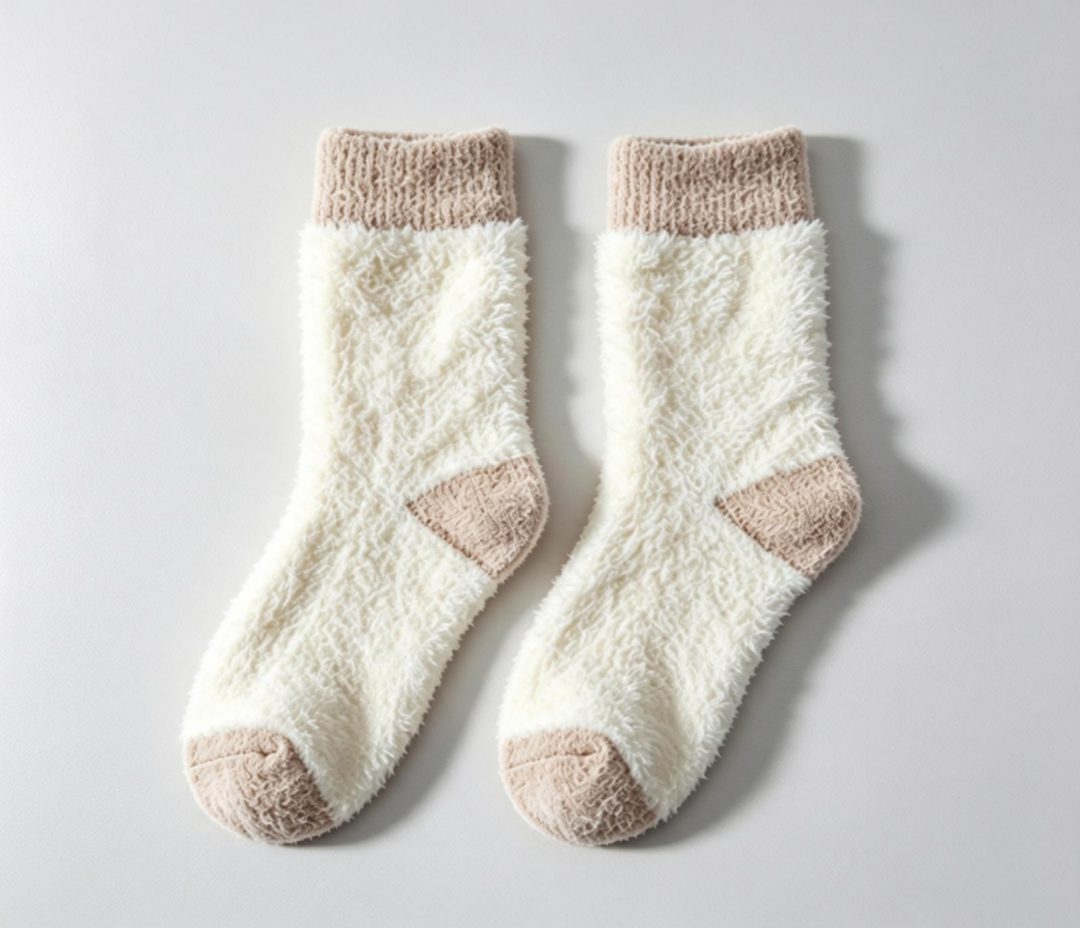
You will see every step below in thermal sock manufacturing, where sampling runs before bulk production and MOQ starts at 100 pairs per design.
It Starts With Microns
Merino quality is graded by fiber diameter in microns. Premium sock merino runs 19–23 microns — fine enough to bend against skin without the itch reflex that coarser wools (25+ microns) trigger. Ultrafine grades below 19 microns feel incredible but cost more and wear faster. When sourcing merino socks, the micron specification is the first question — a factory that states its micron range confidently is one that buys fiber deliberately rather than by price.
Superwash: The Washability Technology
Untreated wool felts and shrinks in machines — the reason wool once meant hand-washing. Superwash treatment removes or masks the wool fiber’s scales (via chlorination-hercosett or increasingly plasma-based processes), making the fiber machine-washable and tumble-dryable. The treatment adds cost and has environmental considerations (responsible producers use certified low-impact processing), but for mainstream retail it is non-negotiable: consumers machine-wash everything.
Blend Engineering
Pure merino socks are rare for good reason: wool abrades. The industry’s proven formula blends 60–75% merino with 25–35% nylon (or recycled nylon) for durability and 1–5% elastane for fit. Reinforcement yarn runs specifically through heel and toe zones. The merino delivers comfort and odor resistance; the nylon delivers a sock that survives a season. Brands marketing “100% merino” position as artisan products with hand-wash care expectations — a niche, not a mainstream strategy.
Knitting Merino
Merino yarn knits differently than synthetics: less inherent elasticity demands adjusted machine tension, and yarn moisture content affects stitch formation (hence climate-controlled yarn rooms in wool-focused factories). Cushioned merino styles knit terry zones at sole and heel for the hiking and outdoor market; fine-gauge merino dress socks knit smooth and thin for the office and travel segments — same fiber, completely different products.
Finishing Discipline: Where Merino Quality Is Decided
Post-knitting, merino socks are washed to remove spinning oils, then dried and boarded under strict temperature control — excessive heat felts wool permanently, shrinking and stiffening it. Anti-pilling finishing addresses merino’s one weakness: shorter-staple yarns pill on the surface over time (premium long-staple merino pills far less naturally). Dimensional stability is then verified, because wool labeling laws in most markets enforce accurate size and fiber-content claims.
Certification and Traceability
The premium merino customer reads tags and asks questions. Standard documentation: RWS (Responsible Wool Standard) or mulesing-free declarations covering animal welfare, OEKO-TEX for chemical safety, GRS where recycled nylon is blended, and accurate fiber-content labels. Traceability — knowing which growing region and processing chain the wool came through — is becoming a retail listing requirement in outdoor channels.
If that is settled, the next question is usually answered in How Are Heated Socks Made?.
FAQ
Q: What micron count should quality merino socks use?
A: 19–23 microns is the sock sweet spot: soft enough for all-day wear, durable enough for regular use. Q: Can merino socks go in the washing machine?
A: Superwash-treated merino blends can be machine-washed cold and air-dried; untreated merino requires hand-washing.
Q: Why not make socks from 100% merino?
A: Durability — nylon reinforcement multiplies sock lifespan. Blends deliver merino comfort with practical longevity.
CONCLUSION
Merino sock excellence is decided long before knitting: micron selection, superwash treatment, blend engineering and temperature-disciplined finishing. Buyers who specify these four variables — and verify certifications — get the fiber’s legendary comfort at its full potential. Assume them, and “merino” becomes just a word on a label.
Ready to price this out? Start with a sample from the Sockmader custom sock factory, or send your artwork and target quantity for a quote.
If you are planning your own line, our custom thermal socks program covers sampling, MOQ and lead times in one place.