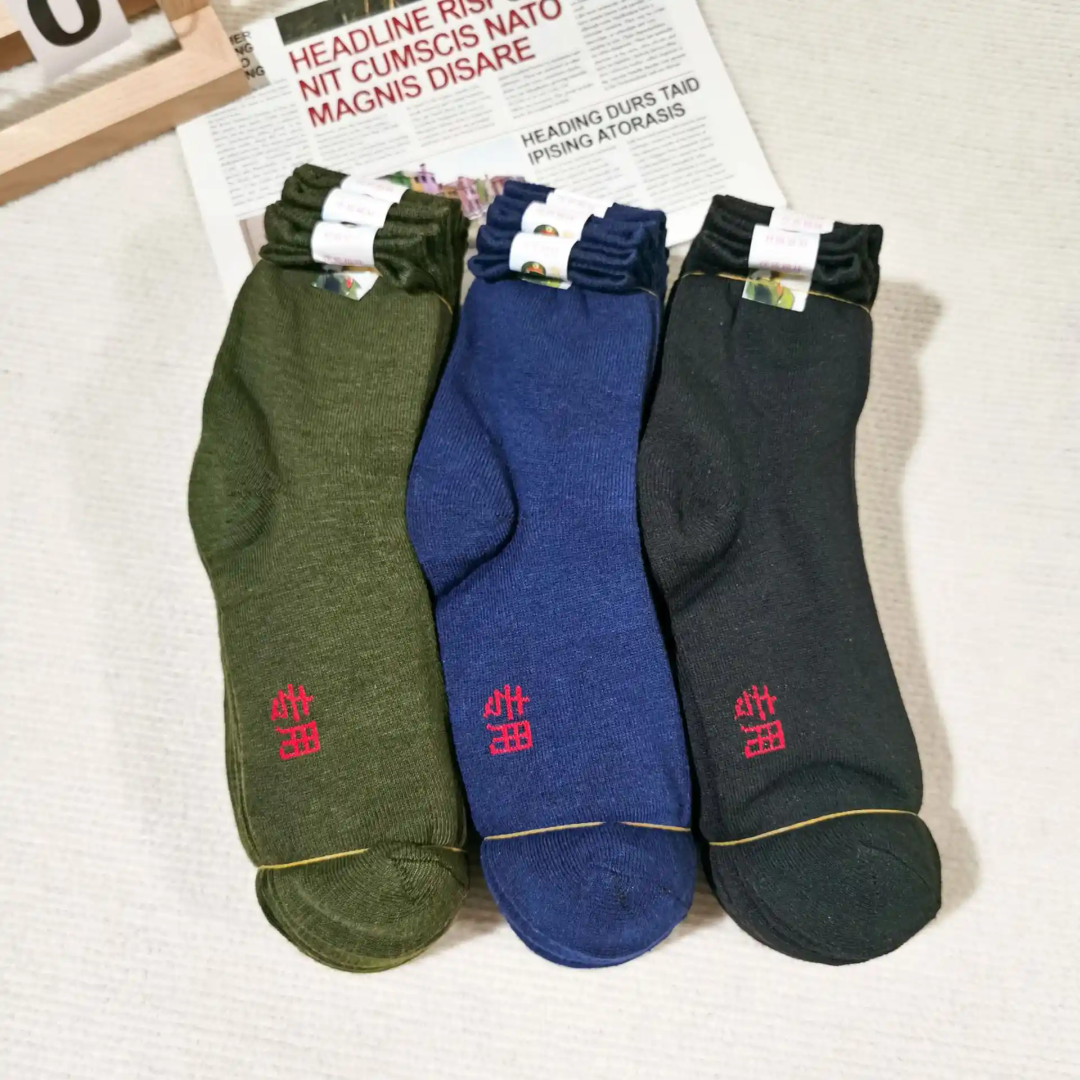
Baseball is the most tradition-bound sport in sock manufacturing. The stirrup — a banded overlay worn over a plain white sock — once defined the look. Today’s buyers almost never order true stirrups; they order tube and crew socks with the stripes knitted directly into the pattern. Knowing how baseball socks are made helps a team buyer get the right stripe placement, reinforcement and length without reviving a 1950s supply chain. It also helps a custom brand avoid the classic mistake of printing stripes onto a finished sock, which cracks and peels after a few innings of sliding.
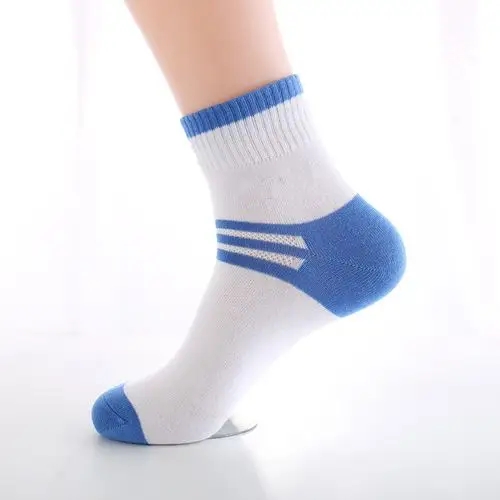
You will see every step below in wholesale sports socks, where sampling runs before bulk production and MOQ starts at 50 pairs per design.
Tube vs Crew: The Length Question Youth and recreational leagues favor tube socks (no defined heel, one straight cylinder) because they fit any foot size — a coach can hand out one size to a whole team. Club and high-school programs prefer crew socks with a true heel pocket for a secure fit. The tube style is cheaper to knit (no heel programming) but fits poorly on large feet and twists during base-stealing. We steer bulk buyers toward crew for ages 13+ and tube only for younger rec leagues, where the universal fit outweighs the sloppy hand.
Knitting the Stripes Stripes are not printed — they are yarn changes programmed into the cylinder. A classic baseball sock has a cuff stripe, a mid-calf stripe and a toe stripe, often in team colors. The machine carries two to three colored yarn fingers and switches them at programmed courses. Misregistration by even one needle shows as a wavy stripe, so we lock stripe position in the pattern file and sample-verify before a run of 500+. For throwback designs, a single wide cuff stripe reads as vintage; for modern clubs, a double stripe (cuff plus mid-calf) carries more visual weight.
Reinforcement Zones Baseball involves bursts of sprinting and digging. The toe and heel get a high-abrasion nylon or aramid-reinforced stitch; the sole gets a tighter knit for blister resistance inside a cleat. Ankle bones (where the cleat strap sits) get a light cushion band. These zones are invisible from outside but decide sock lifespan — a non-reinforced toe fails within a season of sliding. We plate aramid only at the toe and heel rather than through the whole sock, keeping cost down while protecting the wear points.
The Stirrup Legacy True stirrups are still ordered by a handful of vintage leagues and some pro-style uniforms. They are knitted as a narrow band with an open foot, worn over a plain white “sanitary” sock. We produce them on request but flag the added cost and the need to source the underlying white sock separately. For most brands, a knitted stripe that evokes the stirrup look delivers 90% of the heritage at a fraction of the complexity.
Customization and MOQ Team logos are rarely knitted into baseball socks (too small a canvas); instead, buyers use cuff embroidery or a jacquard name band. MOQ for striped tubes starts around 50 pairs per colorway; true stirrups push MOQ higher because of lower demand. Lead time runs 25–35 days including knitting and boarding. For a seasonal league, order in the fall so socks land before spring tryouts.
We handle the adjacent decision in How Are Running Socks Made?.
FAQ
Q: Why are baseball socks often white? A: Tradition and umpire visibility — white makes safe/out calls at the bag clearer. Colored versions are common in youth leagues but read as less traditional.
Q: Can stripes be any Pantone color? A: Yes, within yarn availability; exact dye lots need a 500+ pair commitment to avoid shade drift between orders. Lock a master chip.
Q: Tube or crew for a travel tournament team? A: Crew with a heel pocket — tube socks twist and bag on adult feet during long tournament days and look sloppy on the field.
CONCLUSION
Baseball socks marry tradition and function: knit the stripes, reinforce the toe and heel, and pick tube for kids, crew for teens and up. Get those three right and the sock outlasts the season — and a custom brand earns the repeat league order that keeps the line alive year after year.
Ready to price this out? Start with a sample from Sockmader’s custom sock manufacturing team, or send your artwork and target quantity for a quote.
If you are planning your own line, our custom sports socks program covers sampling, MOQ and lead times in one place.