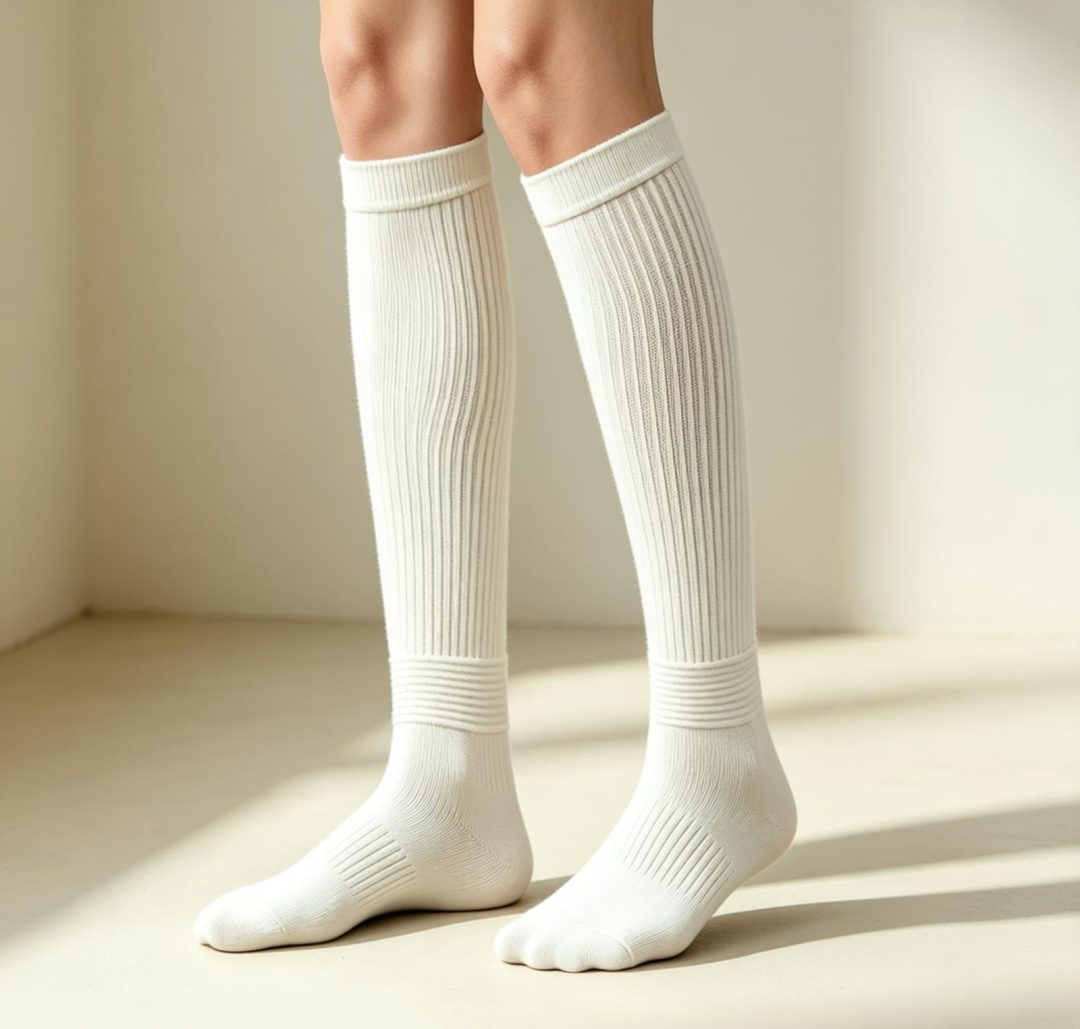
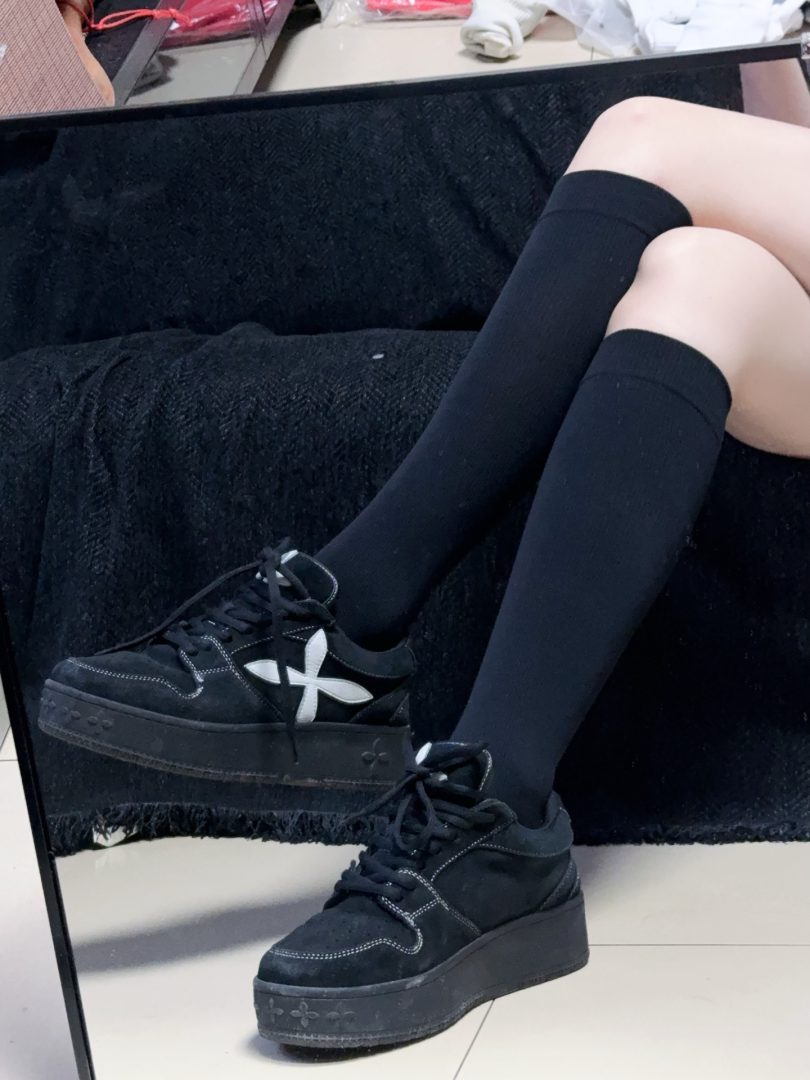
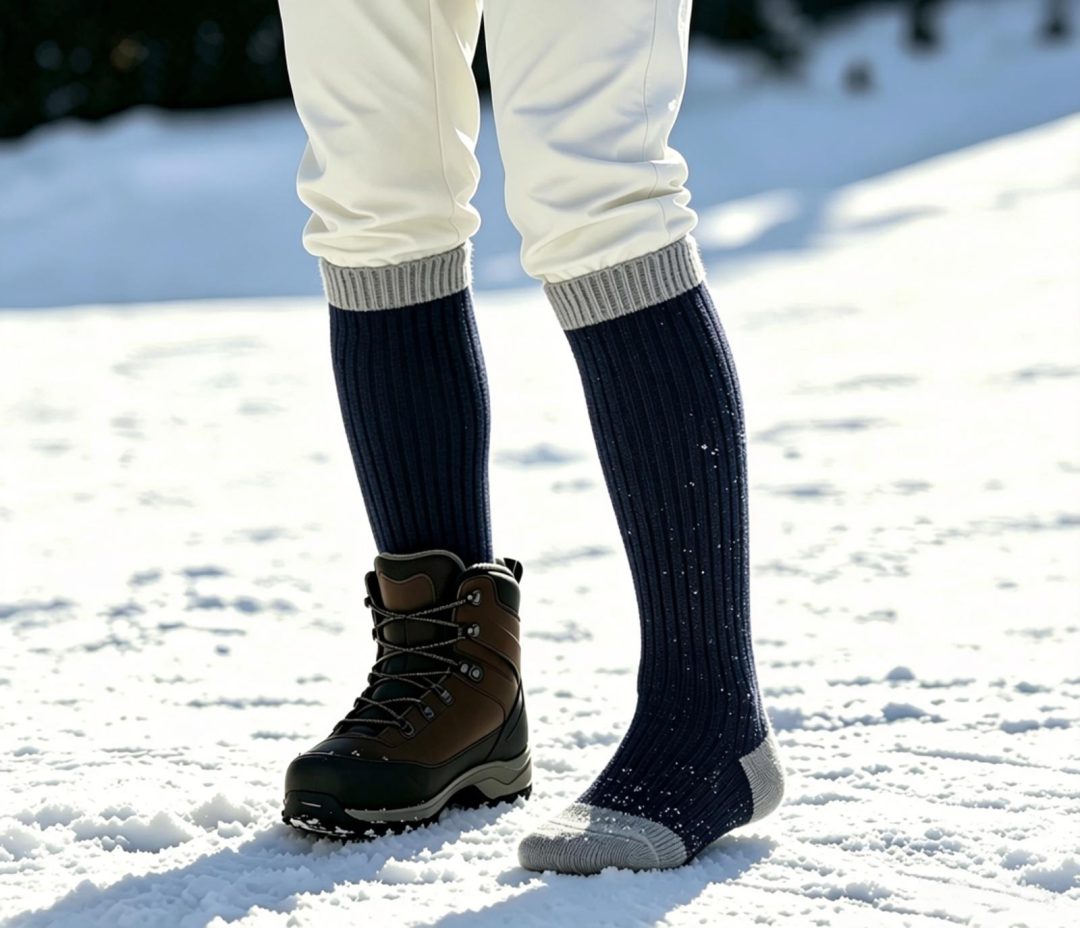
Leg warmers occupy a distinctive niche in knitwear: open-ended tubes with no foot, no heel, and no toe — seemingly the simplest product in the category, yet dependent on exactly the properties that are hardest to knit: stretch, recovery and shape retention over repeated wear. Born in the dance world and revived repeatedly by fashion, they remain a steady seller across dance studios, festivals, athleisure and cold-weather layering. Here is how they are made.
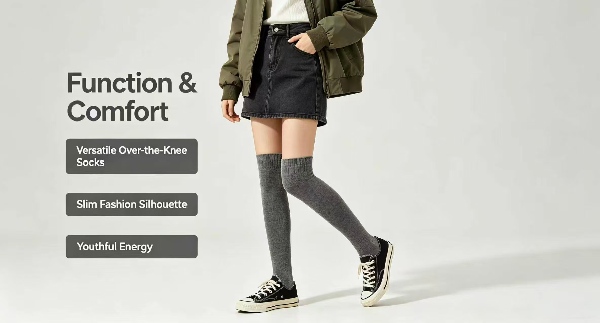
You will see every step below in knee-high sock manufacturing, where sampling runs before bulk production and MOQ starts at 100 pairs per design.
Tube Knitting: Simpler Shape, Higher Standards
Unlike socks, leg warmers are knitted as tubes — either seamless on circular machines (the quality standard) or cut from tubular fabric and overlocked (the budget route, with visible seams and weaker recovery). The apparent simplicity raises the bar on everything else: with no heel or toe to anchor fit, the entire product is its stretch behavior. Fabric must accommodate the calf and ankle difference in the same tube, so programs graduate tension and rib density along the length.
The Constructions That Define the Product
Rib knitting dominates — 1×1, 2×2 and deeper ribs provide the two-way stretch and the classic scrunch aesthetic. Cable-knit and waffle constructions serve the chunky fashion and winter segments. Fine-gauge jersey knits appear in dance and sheer fashion styles. Each construction programs differently: ribs need balanced elasticity recovery (a leg warmer that bags at the ankle after one wear has failed), while cables and waffles add bulk and warmth at some stretch cost. Elastane content — typically 5–10% — provides the recovery that keeps tubes in place without binding.
Applications Drive Specifications
Dance leg warmers (the category’s origin) demand maximum stretch for unrestricted movement, durable fibers for studio floors, and machine washability for near-daily laundering. Fashion leg warmers prioritize appearance: color trends, textures, buttons or lace details. Winter and outdoor versions (worn over tights or boots) emphasize warmth through chunky knits and wool or acrylic blends. Festival and cosplay segments accept wilder constructions — glow threads, oversized proportions. A single production line rarely serves all four; factories typically specialize by fiber and gauge.
Yarn Selection
Acrylic and acrylic-wool blends dominate the volume market — warm, colorful, affordable, and adequately stretchy. Cotton-rich blends serve the dance and eco segments (breathability, natural fiber preference). Pure wool and merino versions hold the premium winter tier. Recycled fiber options (GRS-certified) are increasingly requested in athleisure. Whatever the fiber, recovery testing matters more here than in socks: leg warmers must return to shape after every wear, not gradually relax into tubes twice their original size.
Finishing and Quality Control
After knitting, leg warmers are washed, boarded on leg-shaped forms to set dimensions, and inspected for recovery behavior — stretched and released repeatedly to verify snap-back. QC checks tube consistency between the pair (matched length and rib alignment), seam integrity where styles use any construction seams, and colorfastness across the (often bright) dance and fashion palettes. Cuff edges — rolled, ribbed or picot-finished — must hold their shape without curling or fraying, since they are the product’s visible signature.
Customization for Brands and Studios
Custom programs are common: dance studios order branded colors and embroidered logos; yoga and barre studios retail their own lines; sports teams use them for cold-weather training. Customization runs through color matching, knit structure, length (ankle to over-knee), and branding via woven labels or embroidery. MOQs are typically modest — leg warmers knit quickly and are a common entry product for new labels.
If that is settled, the next question is usually answered in Leg Warmers Size Chart.
FAQ
Q: Are leg warmers knitted the same way as socks? A: They use similar circular machines but knit as simple tubes with graduated tension — no heel or toe pocket, which makes stretch and recovery the entire engineering challenge.
Q: Why do some leg warmers lose their shape? A: Insufficient elastane content or poor recovery finishing; quality pairs snap back after stretching and keep their shape through a full season of wear.
Q: What fibers work best for dance leg warmers? A: Stretch-rich acrylic or cotton-acrylic blends — machine-washable, durable, and elastic enough to move with the dancer.
CONCLUSION
Leg warmers prove that simple shape does not mean simple engineering: recovery-focused tube knitting, application-tuned constructions and disciplined finishing decide whether the product performs. For studios, brands and retailers, the evaluation standard is easy — stretch the sample, let go, and watch what happens next.
To move from plan to order, send artwork, size range and quantity through the Sockmader custom sock factory.
When you are ready to source, the Sockmader custom knee-high socks team can quote sampling, MOQ and lead times for your quantity.